

Are Store-Bought Spice Blends Gluten Free?
Table of Contents
- Are Store-Bought Spice Blends Gluten Free?
- Hidden Gluten in Spices and Seasoning Mixes
- How to Read Spice Labels for Gluten
- Why Pure Single Spices Are Safer Than Blends
- Simple Weeknight Dinner Seasoning Ideas
- Protecting Against Cross-Contamination at Home
- Conclusion
Last Updated: August 26, 2026
Are Store-Bought Spice Blends Gluten Free?
Not all store-bought spice blends are gluten free. Pure single spices like cumin, paprika, and oregano are naturally gluten free, but blended seasonings introduce risk through anti-caking agents, thickening additives, and cross-contamination during processing. If you or someone in your household has celiac disease or gluten sensitivity, this matters more than the label might suggest.
At Dam Spice Company, we craft all-natural, additive-free spice blends made right here in New Mexico with authentic Southwest flavors. Because we skip the fillers and processing shortcuts that other brands rely on, you know exactly what's in every jar. Understanding how to identify gluten in store-bought spice blends requires knowing what to look for on labels and in manufacturing practices.
Hidden Gluten in Spices and Seasoning Mixes
Manufacturers add anti-caking agents to prevent clumping, fillers for consistency, and thickening agents to boost flavor. A taco seasoning might contain wheat starch, a barbecue rub might use barley malt flavoring, and an Italian herb blend might include wheat-derived anti-caking agents. These ingredients often hide under vague names like "natural flavors" or "spice extractives."
The real problem isn't intentional gluten addition, it's that manufacturers don't prioritize gluten avoidance because most customers don't need it. They choose ingredients based on cost, functionality, and shelf stability.
Common Additives That Hide Gluten
Wheat starch appears on labels but often goes unnoticed. Though refined, it retains trace gluten amounts that matter for severe celiac disease.
Barley flour and barley malt are common in meat rubs and grilling seasonings. Barley is gluten-containing and listed plainly, but many shoppers don't recognize it as a gluten source.
Rye appears in some European-style and specialty blends. Like wheat and barley, it contains gluten.
Hydrolyzed vegetable protein (HVP) is a flavor enhancer. When wheat-based, the label should specify, but "hydrolyzed vegetable protein" without a source is a red flag.
Maltodextrin is a thickening and anti-caking agent usually gluten free, but some manufacturers source it from barley or wheat without disclosing the source.
Natural flavors can hide gluten sources. The FDA allows manufacturers to list complex flavor compounds as "natural flavors" without breaking down components. Barley extract or wheat germ-derived flavoring doesn't require disclosure.
Anti-Caking Agents and Cross-Contamination Risk
Silicon dioxide and calcium silicate are themselves gluten free, but manufacturing facilities often process dozens of different blends on shared equipment. A facility might run wheat-based seasoning on Monday and pure spice blends on Tuesday, with trace gluten particles contaminating subsequent batches despite cleaning.
Third-party certification is the best protection. A "Certified Gluten Free" logo means an independent auditor verified that the facility maintains cross-contamination protocols and the final product tests below 20 parts per million (ppm) of gluten, the FDA threshold for gluten-free labeling (the FDA).
How to Read Spice Labels for Gluten
Reading a spice label requires checking three places: the ingredient list, the allergen statement, and third-party certification logos.
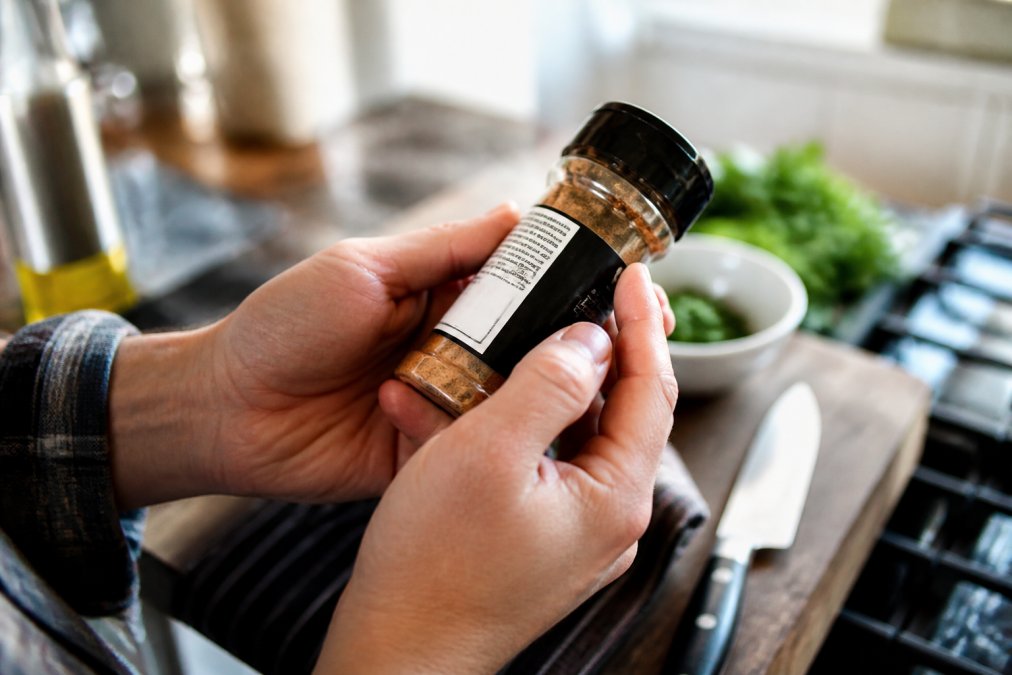
Start with the ingredient list and read every item. If you see wheat, barley, rye, or derivatives, the product is not gluten free. Don't assume safety based on the first three ingredients, read the entire list.
Next, check the allergen statement. The Food Allergen Labeling and Consumer Protection Act (FALCPA) requires disclosure of wheat, but barley and rye are not required in a separate allergen statement, so catch them in the ingredient list (the FDA).
What the Allergen Statement Actually Tells You
A "Contains" statement means the allergen is a direct ingredient. A "May contain" statement means the product was manufactured in a facility or on shared equipment that also processes that allergen. For someone with celiac disease, both warrant caution. A "May contain wheat" disclosure admits the manufacturer can't guarantee gluten-free status.
Language like "Processed in a facility that also processes wheat" is functionally equivalent to a "May contain" statement. The specificity varies, a facility processing wheat in a separate area poses less risk than one where wheat and gluten-free products share the same line.
Spotting Third-Party Certification Logos
Third-party certification is the gold standard. Organizations like the Celiac Sprue Association (CSA), the Gluten-Free Certification Organization (GFCO), and NSF audit manufacturers to ensure strict gluten-free standards (peer-reviewed research).
Look for these logos:
- GFCO Certified Gluten Free (requires below 10 ppm of gluten)
- CSA Recognized (requires below 20 ppm of gluten)
- NSF Certified Gluten Free (requires below 20 ppm of gluten)
If a spice blend carries one of these certifications, you can trust it. Many smaller manufacturers don't carry certification due to cost, but that doesn't mean their products aren't gluten free, you'll need to verify manufacturing practices directly with the brand.
Why Pure Single Spices Are Safer Than Blends
The safest approach for celiac disease or severe gluten sensitivity is buying pure single spices and blending them yourself. A jar of pure cumin is just cumin, no thickening agent, no anti-caking additive, no barley-derived flavoring. You can contact the manufacturer directly about facility practices.
The trade-off is convenience. Blending your own spices takes time and knowledge. For weeknight dinners, that friction is real. Certified gluten-free spice blends from trusted brands offer convenience with verified safety. Dam Spice Company's all-natural blends, crafted without additives or fillers, eliminate many gluten sources that plague mass-market brands.
Simple Weeknight Dinner Seasoning Ideas
Taco Seasoning (no gluten, no fillers):
- 2 tablespoons chili powder
- 1 tablespoon cumin
- 1 tablespoon paprika
- 1 teaspoon garlic powder
- 1 teaspoon onion powder
- ½ teaspoon oregano
- ¼ teaspoon cayenne (optional)
Mix in a small jar and use 2-3 tablespoons per pound of ground meat.
Simple Grilled Chicken Rub:
- 1 tablespoon paprika
- 1 tablespoon garlic powder
- 1 tablespoon onion powder
- 1 teaspoon cumin
- 1 teaspoon black pepper
- 1 teaspoon sea salt
- ½ teaspoon cayenne
Rub directly onto chicken before grilling.
Roasted Vegetable Seasoning:
- 1 tablespoon dried oregano
- 1 tablespoon garlic powder
- 1 tablespoon paprika
- 1 teaspoon cumin
- 1 teaspoon black pepper
- ½ teaspoon sea salt
Toss with olive oil and coat vegetables before roasting at 425°F for 20-25 minutes.
Making your own blends gives complete control over ingredients and eliminates cross-contamination risk from manufacturing. Batch your blends on Sunday and store in airtight containers for quick weeknight cooking.
Protecting Against Cross-Contamination at Home
Even certified gluten-free spice blends can be contaminated in your own kitchen. If you're cooking for someone with celiac disease, your kitchen practices matter as much as the products you buy.
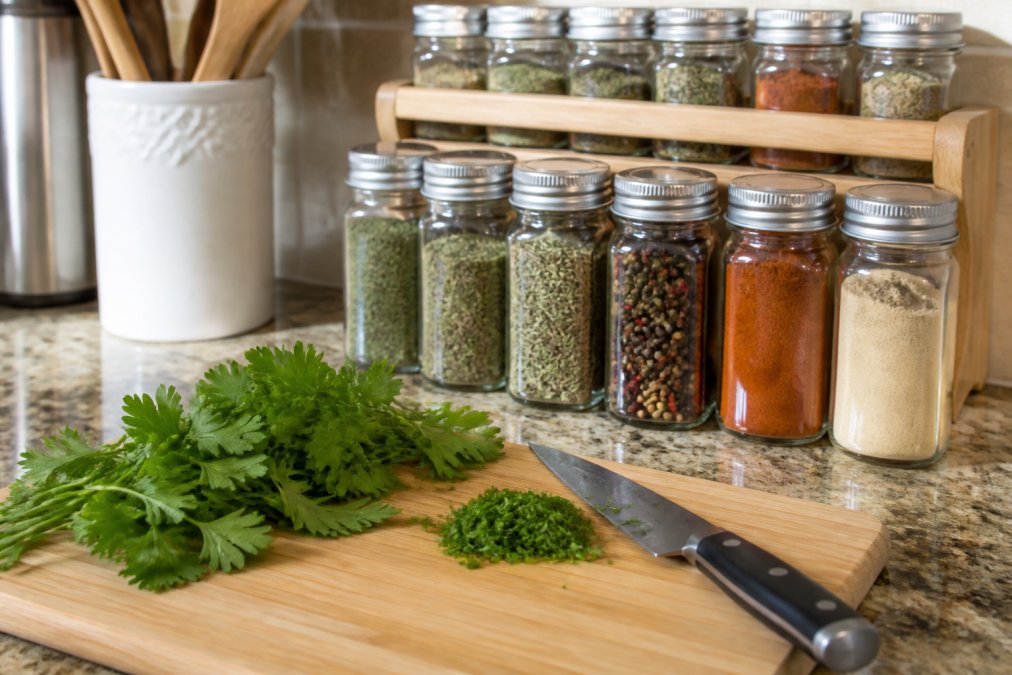
Use dedicated spoons for gluten-free cooking. A wooden spoon that's touched regular flour and then dipped into a gluten-free spice blend transfers gluten particles.
Wash your hands thoroughly between handling gluten-containing and gluten-free foods. Flour particles stick to hands and transfer easily.
Clean cutting boards and countertops between tasks. A cutting board used for regular bread and then for gluten-free vegetables is a contamination vector.
Store gluten-free spices above gluten-containing products. Particles settle downward from higher shelves.
Buy spices in containers with tight-fitting lids. Open containers are vulnerable to airborne particles.
Label everything clearly. If buying both regular and gluten-free versions of seasonings, label them explicitly so you don't grab the wrong one.
Choosing safe spice blends requires reading labels carefully, understanding which additives hide gluten, and knowing what third-party certifications mean. Store-bought spice blends pose real risks if you have celiac disease or gluten sensitivity, but certified gluten-free options exist. Dam Spice Company's all-natural, additive-free spice blends eliminate the fillers and thickening agents that commonly hide gluten in mass-market seasonings. Start with certified gluten-free blends, read every label, and verify manufacturing practices directly with the brand when certification isn't available.
Frequently Asked Questions
What spice blends are gluten-free?
Pure single spices like black pepper, cumin, paprika, and garlic powder are naturally gluten-free. However, seasoning blends vary widely. Check the allergen statement on the label, if wheat, barley, or rye appear, the blend contains gluten. Look for products labeled 'certified gluten-free' or those from manufacturers with dedicated gluten-free facilities. All-natural blends with minimal additives carry lower risk than those containing thickening agents, maltodextrin, or hydrolyzed vegetable protein.
How can I tell if a spice blend is gluten-free by reading the label?
First, check the allergen statement, it will explicitly list wheat, barley, or rye if present. Second, scan the ingredient list for high-risk items: wheat starch, barley flour, thickening agents, maltodextrin, and hydrolyzed vegetable protein. Third, look for 'certified gluten-free' logos from third-party organizations. Finally, check for a statement about shared equipment or manufacturing facility, if the facility processes wheat, cross-contamination is possible. When in doubt, contact the manufacturer directly.
Why do some spice blends contain gluten?
Gluten enters spice blends through additives, not the spices themselves. Anti-caking agents like silicon dioxide are safe, but some manufacturers use wheat starch as a flow agent. Thickening agents, maltodextrin (sometimes made from barley), and hydrolyzed vegetable protein may contain gluten. Seasoning mixes also pose cross-contamination risk if manufactured on shared equipment with wheat-containing products. Cost-cutting manufacturers often choose cheaper additives that happen to contain gluten.
What are the risks of cross-contamination in spice manufacturing?
Cross-contamination occurs when spice manufacturing equipment or facilities process both gluten-free spices and wheat-containing products. Even trace amounts of wheat flour or barley can trigger celiac disease symptoms. Check the label for statements like 'may contain wheat' or 'processed in a facility with wheat.' Dedicated gluten-free facilities eliminate this risk entirely. At home, use separate cutting boards, utensils, and storage containers if cooking for someone with celiac disease to prevent cross-contact.
This article was written using GrandRanker