

Best Spice Rubs for Roasted Vegetables (2026 Guide)
Table of Contents
- Why the Right Spice Rub Makes or Breaks Roasted Vegetables
- How to Season Vegetables for Roasting: Oil, Salt, and Ratios
- The Best Spice Rubs for Roasted Vegetables by Flavor Profile
- Homemade Roasted Vegetable Seasoning Recipe: The Master Blend
- Customizing Your Dry Rub by Vegetable Type
- Vegetable Roasting Temperature and Time for Maximum Caramelization
- Conclusion
Last Updated: August 8, 2026
Most home cooks treat vegetable roasting as an afterthought: toss with olive oil, sprinkle salt, and hope for the best. The result is usually fine, but "fine" is far from the deeply caramelized, crispy-edged vegetables that make people reach for seconds. Below, we break down the best spice rubs for roasted vegetables by flavor profile, share a master blend recipe, and cover the science and technique that separates forgettable vegetables from genuinely great ones.
Quick Picks:
- Best for Southwest flavor: Smoky cumin-chile blend with smoked paprika and garlic
- Best for Mediterranean: Herbaceous Italian seasoning with lemon zest and cracked black pepper
- Best all-purpose: Savory pantry blend with onion powder, garlic, and kosher salt
- Best for low-sodium diets: Salt-free herb rub with turmeric and black pepper
Why the Right Spice Rub Makes or Breaks Roasted Vegetables
A spice rub is not just seasoning, it's the difference between a vegetable that tastes cooked and one that tastes intentional. Most recipes treat seasoning as a finishing step, but salt and pepper added at the end sit on the surface and never bond with the vegetable's natural sugars. A proper dry rub, applied before roasting and pressed into the surface, interacts with heat to create layered flavor throughout.
The Maillard Reaction and Why Seasoning Timing Matters
The Maillard reaction is the chemical process by which amino acids and reducing sugars react under high heat to produce the brown, complex flavors of roasted food. Seasoning timing matters because dry spice rubs applied 10-15 minutes before roasting draw moisture to the surface through osmosis, which then evaporates and concentrates flavor. Salt seasons from the inside out rather than just coating the exterior. Sugary spices like smoked paprika and onion powder accelerate surface browning, which is why Southwest-style blends produce such dramatic caramelization at high heat.
According to Serious Eats' food science resource on the Maillard reaction, the reaction begins around 280°F but accelerates significantly above 350°F, which is why roasting at 425°F or above produces different results than lower temperatures.
How to Season Vegetables for Roasting: Oil, Salt, and Ratios
Seasoning comes down to three variables: the oil you use, how much salt you apply, and the ratio of spices to surface area.
Choosing the Right Neutral Oil and Smoke Point
The oil you choose determines whether vegetables roast or steam. Oils with low smoke points break down before the oven reaches roasting temperature, releasing off-flavors and preventing proper browning. For roasted vegetables, use an oil with a smoke point above 400°F.
Good options include:
- Refined avocado oil (520°F): excellent for very high heat
- Light olive oil (465°F): neutral flavor, widely available
- Refined coconut oil (450°F): adds subtle sweetness
- Grapeseed oil (420°F): very neutral, good for delicate herb blends
Extra-virgin olive oil has a smoke point closer to 375°F and works better for lower-temperature roasting. The goal is a thin, even coat, too much oil causes steaming; too little causes the rub to burn before vegetables cook through.
Seasoning Ratios That Actually Work
A reliable ratio is approximately 1 tablespoon of dry rub per pound of vegetables, combined with 1-2 tablespoons of oil. For salt, use about 1/2 teaspoon of kosher salt per pound as a baseline. Kosher salt is preferred because its larger crystals distribute evenly and are easier to control.
| Vegetable Weight | Oil | Kosher Salt | Dry Spice Rub |
|---|---|---|---|
| 1 lb | 1.5 tbsp | 1/2 tsp | 1 tbsp |
| 2 lbs | 2.5 tbsp | 1 tsp | 2 tbsp |
| 3 lbs | 3-4 tbsp | 1.5 tsp | 3 tbsp |
Toss and coat thoroughly before spreading on a sheet pan. Crowding the pan is the single most common mistake, vegetables need space to roast, not steam.
The Best Spice Rubs for Roasted Vegetables by Flavor Profile
Three flavor profiles dominate roasted vegetable seasoning: Southwest and New Mexico, Mediterranean, and savory all-purpose.
Southwest and New Mexico: Smoky, Earthy, and Bold
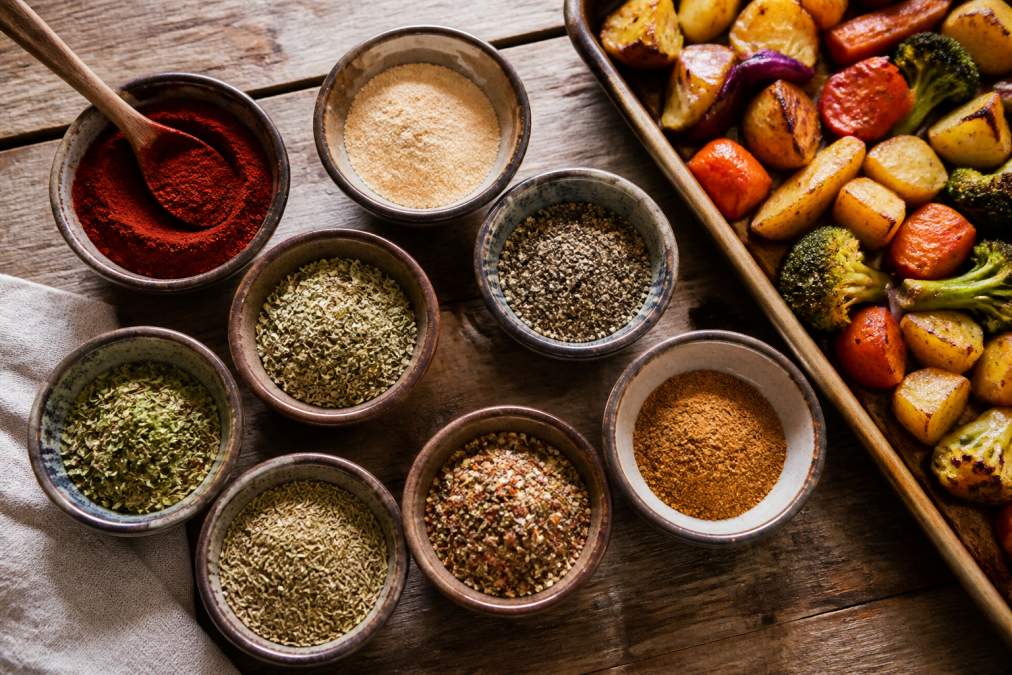
The Southwest flavor profile is built on smoked paprika, cumin, dehydrated garlic, onion powder, and dried chiles, authentic New Mexico spice traditions that produce bold, complex results without additives or MSG. This profile works especially well on root vegetables, corn, zucchini, cauliflower, broccoli, and peppers. The smokiness and earthiness create umami-rich flavor without artificial enhancement.
Southwest Dry Rub:
- 2 tsp smoked paprika
- 1 tsp ground cumin
- 1 tsp dehydrated garlic
- 1/2 tsp onion powder
- 1/2 tsp cracked black pepper
- 1/4 tsp dried oregano
- Kosher salt to taste
Mediterranean: Herbaceous and Bright
The Mediterranean profile relies on herbaceous dried herbs, rosemary, thyme, oregano, basil, and parsley, often finished with lemon juice after roasting for acid balance. It pairs best with zucchini, eggplant, squash, tomatoes, asparagus, and potatoes. Use dried herbs that are genuinely fresh; replace them every 6-12 months for best results.
Mediterranean Dry Rub:
- 1.5 tsp Italian seasoning
- 1 tsp dehydrated garlic
- 1/2 tsp onion powder
- 1/2 tsp cracked black pepper
- 1/4 tsp dried rosemary (crumbled fine)
- Pinch of red chili flake
- Kosher salt to taste
Savory All-Purpose: The Everyday Pantry Blend
The all-purpose savory blend is built from pantry staples: garlic powder, onion powder, smoked paprika, black pepper, and salt. Simple, reliable, and works on virtually every vegetable. This is the baseline to start with before experimenting with more specific profiles.
Homemade Roasted Vegetable Seasoning Recipe: The Master Blend
A homemade blend gives you control over sodium, heat level, and flavor balance that no commercial blend can match.
The Dam Spice Master Blend for Roasted Vegetables:
- 3 tbsp smoked paprika
- 2 tbsp dehydrated garlic
- 2 tbsp onion powder
- 1 tbsp cracked black pepper
- 1 tbsp ground cumin
- 1.5 tbsp kosher salt
- 1 tsp dried oregano
- 1/2 tsp cayenne pepper (adjust to heat preference)
Mix thoroughly and store in an airtight glass jar. This makes approximately 12 tablespoons, enough for 12 pounds of vegetables.
Dietary-Specific Modifications
Spice rubs are naturally well-suited to dietary modification. Most dry rub ingredients are inherently gluten-free, but cross-contamination in commercial blends is a real concern. Making your own blend from individual spices purchased from certified gluten-free sources eliminates that risk.
For low-sodium diets, simply omit the kosher salt or reduce it significantly. The smoked paprika, cumin, and garlic provide enough flavor complexity that many find a salt-free version satisfying.
Salt-Free Modification: Remove kosher salt. Add 1/2 tsp sumac or lemon pepper for acid brightness.
Low-Sodium Modification: Reduce kosher salt to 1/2 tbsp. Add 1/4 tsp celery seed for a savory, mineral note that mimics salt's flavor-enhancing effect.
According to the American Heart Association's guidance on sodium and cooking, cooking at home with controlled spice blends is one of the most effective ways to reduce sodium intake without sacrificing flavor.
Bulk Batching and Shelf-Life Storage
Bulk batching spice rubs is one of the highest-return habits in home cooking. A 10-minute batch can season dozens of meals over several months.
Shelf-life guidelines:
- Whole dried spices ground fresh: up to 2 years
- Pre-ground spices mixed into a blend: 6-12 months at peak flavor
- Blends containing salt: up to 18 months
- Blends containing dried herbs: 6 months before herbaceous notes fade
Store in airtight glass jars away from heat, light, and moisture. A cool, dark pantry shelf extends shelf life considerably. Label every jar with the blend name and date made.
Customizing Your Dry Rub by Vegetable Type
Not all vegetables respond to seasoning the same way. Texture, water content, and natural sugar levels all affect how a dry rub performs.
Dense root vegetables (carrots, beets, sweet potatoes, parsnips): Handle bold, heavy spice rubs and benefit from the full master blend. Their low water content means they absorb flavor well and caramelize readily. Roast at 400-425°F.
Cruciferous vegetables (broccoli, cauliflower, Brussels sprouts): Their naturally bitter, sulfurous note benefits from spice profiles with sweetness and smoke. Smoked paprika counterbalances bitterness. Roast at 425°F for maximum caramelization.
Watery vegetables (zucchini, mushrooms, tomatoes): These release significant moisture during cooking. Use a lighter hand with the rub and ensure the sheet pan is not crowded. Mediterranean profiles work better than heavy Southwest blends. Roast at 400-425°F.
Delicate vegetables (asparagus, green beans, snap peas): These cook quickly and need minimal rub. A light coating of oil, garlic, black pepper, and salt is often sufficient. Over-seasoning masks their fresh flavor. Roast at 400°F for 10-15 minutes.
Vegetable Roasting Temperature and Time for Maximum Caramelization
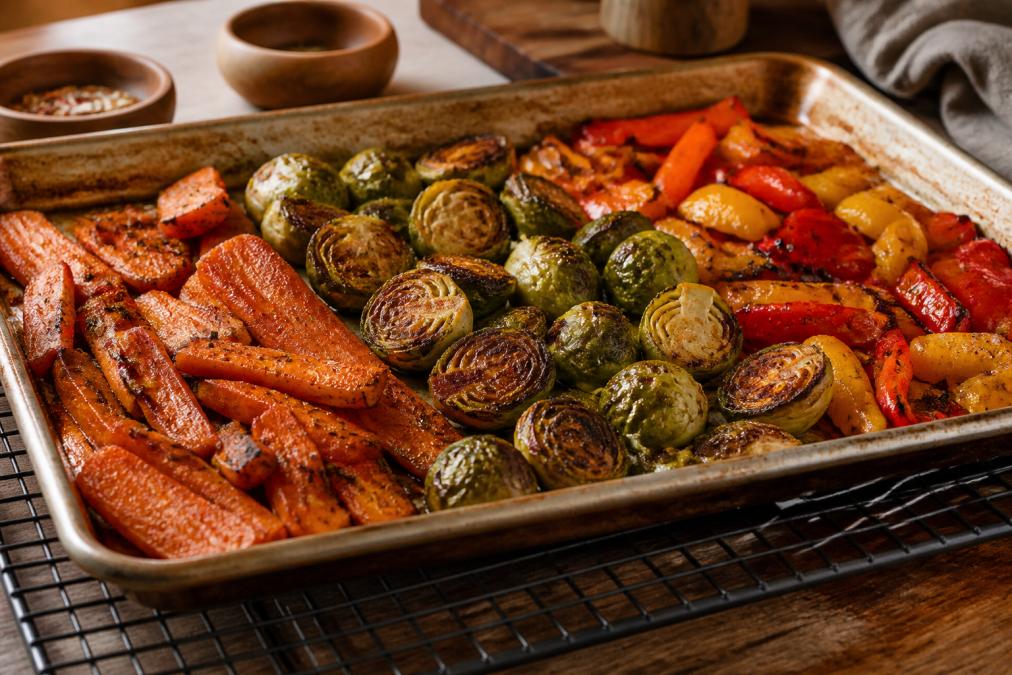
The ideal roasting temperature for most vegetables is between 400°F and 425°F. This range is hot enough to drive the Maillard reaction and caramelization but not so hot that the exterior burns before the interior cooks through.
| Vegetable | Temperature | Time | Notes |
|---|---|---|---|
| Carrots, beets | 400°F | 25-35 min | Cut into uniform pieces |
| Broccoli, cauliflower | 425°F | 20-25 min | Flat cut side down |
| Brussels sprouts | 425°F | 20-30 min | Halved, cut side down |
| Zucchini, squash | 400°F | 15-20 min | Do not crowd |
| Asparagus | 400°F | 10-15 min | Single layer only |
| Sweet potatoes | 400°F | 30-40 min | Uniform 3/4" dice |
| Bell peppers | 425°F | 20-25 min | Skin blisters and sweetens |
| Mushrooms | 425°F | 15-20 min | Dry before seasoning |
Uniform cutting is as important as temperature. Pieces that vary significantly in size will cook unevenly.
Tips for Crispy Edges and Caramelized Surfaces
Crispy edges require three things: high heat, dry surfaces, and space on the pan.
1. Dry the vegetables before seasoning. Pat vegetables dry with a clean kitchen towel before applying oil and rub. This is especially important for mushrooms and zucchini.
2. Preheat the sheet pan. Place the empty pan in the oven for 5-10 minutes before adding vegetables. A preheated pan produces immediate searing contact, which jumpstarts caramelization.
3. Do not stir too often. Let vegetables sit undisturbed for the first half of cooking. Frequent stirring prevents the contact browning that creates crispy edges. Flip once at the halfway point.
4. Use the broiler for the final 2-3 minutes. If vegetables are cooked through but lack color, a brief blast under the broiler produces dramatic caramelization without overcooking the interior. Watch carefully; the difference between perfect and burned is about 90 seconds.
5. Finish with an acid. A squeeze of lemon juice or splash of sherry vinegar added immediately after roasting brightens flavor and cuts through richness. This is standard culinary technique in professional kitchens and makes a noticeable difference at home.
As documented in the USDA's food safety guidelines for roasting temperatures, maintaining consistent oven temperatures and proper food handling reduces the risk of uneven cooking.
For home cooks who want authentic Southwest flavor profiles without building blends from scratch, Dam Spice Company's all-natural, additive-free spice blends are made with genuine New Mexico spices and contain no MSG, no fillers, and no artificial ingredients.
For deeper reading on flavor development and roasting science, America's Test Kitchen's guide to roasting vegetables provides detailed testing on temperature, pan type, and seasoning methodology.
Roasting vegetables well is a skill that compounds: once you understand the relationship between heat, moisture, and seasoning, every batch improves. The biggest obstacle most home cooks face is not technique but seasoning confidence. Dam Spice Company's Southwest and New Mexico spice blends remove that uncertainty with flavor profiles built specifically for high-heat cooking, using all-natural ingredients with no additives. Whether you start with the master blend recipe above or reach for a ready-made Southwest rub, the principles stay the same: dry surfaces, hot pan, proper ratios, and an acid finish. Add Dam Spice Company blends to your cart and taste the difference that authentic New Mexico flavor makes on your next sheet pan dinner.
Frequently Asked Questions
What is the best seasoning for roasted vegetables?
The best seasoning depends on your flavor goal. For bold, smoky results, a Southwest-style dry rub built on smoked paprika, dehydrated garlic, onion powder, kosher salt, and cracked black pepper delivers excellent caramelization. For lighter dishes, an Italian seasoning blend with oregano, thyme, and rosemary works well. The key is coating vegetables evenly in oil first so the spice rub adheres and browns properly on the sheet pan.
Should you season vegetables before or after roasting?
Season before roasting. Tossing vegetables in oil and your spice blend before they hit the oven allows the Maillard reaction to develop flavor directly on the surface. Seasoning after roasting produces a flat, powdery taste rather than the deep, roasted flavor you get when spices are exposed to high heat throughout cooking. For a bright acid finish, a squeeze of lemon juice after roasting complements the seasoning without dulling the crust.
What herbs go well on roasted vegetables?
Dried herbs like thyme, oregano, rosemary, and Italian seasoning hold up well in the high heat of roasting without burning. Fresh herbs like parsley or basil are best added after the vegetables come out of the oven, since they scorch easily. For root vegetables, rosemary and thyme are classic pairings. For summer vegetables like zucchini and bell peppers, oregano and smoked paprika create a Mediterranean-style flavor profile.
How do I make a homemade roasted vegetable seasoning recipe that stays fresh?
Combine smoked paprika, garlic powder, onion powder, dried thyme, kosher salt, and cracked black pepper in a 2:1:1:1:2:1 ratio by teaspoon. Store the blend in an airtight glass jar away from direct heat and light. A properly stored homemade spice blend stays fresh and aromatic for up to six months. For bulk batching, scale the recipe and label jars with the mix date so you always know when to refresh your supply.
What is the best roasting temperature for vegetables?
Most vegetables roast best at 400°F to 425°F. This range is hot enough to trigger caramelization and the Maillard reaction without steaming the vegetables. Dense root vegetables like carrots and potatoes need 35 to 45 minutes, while softer vegetables like asparagus or zucchini are done in 15 to 20 minutes. Spread vegetables in a single layer on the sheet pan with space between pieces, crowding traps steam and prevents crispy edges.
This article was written using GrandRanker