

Best Spices for Roasting Root Vegetables
Table of Contents
- Why Root Vegetables Need Bold Spices
- Best Spices for Roasting Root Vegetables: An Earthy, Sweet, and Smoky Guide
- How to Roast Root Vegetables Perfectly: A Step-by-Step Method
- Roasting Time for Root Vegetables: A Quick Chart
- Savory Spice Blends for Vegetables: DIY and Store-Bought Options
- Troubleshooting Soggy Vegetables and Other Common Mistakes
- Global Flavor Profiles: Southwest, Moroccan, and Beyond
- Conclusion
- Frequently Asked Questions
Last Updated: September 14, 2026
Why Root Vegetables Need Bold Spices
Root vegetables come out of the ground tasting like the earth they grew in: sweet, starchy, and a little bit plain. That mildness is exactly why they take so well to strong seasoning. Unlike delicate greens that wilt under heavy spice, carrots, parsnips, beets, and sweet potatoes have dense flesh and natural sugars that can carry cumin, smoked paprika, and chile without losing themselves.
At Dam Spice Company, we build blends around that principle every day. High-heat roasting does two things at once: it drives off moisture so surfaces can brown, and it concentrates the sugars inside each piece. The right spices amplify that process instead of fighting it. Get the seasoning right and a plain bag of carrots turns into something people reach for twice.
Best Spices for Roasting Root Vegetables: An Earthy, Sweet, and Smoky Guide
The best spices for roasting root vegetables fall into three families: earthy and warm, sweet and aromatic, and smoky and savory. Each family pairs with a different style of dish, and knowing which is which takes the guesswork out of seasoning. But the real skill is understanding why a spice works with a given root, once you see the mechanism, you can improvise instead of following a recipe.
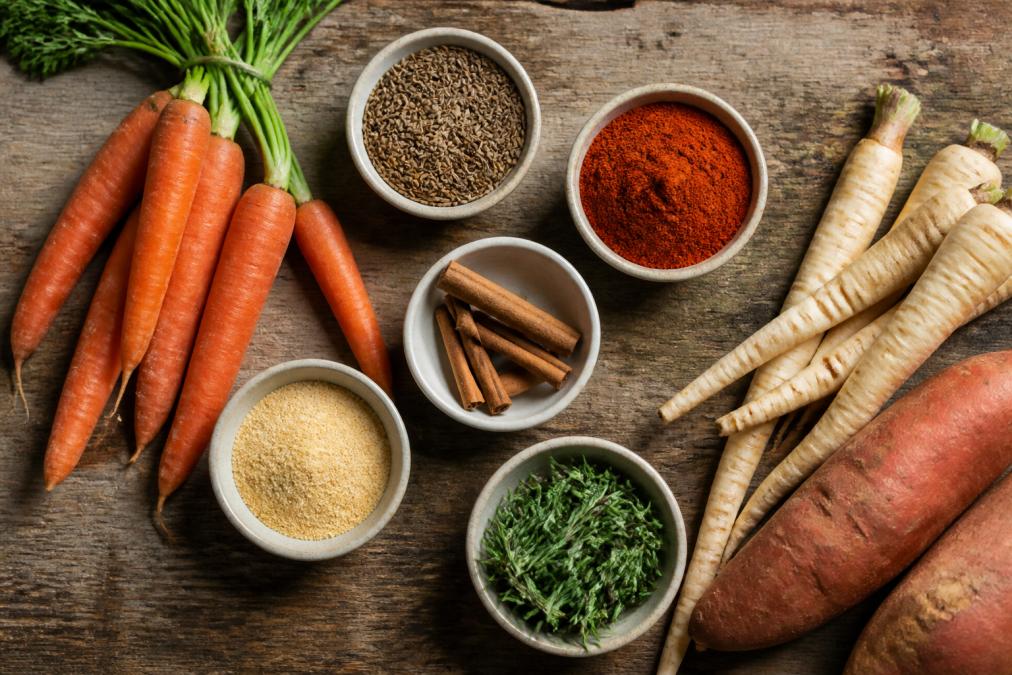
The Pairing Principle: Match Spice to the Root's Sugar and Starch
Root vegetables sit on a spectrum from high-sugar (carrots, sweet potatoes, beets, parsnips) to high-starch (potatoes, turnips, rutabagas). That ratio drives which spices flatter them.
- High-sugar roots caramelize and brown fast. Warm, sweet spices like cinnamon and coriander echo their natural sugars, while earthy spices like cumin and smoked paprika provide contrast so the dish doesn't taste like candy.
- High-starch roots are neutral and absorbent. They need assertive, savory spices, garlic, onion, paprika, black pepper, because there's no built-in sweetness to play against.
- Earthy, bitter roots (beets, turnips, radishes) benefit from acid-forward or citrusy spices like coriander and sumac, which cut through the bitterness rather than masking it.
This is why cumin and carrots work so well together: the cumin's nutty, slightly bitter edge balances the carrot's sugar, and both deepen under dry heat. It's also why plain cinnamon on a potato tastes wrong, there's no sugar to support it.
Earthy and Warm: Cumin, Coriander, and Chile Powder
Cumin is the backbone of savory root vegetable seasoning. Its earthy, slightly nutty flavor deepens as it roasts, and it pairs naturally with the sweetness in carrots and parsnips. Coriander adds a citrusy lift that keeps heavy blends from tasting flat. Chile powder brings heat and color, and it browns beautifully against a hot pan.
A common mistake is adding these spices at the end. Bloom them in oil before the vegetables go in, or toss everything together so the spices coat every surface before heat hits. Fat-soluble flavor compounds in cumin and chile need oil to disperse evenly, dry-dusting them on top leaves patches of raw spice.
Sweet and Aromatic: Cinnamon, Maple, and Brown Sugar
Cinnamon, maple syrup, and brown sugar push roasted roots toward dessert territory, which is exactly the point with sweet potatoes, acorn squash, and beets. A light dusting of cinnamon plus a drizzle of maple creates a glaze that caramelizes at the edges.
Keep the sugar modest. Too much and the pieces scorch before the insides turn tender. A useful rule of thumb: about 1 teaspoon of maple or brown sugar per pound of vegetables is enough to encourage browning without burning (extension.umn.edu). Pair cinnamon with a pinch of salt and a squeeze of citrus to keep the flavor from tipping into pure dessert.
Smoky and Savory: Paprika, Garlic, and Onion
Smoked paprika, garlic powder, and onion powder form the savory trio that most roasted vegetable recipes lean on. Smoked paprika adds a campfire depth, garlic powder fills in the savory base, and onion powder rounds out the finish. This combination works on nearly any root, from potatoes to turnips.
One trade-off worth knowing: garlic and onion powders burn faster than whole spices. If your oven runs hot, add them in the last 10 minutes or drop the temperature to 400°F to avoid a bitter, acrid edge.
How to Roast Root Vegetables Perfectly: A Step-by-Step Method
Perfect roasted root vegetables come down to three things: even cuts, dry surfaces, and a hot pan. Miss any one of them and you get steaming instead of roasting.
Prep, Cut, and Toss for Even Coating
- Scrub and peel as needed. Thin-skinned roots like carrots and potatoes only need a scrub. Beets and turnips benefit from peeling.
- Cut into uniform pieces. Aim for 1-inch cubes or wedges so everything finishes at the same time.
- Dry the pieces thoroughly. Pat them with a towel. Wet vegetables steam rather than brown.
- Toss with oil and spices. Use enough oil to coat every piece, roughly 1 to 2 tablespoons per pound (extension.psu.edu).
- Spread in a single layer. Crowding the pan traps moisture and kills the crispy edges you want.
Oven Temperature and Pan Setup
Preheat the oven to 425°F and place the rack in the middle position (Pork Loin Roast with Veggies). Use a heavy rimmed baking sheet, and give it a few minutes in the oven before the vegetables go on. A hot pan starts the caramelization immediately.
Roasting Time for Root Vegetables: A Quick Chart
Roasting time for root vegetables depends on density and cut size. The chart below covers the most common varieties at 425°F.
| Vegetable | Cut Size | Roasting Time | Doneness Cue |
|---|---|---|---|
| Carrots | 1-inch chunks | 25-30 min | Fork-tender, browned edges |
| Potatoes | 1-inch cubes | 30-35 min | Golden brown, crisp outside |
| Sweet potatoes | 1-inch cubes | 25-30 min | Caramelized, soft center |
| Beets | 1-inch wedges | 35-40 min | Tender, deep color |
| Parsnips | 1-inch chunks | 25-30 min | Golden, slightly crisp |
| Turnips | 1-inch cubes | 30-35 min | Tender, browned |
Toss everything once at the halfway mark. This promotes even browning on all sides.
Savory Spice Blends for Vegetables: DIY and Store-Bought Options
Savory spice blends for vegetables range from simple two-ingredient mixes to full Southwest profiles. You can build your own, or reach for a pre-made blend when you want consistency without measuring.
A basic DIY blend for roasted roots:
- 2 parts smoked paprika
- 1 part cumin
- 1 part garlic powder
- 1 part onion powder
- ½ part black pepper
- ½ part kosher salt
For a Southwest twist, Dam Spice Company's DAM Dirt delivers earthy, smoky depth with a medium-hot kick that works especially well on roasted potatoes and carrots.

Troubleshooting Soggy Vegetables and Other Common Mistakes
Soggy vegetables almost always trace back to moisture, crowding, or low heat. Fix those three variables and the problem disappears.
Other frequent issues:
- Uneven cooking: inconsistent cuts. Fix by cutting everything to the same size.
- Bland flavor: not enough salt, or spices added after roasting instead of before.
- Burnt edges, raw centers: oven too hot or pieces too large. Drop to 400°F and cut smaller.
- Sticking to the pan: not enough oil, or a pan without a rim. Use a rimmed sheet and coat evenly.
Global Flavor Profiles: Southwest, Moroccan, and Beyond
Once you know the three spice families, you can build entire regional profiles on top of them. The trick is to treat each cuisine as a formula, a base of earthy, sweet, and smoky notes plus one signature accent, rather than memorizing a list of spices. Below are four profiles you can apply to any root vegetable, with rough ratios you can scale up or down.
Southwest: Cumin, Chile, and Smoked Paprika
Southwest cooking leans on cumin, chile powder, and smoked paprika, with garlic and oregano in support. A workable home formula:
- 2 parts mild chile powder (ancho or New Mexico)
- 1 part ground cumin
- 1 part smoked paprika
- ½ part garlic powder
- ½ part dried Mexican oregano
- Salt to taste
This profile shines on roasted potatoes, carrots, and sweet potatoes. For an easy Southwest finish, New Mexico Heat brings authentic New Mexico red chile flavor with adjustable heat, and Grumpy Gringo works as a direct salt replacement while adding chile, cumin, and smoke.


Moroccan: Cinnamon, Coriander, and Cumin
Moroccan seasoning (often called ras el hanout) layers warm sweet spices over earthy ones. A simplified version:
- 2 parts ground cumin
- 2 parts ground coriander
- 1 part cinnamon
- 1 part sweet paprika
- ½ part ground ginger
- ¼ part cayenne (or to taste)
- Pinch of ground cloves or allspice
This blend is built for carrots, parsnips, and sweet potatoes. Finish the roasted tray with a squeeze of lemon and a scatter of fresh cilantro or parsley, the acid and herbs are what make the profile read as Moroccan rather than just "warm spice."
Middle Eastern: Sumac, Za'atar, and Cumin
Middle Eastern blends bring sumac and za'atar into the mix. Sumac is tart and lemony, which makes it a natural partner for beets and turnips. A simple approach:
- 2 parts za'atar
- 1 part ground cumin
- 1 part sumac
- ½ part garlic powder
Because za'atar and sumac are delicate, add them after roasting or in the final few minutes. High heat mutes their brightness.
Indian: Garam Masala, Turmeric, and Coriander
Indian-style roasted roots lean on garam masala, turmeric, and coriander, often with a pinch of cayenne and a finish of fresh ginger. Toss 1-inch cubes of sweet potato, carrot, and potato with oil, then season with:
- 2 parts garam masala
- 1 part ground coriander
- ½ part turmeric
- ¼ part cayenne
Roast at 425°F, then finish with a squeeze of lime and plain yogurt on the side. The yogurt's coolness balances the spice and adds a creamy contrast the other profiles don't have.
Conclusion
Getting roasted root vegetables right is mostly about technique: hot oven, dry surfaces, single layer, and bold seasoning applied before the heat hits. The spices do the rest.
Dam Spice Company makes that last step simple with all-natural, additive-free blends crafted in New Mexico, including DAM Dirt, New Mexico Heat, and Grumpy Gringo. No MSG, no fillers, and naturally gluten-free.
Get started with Dam Spice Company and turn an ordinary tray of carrots into something worth talking about.
Frequently Asked Questions
What spices are good to use in roasted root vegetables?
Cumin, smoked paprika, garlic powder, rosemary, thyme, and cinnamon all work well. For a Southwest twist, try chile powder with cumin. Sweet spices like cinnamon and maple pair nicely with carrots and sweet potatoes, while earthy spices like cumin and coriander suit beets and parsnips. Toss with olive oil, kosher salt, and black pepper before roasting at 425°F for crispy edges.
Should you season vegetables before or after roasting?
Season before roasting so the spices have time to bloom and cling to the oil-coated surface. Toss cut vegetables with olive oil, then sprinkle spices and salt. This helps create a flavorful crust and even coating. You can add a finishing sprinkle of fresh herbs or flaky salt after roasting for extra aroma, but the main seasoning belongs in the oven.
What is the best seasoning blend for roasting vegetables?
A simple blend of smoked paprika, garlic powder, onion powder, cumin, kosher salt, and black pepper covers most root vegetables. For a Southwest profile, use chile powder, cumin, and garlic. If you want a store-bought option, Dam Spice Company's Grumpy Gringo or New Mexico Heat blend adds authentic flavor. Always taste and adjust salt and heat to your preference.
How do I keep roasted root vegetables from getting soggy?
Cut vegetables into uniform pieces, dry them well, and toss with just enough oil to coat. Spread them in a single layer on a preheated baking sheet with space between pieces. Roast at high heat (425°F) and avoid overcrowding. If they steam instead of roast, they release moisture and turn soggy. Use a large sheet pan or roast in batches.
USDA food and nutrition guidance on vegetable preparation
FDA guidance on food safety and ingredient labeling
Academy of Nutrition and Dietetics information on cooking methods and nutrient retention