

Crispy Roasted Vegetable Edges: A 2026 Guide
Table of Contents
- Why Your Roasted Vegetables Turn Out Soggy
- The Best Temperature for Roasting Vegetables
- Prep Techniques That Create Crispy Roasted Vegetable Edges
- How to Use Spice Blends for Roasted Vegetables
- Common Mistakes When Roasting Vegetables
- The Science of Maillard Reaction in Home Ovens
- Keeping the Crunch: Post-Roasting Tips
- Conclusion
- Frequently Asked Questions
Last Updated: September 18, 2026
Why Your Roasted Vegetables Turn Out Soggy
If your crispy roasted vegetables keep coming out limp, the culprit is almost always steam. When vegetables crowd a pan, they release moisture faster than the oven can remove it. That trapped water surrounds the food and cooks it instead of browning it. The result is mushy, pale, and disappointing.
Here's the fix in one sentence: give vegetables room, dry them well, and use high heat. Those three things turn soggy into crispy roasted vegetable edges every time.
The good news is that crispy roasted vegetables don't require special equipment. They require a few small changes to how you prep and space your pan.
The USDA's food safety and handling guidance reminds cooks that moisture control matters for both safety and quality. That principle applies directly here.
The Best Temperature for Roasting Vegetables
The best temperature for roasting vegetables is 425°F for most firm vegetables and 400°F for softer ones. High heat drives off surface moisture fast and starts browning before the inside turns to mush.
Why does this range work so well? Two things happen at once:
- Moisture evaporation: The surface dries out quickly.
- Browning: Sugars and proteins react to create color and flavor.
Go too low (under 375°F) and vegetables release water faster than it evaporates. They steam.
Convection vs. Conventional Heat
A convection oven moves hot air around the food. That moving air pulls moisture off the surface faster, so vegetables brown more evenly and often quicker.
Prep Techniques That Create Crispy Roasted Vegetable Edges
The prep step decides whether you get crispy roasted vegetable edges or a soggy pile. Two habits matter most: cutting evenly and drying thoroughly before oil goes on. But the piece most guides skip is that different vegetables hold different amounts of water, and that changes how you prep each one.
Cutting for Uniform Size
Uniform pieces cook at the same rate. A big chunk of carrot next to a thin slice means one burns while the other stays raw.
Drying and Oiling
Pat vegetables completely dry with a clean towel before you do anything else. Surface water is the enemy of browning.
Match Your Prep to the Vegetable's Moisture Content
This is where most guides stay generic, and it's the single biggest reason home cooks get inconsistent results. Vegetables are not interchangeable. High-moisture vegetables release water in the oven and fight against browning; low-moisture vegetables crisp easily but dry out fast. Prep them differently.
| Vegetable type | Examples | Moisture level | Prep adjustment |
|---|---|---|---|
| High-moisture | Zucchini, summer squash, tomatoes, mushrooms, eggplant | High | Salt 15-30 minutes ahead and blot the released water; cut thicker; roast on the upper rack; consider a light cornstarch dust |
| Medium-moisture | Bell peppers, onions, broccoli, cauliflower, green beans | Moderate | Dry well, cut uniform, standard oil and 425°F |
| Low-moisture / dense | Potatoes, sweet potatoes, carrots, parsnips, beets, winter squash | Low | Cut smaller for more surface area; oil generously; give extra time; they tolerate higher heat |
| Leafy / delicate | Kale, Brussels sprout leaves, asparagus tips | Variable | Dry aggressively; roast hot and fast; watch closely, they go from crisp to charred quickly |
A few practical notes on that table:
- Salting high-moisture vegetables ahead pulls water to the surface through osmosis. Blot it off before oiling. This one step is the difference between roasted zucchini and steamed zucchini.
- Cornstarch or arrowroot, a light dusting (about a teaspoon per pound, tossed after oiling), gives high-moisture vegetables a starch coating that crisps before the interior releases its water. It's a common restaurant trick and works in a home oven.
- Don't mix moisture classes on one pan if you can avoid it. Zucchini next to potatoes means the zucchini steams while the potatoes are still firm. If you must combine, give the dense vegetables a head start.
A Note on Salt Timing
Salting before roasting seasons the interior, but on high-moisture vegetables it also draws water to the surface. For those, salt early and blot. For low-moisture vegetables, salting right before they go in is fine and avoids any surface weeping.
How to Use Spice Blends for Roasted Vegetables
The best time to season roasted vegetables is right before they go in the oven, not after. Oil helps the seasoning stick, so toss everything together in a bowl first.
Here's a simple order that works:
- Dry the vegetables well.
- Toss with oil until lightly coated.
- Add your spice blend and toss again.
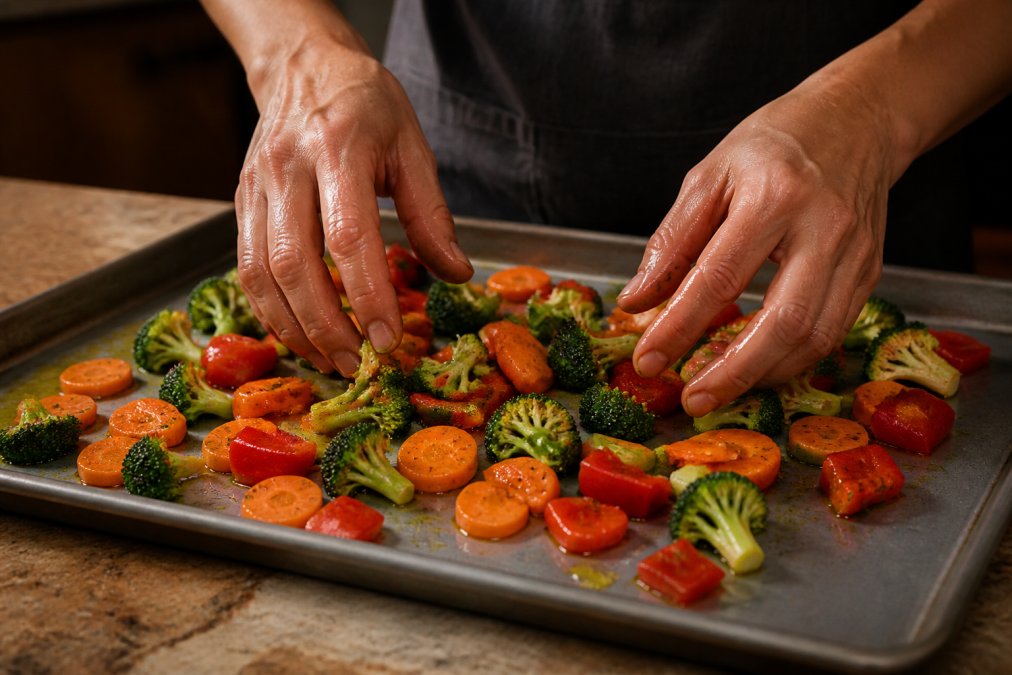
- Spread on the pan in a single layer.
Common Mistakes When Roasting Vegetables
Even good cooks hit the same five problems. Fix these and your results change fast.
- Overcrowding the pan: Vegetables touch and steam. Use two pans if needed.
- Wet vegetables: Skipping the drying step guarantees sogginess.
- Wrong temperature: Too low means steaming, not roasting.
- Not preheating: A cold oven starts vegetables slow and releases moisture.
- Forgetting to flip: One side browns while the other stays pale.
The Science of Maillard Reaction in Home Ovens
The Maillard reaction is the chemical process that browns food and builds deep, savory flavor when proteins and sugars meet high heat. It's why a seared steak tastes different from a boiled one, and why properly roasted vegetables taste nutty and rich.
- Dry surface: Water blocks browning. This is why drying matters so much.
- Enough heat: The reaction speeds up above roughly 300°F.
Keeping the Crunch: Post-Roasting Tips
Crispy edges don't last forever, but a few habits keep them around longer. The biggest one: don't cover the pan. A lid or foil traps steam and undoes all your work in minutes.
Cool on a Rack, Not a Pile
When vegetables come out of the oven, the pan is still hot and the undersides are still releasing steam. If you slide them into a bowl or pile them on a plate, the bottom layer steams the top layer.
Two better options:
- Leave them on the pan in a single layer if you're serving within a few minutes. The hot metal keeps the undersides crisp.
- Transfer to a wire cooling rack if you need to free up the pan or hold them longer. Air circulates under the rack, so no surface sits against a hot, moist pan.
Holding and Reheating Without Losing the Crust
If dinner is running late, you have a few ways to hold roasted vegetables without turning them soggy:
- Warm oven, uncovered: Set the oven to its lowest setting (usually 170°F-200°F) and leave the pan uncovered. This keeps them warm without trapping steam.
- Brief return to high heat: If they've cooled and softened, spread them back on a sheet pan and give them 5-8 minutes at 425°F. This drives off surface moisture and re-crisps the edges.
- Never the microwave. Microwaves heat by exciting water molecules, which is the exact opposite of what you want. A minute in the microwave can undo a perfectly roasted batch.
- Skillet re-crisp: For small portions, a dry skillet over medium-high heat for 2-3 minutes brings back some edge crunch, especially on dense vegetables.
Serving and Finishing Touches
Timing matters more than technique here. Crispy edges are at their peak in the first 5-10 minutes out of the oven. If you can, plate and serve within that window.
- A light sprinkle of a crunchy blend like Everything Bagel seasoning adds seeds and flakes that stay crisp.
- Toasted nuts, breadcrumbs, or fried shallots add crunch without adding moisture.
- Skip wet sauces and glazes at plating, serve them on the side or drizzle at the last second so they don't soak into the crust.
Conclusion
Getting crispy roasted vegetable edges comes down to controlling moisture and heat. Dry your vegetables, give them room, roast at a high temperature, and let the Maillard reaction do its work. The difference between soggy and crispy is rarely about skill. It's about a few small choices.

Frequently Asked Questions
What is the secret to crispy roasted vegetables?
The secret is high heat and dry surfaces. Preheat your oven to 425°F, pat vegetables completely dry, and toss with just enough oil to coat. Spread them in a single layer on a metal baking sheet with space between pieces. This lets moisture evaporate quickly so edges can brown instead of steam. A sprinkle of a flavorful spice blend like Dam Spice Company's SPG adds savory depth without added moisture.
What is the single ingredient you need for the crispiest roasted vegetables?
Oil is the single most important ingredient. It conducts heat, helps vegetables brown, and prevents sticking. Use a high-smoke-point oil like olive oil or avocado oil. Toss vegetables until every piece is lightly coated, but avoid over-oiling, which can make them greasy. For extra flavor, pair the oil with a spice blend such as Dam Dirt, which adds smoky, earthy notes that complement the caramelized edges.
How to crisp up roast vegetables?
If your roasted vegetables come out soft, try these fixes: increase the oven temperature to 450°F, use a metal baking sheet instead of glass, and make sure vegetables are in a single layer without crowding. You can also flip them halfway through roasting. For already-cooked vegetables, return them to a hot oven for 5-10 minutes to re-crisp. A light dusting of Everything Bagel seasoning adds crunch and flavor.
How to roast vegetables without getting soggy?
Sogginess comes from steam. To avoid it, dry vegetables thoroughly after washing, cut them into uniform pieces, and don't overcrowd the pan. Use a preheated baking sheet and avoid covering the pan with foil. Choose vegetables with lower moisture like carrots, Brussels sprouts, and potatoes. If using watery vegetables like zucchini, salt them first to draw out moisture, then pat dry before roasting.