

How to Identify MSG in Spices: A Practical Guide
Table of Contents
- What Is MSG and Why It Matters in Spices
- How to Read Spice Ingredient Labels
- Hidden Sources of MSG in Food and Spice Blends
- How to Identify MSG in Spices at the Store
- Clean Label Spice Brands and What to Look For
- Understanding Natural Glutamate vs. Added MSG
- Sensitivity vs. Allergy: What the Difference Means
- Conclusion
Last Updated: August 30, 2026
What Is MSG and Why It Matters in Spices
Monosodium glutamate (MSG) is a flavor enhancer derived from glutamic acid, a naturally occurring amino acid. When you see MSG listed on a label, you're looking at the sodium salt form of free glutamate, the compound responsible for the savory taste known as umami, sometimes called the fifth taste.
Why does this matter for spices? Many commercial spice blends, seasoning mixes, and flavor enhancers contain MSG or its hidden cousins to boost taste intensity without adding salt or sugar. The challenge is that MSG doesn't always appear on labels with that straightforward name. Food manufacturers use alternative ingredient names that are technically accurate but obscure the presence of added glutamate.
Understanding how to identify MSG in spices puts you in control of what goes into your cooking. Whether you're sensitive to MSG, prefer clean label products, or simply want transparency in your ingredients, learning to decode spice labels and recognize hidden sources of free glutamate is a practical skill that takes just minutes to master.
At Dam Spice Company, we believe your spice cabinet should reflect what you actually want to cook with. Our all-natural, additive-free spice blends contain zero MSG, no hidden names, no flavor enhancers, just authentic Southwest flavors that stand on their own. But if you're shopping across multiple brands, knowing how to read labels yourself gives you the confidence to make informed choices every time.
How to Read Spice Ingredient Labels
The ingredient list is your most reliable tool for spotting MSG and related compounds. Unlike marketing claims on the front of the package, ingredient lists are regulated and must disclose what's actually inside.
Start by understanding label hierarchy: ingredients are listed in descending order by weight. The first few ingredients make up the bulk of the product. If you see MSG, hydrolyzed vegetable protein, or autolyzed yeast listed early, that's a significant amount. Items listed near the end contribute minimal weight but may still be present.
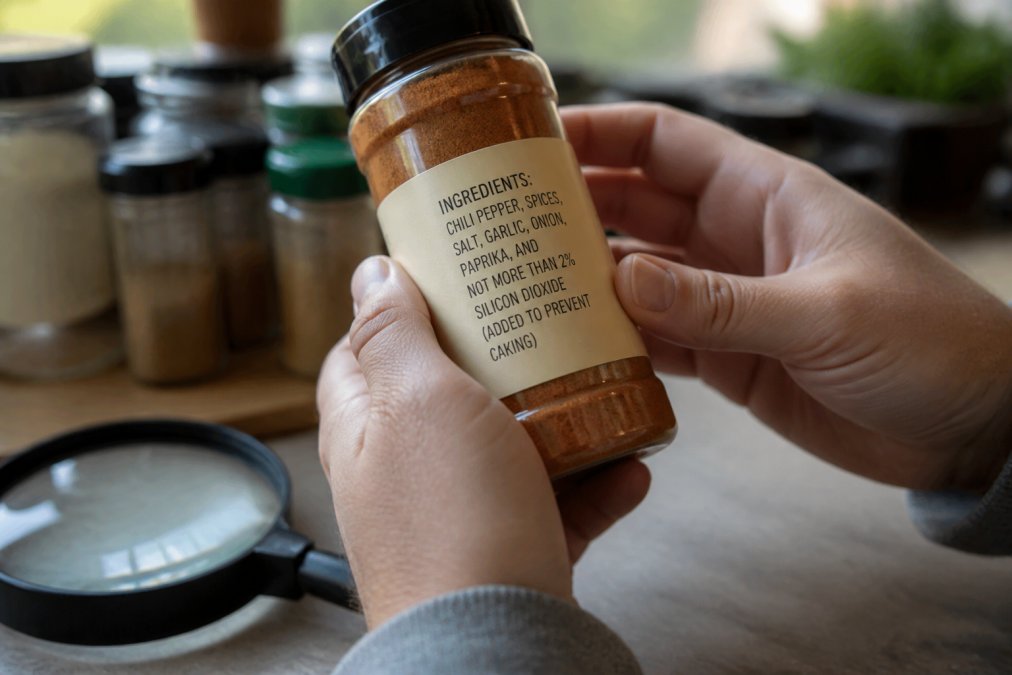
Direct MSG Listings
The most straightforward case is when MSG appears directly on the label as "monosodium glutamate" or sometimes "MSG." Not all manufacturers hide it, some list it plainly because it's a legal food additive. If you're avoiding MSG entirely, this is the easiest red flag to spot.
However, direct listings are becoming less common as consumer awareness grows. Many manufacturers have shifted to alternative names that achieve the same flavor-boosting effect while avoiding the "MSG" label that some consumers actively avoid.
Decoding Flavor Enhancer Terms
This is where label reading gets practical. Several ingredient names are legal ways to add free glutamate without calling it MSG. Learning to recognize these terms transforms you from a passive reader into an active decoder.
Hydrolyzed vegetable protein (HVP) is processed plant material broken down into amino acids, including free glutamate. It's a common ingredient in spice blends, meat rubs, and seasoning mixes. The hydrolyzation process creates free glutamate that functions identically to MSG in your body (peer-reviewed research).
Autolyzed yeast and yeast extract are byproducts of beer brewing where yeast cells break down naturally, releasing free glutamate. These appear frequently in barbecue rubs and savory seasoning blends because they deliver that umami punch consumers expect.
Sodium caseinate and calcium caseinate are milk proteins that contain free glutamate. You'll find these more often in dairy-based seasonings or blends designed for specific cuisines.
The pattern here is consistent: any ingredient that involves breaking down proteins, whether through hydrolyzation, fermentation, or enzymatic processes, creates free glutamate. If you're trying to identify MSG in spices, watch for processing language like "hydrolyzed," "autolyzed," "fermented," or "enzyme-modified."
Hidden Sources of MSG in Food and Spice Blends
The real challenge isn't identifying obvious MSG, it's recognizing where free glutamate hides in plain sight within legitimate-sounding ingredients.
Common Hidden Names for MSG
Beyond the flavor enhancer terms, several other ingredients contain significant amounts of free glutamate but don't announce it on the label. Textured vegetable protein (TVP) and soy protein isolate are common in meat seasonings and barbecue rubs. Both are processed to extract protein, a process that creates free glutamate.
Spice blends themselves often contain ingredients that add glutamate. A "garlic powder blend" might include hydrolyzed garlic, not just dehydrated garlic. A "steak seasoning" might combine salt, pepper, and hydrolyzed plant proteins. The individual components might seem innocent until you examine the full ingredient statement.
Bouillon, broth powders, and stock bases are almost universally high in free glutamate. If your spice blend includes any of these as a base, you're getting MSG-like compounds regardless of other ingredients.
Processed Ingredients That Often Contain Free Glutamate
Certain categories of ingredients are reliable sources of added glutamate. Yeast-based ingredients, whether listed as nutritional yeast, yeast extract, or autolyzed yeast, are fermented products where free glutamate develops naturally. Manufacturers use these because they're inexpensive and highly effective at creating savory flavor.
Tomato powder and tomato concentrate contain naturally occurring glutamate, but when they're processed or combined with hydrolyzed proteins, the free glutamate content increases significantly. Check whether a tomato-based spice blend also includes hydrolyzed ingredients.
Cheese powders and dairy derivatives like sodium caseinate contain free glutamate from milk proteins. These appear in ranch seasonings, pizza blends, and savory mixes.
The common thread: any ingredient that's been processed, fermented, or broken down is a potential source of free glutamate. Whole spices, peppercorns, cumin seeds, dried chiles, do not contain added glutamate. The processing happens to other ingredients in the blend.
How to Identify MSG in Spices at the Store
Real-world label reading happens in the spice aisle with limited time and imperfect lighting. Here's a practical system that works.
The 30-Second Label Scan Method
Pick up the spice jar and flip it to the ingredient list. Scan for these red-flag terms in order of likelihood:
- MSG, monosodium glutamate, stop here if you see it
- Hydrolyzed vegetable protein, hydrolyzed plant protein, hydrolyzed soy protein, very common
- Autolyzed yeast, yeast extract, nutritional yeast, fermented sources
- Sodium caseinate, calcium caseinate, dairy proteins
- Textured vegetable protein, soy protein isolate, processed plant proteins
- Bouillon, broth powder, stock base, almost always contain glutamate
If none of these appear in the first five ingredients, the blend likely contains minimal added glutamate. If they appear further down, the amount is smaller but still present.
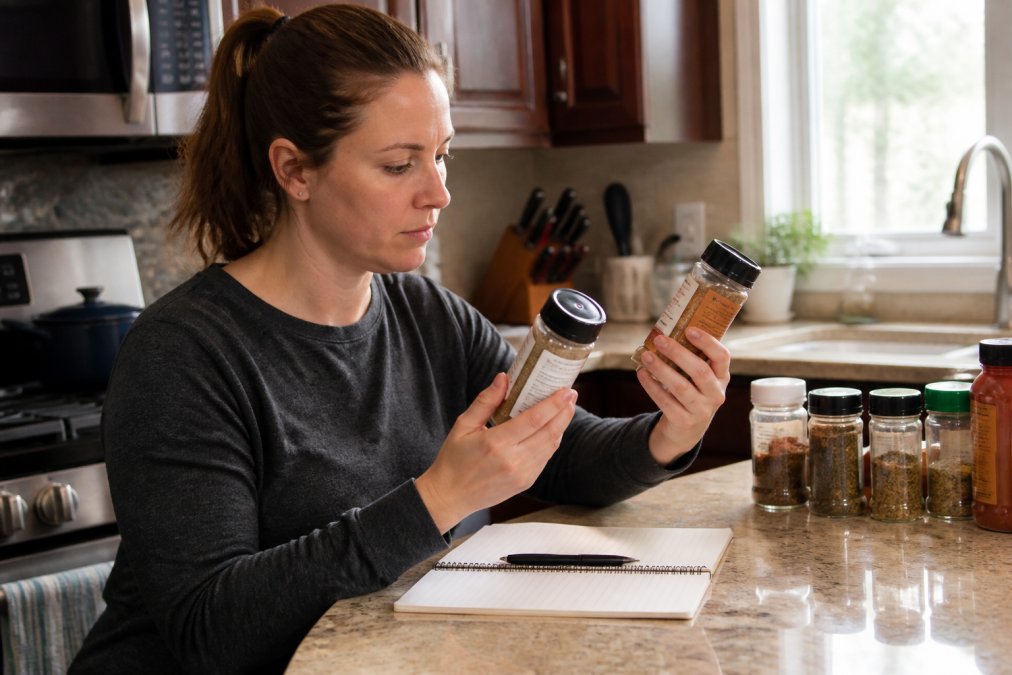
Asking Questions Before You Buy
When you're unsure, ask the retailer or manufacturer directly. Many spice companies maintain customer service lines or email addresses. A legitimate question deserves a straight answer.
If shopping online: Check the product page for detailed ingredient information. Reputable brands provide full ingredient lists, manufacturing information, and sometimes even contact details for questions. If a brand won't provide complete ingredient transparency, that's worth noting.
If shopping in-store: Ask the store employee if they have access to the full ingredient list. Some bulk spice sections keep detailed information sheets. Specialty spice retailers often have more detailed knowledge than mass-market stores.
Direct manufacturer contact: Call or email the brand. Ask specifically: "Does this spice blend contain MSG, hydrolyzed vegetable protein, autolyzed yeast, or any other sources of free glutamate?" A company committed to transparency will answer clearly. Vague responses or deflection is itself informative.
Clean Label Spice Brands and What to Look For
When evaluating spice brands for MSG-free options, look for these markers of transparency and clean ingredients.
Full ingredient disclosure, The brand lists every single ingredient, including any spice blend sub-components. If a label says "spice blend" without breaking down what's in it, that's a red flag. You can't identify MSG in spices if the manufacturer won't tell you what's actually there.
Minimal ingredient count, Authentic spice blends don't need twenty ingredients. A quality barbecue rub might contain eight to twelve whole spices, salt, and maybe a binder. Anything significantly longer likely includes flavor enhancers, fillers, or processing aids.
Whole spices as the base, Look for ingredient lists that start with recognizable spice names: cumin, chili powder, garlic, paprika, oregano. These are whole spices or simple dehydrated versions. If the list starts with hydrolyzed proteins or flavor enhancers, the brand is building from processing aids rather than actual spices.
Third-party certifications, Some brands pursue certifications like Non-GMO Project Verified or organic certification. While these don't explicitly guarantee MSG-free status, they indicate a commitment to ingredient transparency and often require full disclosure.
Brand transparency about sourcing, Companies that are proud of their ingredients talk about where they come from. Dam Spice Company sources authentic New Mexico spices and produces all blends right here in New Mexico, with zero additives or hidden ingredients. When a brand is transparent about sourcing and manufacturing location, that transparency usually extends to ingredient honesty.
Understanding Natural Glutamate vs. Added MSG
This distinction matters because it changes how you evaluate spice blends.
Natural glutamate exists in many whole foods: tomatoes, mushrooms, aged cheeses, fermented products like soy sauce, and some spices. Tomato powder contains natural glutamate. Garlic contains natural glutamate. These are present in the food itself, not added during processing.
Added MSG or free glutamate comes from processing ingredients to extract or concentrate glutamic acid. Hydrolyzed vegetable protein is processed to create free glutamate. Autolyzed yeast is fermented to release free glutamate. These are added to enhance flavor beyond what whole spices provide.
The key difference: natural glutamate is bound within the food's structure. Added glutamate is free and bioavailable, your body absorbs it more rapidly. For people sensitive to MSG, the distinction matters significantly. For others, the concern is less about the glutamate itself and more about knowing exactly what's in their food.
When you're evaluating spice blends, the question isn't "does this contain any glutamate?", many whole spices do naturally. The question is "has the manufacturer added processed sources of free glutamate?" A blend of whole spices with natural glutamate is fundamentally different from a blend built on hydrolyzed proteins and autolyzed yeast.
Sensitivity vs. Allergy: What the Difference Means
Understanding the distinction between MSG sensitivity and true allergies helps you interpret your own reactions and shop with appropriate caution.
MSG sensitivity (sometimes called "MSG symptom complex") describes reactions some people experience after consuming MSG. Common symptoms include headaches, flushing, tingling sensations, or digestive discomfort. These reactions are real and worth taking seriously, but they're not immune responses. Sensitivity varies widely between individuals, some people notice no effect, others react noticeably.
True food allergies involve immune system activation. Allergic reactions to spices themselves are uncommon, but they do occur with certain spices like sesame or mustard (the NIH). These reactions are different from MSG sensitivity and require different management strategies.
If you suspect MSG sensitivity, the practical approach is elimination and observation. Remove foods with added MSG and processed glutamate sources for two to three weeks, then reintroduce them deliberately. Your own experience is the most reliable indicator.
If you have a documented spice allergy, that's a different issue requiring careful label reading for the specific allergen. Spice blends sometimes contain unexpected ingredients, a "chili powder" might include wheat flour as a binder, for example.
The reason this matters for identifying MSG in spices: if you're managing sensitivity, you want to avoid processed sources of free glutamate. If you have an allergy, you're looking for a specific allergen. These require different label-reading strategies.
Choosing spices with confidence means knowing exactly what you're bringing into your kitchen. The labeling system isn't always transparent, but once you learn to recognize the common names for added glutamate and the processing techniques that create free glutamate, you can make informed decisions in minutes.
Dam Spice Company's all-natural, additive-free spice blends eliminate this guesswork entirely. Every blend contains nothing but authentic Southwest spices, no MSG, no hydrolyzed proteins, no hidden flavor enhancers. When you cook with our blends, you're getting pure flavor from real ingredients, crafted right here in New Mexico. Add to cart and experience the difference that transparency and quality ingredients make in your everyday cooking.
Frequently Asked Questions
Q: What are the common names for MSG on food labels?
A: MSG appears on labels as monosodium glutamate, but it also hides under names like hydrolyzed vegetable protein, autolyzed yeast, yeast extract, sodium caseinate, and textured vegetable protein. The FDA requires monosodium glutamate to be listed by name, but these other sources of free glutamate may not carry the MSG label. Check ingredient lists carefully for these terms, especially in spice blends and seasoning mixes designed for convenience.
Q: How can I tell if a spice blend contains hidden MSG?
A: Scan the ingredient list for both direct MSG listings and hidden names like yeast extract, hydrolyzed vegetable protein, and autolyzed yeast. Look for vague terms such as 'natural flavors' or 'flavor enhancers,' which can mask glutamate sources. Contact the manufacturer directly if the label is unclear. Choose clean label spice brands that explicitly state 'no MSG' and list only recognizable spices and salt. All-natural spice companies typically avoid these additives entirely.
Q: Why do some spice companies use MSG in their blends?
A: MSG enhances the perception of savory, umami flavors at a lower cost than using more expensive spices. Manufacturers add it to make blends taste richer and more satisfying with smaller amounts of actual spice. Authentic Southwest and New Mexico spice blends rely on bold, natural spice profiles rather than flavor enhancers to deliver complex taste.
Q: Is there a difference between MSG sensitivity and a true MSG allergy?
A: MSG sensitivity causes temporary reactions like headaches, flushing, or numbness after consuming it, but it is not a true allergic reaction. True allergies trigger immune system responses and can be life-threatening. Most people can tolerate MSG without issues. If you experience consistent reactions after eating MSG-containing foods, avoiding it makes sense for comfort, even if it's not a clinical allergy. Reading labels carefully helps you identify and avoid MSG if you're sensitive to it.
This article was written using GrandRanker