

How to Store Artisanal Spice Blends: A Step-by-Step Guide
Table of Contents
- Why Proper Storage Matters for Artisanal Spice Blends
- Best Containers for Spice Storage
- Step-by-Step: How to Store Artisanal Spice Blends
- Understanding Shelf Life of Spice Blends
- Signs That Spices Have Gone Bad
- Common Storage Mistakes to Avoid
- Frequently Asked Questions
Last Updated: August 31, 2026
Why Proper Storage Matters for Artisanal Spice Blends
Storing artisanal spice blends correctly is the difference between vibrant, aromatic seasonings that elevate your cooking and dull, stale powders that disappoint. The moment you open a jar of premium spices, oxidation begins. Exposure to air, light, and heat degrades the volatile oils that give these blends their complexity and punch.
Most home cooks treat spice storage as an afterthought, tossing jars into cabinets above the stove or leaving lids loose between uses. Within months, those carefully crafted blends lose potency. At Dam Spice Company, we craft spice blends with precision, all-natural, additive-free ingredients sourced right here in New Mexico. But even the finest blend deteriorates without proper storage. The shelf life of spice blends depends almost entirely on how you protect them from their three enemies: oxygen, light, and heat.
This guide walks you through exactly how to store artisanal spice blends so they maintain their flavor profile and aromatic qualities for months. You'll learn which containers actually work, why desiccants matter, where to keep your spices, and how to spot degradation before it ruins a meal.
Best Containers for Spice Storage
The container you choose determines how well your spices resist oxidation and moisture.
Glass Jars with Airtight Seals
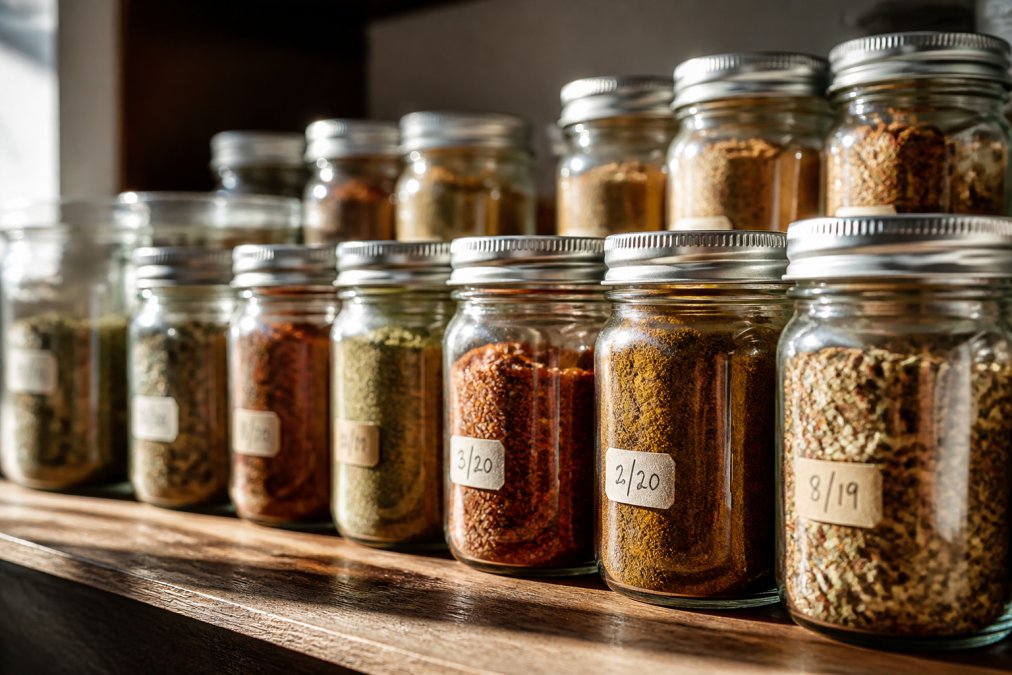
Glass is the gold standard for spice storage. It's inert, doesn't absorb odors or flavors, and allows you to see what's inside without opening the jar. Look for jars with airtight lids that create a complete seal when closed. Mason jars work well if the lid seals properly. The key is the gasket, that rubber or silicone ring that creates the moisture-proof barrier. Test your jar before committing: close the lid, turn it upside down, and see if any air escapes.
Food-grade glass jars with snap or screw-on lids that click into place are ideal. Avoid clear glass if possible. Opaque or dark-tinted glass blocks light while still allowing you to see contents through the top.
Avoiding Light and Heat Damage
Light exposure is one of the fastest ways to degrade spice quality. The volatile oils that create flavor and aroma are sensitive to UV radiation. Heat amplifies oxidation. Spices stored near the stove, oven, or in cabinets above appliances will lose potency rapidly. Temperature fluctuations cause moisture to condense inside jars, leading to clumping and mold growth.
The ideal storage location is cool and dark. A pantry away from heat sources is perfect. The back of a lower cabinet works well. Avoid windowsills, countertops near appliances, and anywhere that receives direct or indirect sunlight.
If you must keep spices visible on open shelving, use opaque containers or store them in a closed box. Consider the cool dry place not as a suggestion but as a requirement for maintaining shelf stability.
Step-by-Step: How to Store Artisanal Spice Blends
Storing artisanal spice blends properly involves five deliberate steps. Follow this process when you receive new spices or transfer existing ones to better containers.
Step 1: Choose Your Storage Container
Select a glass jar with an airtight seal. Check the lid mechanism to ensure it creates a hermetic seal. Ensure the glass is either opaque or dark-tinted to block light. Clean the jar thoroughly with warm water and dry it completely. Let it air dry for at least 30 minutes after washing.
Step 2: Add Desiccant for Moisture Control
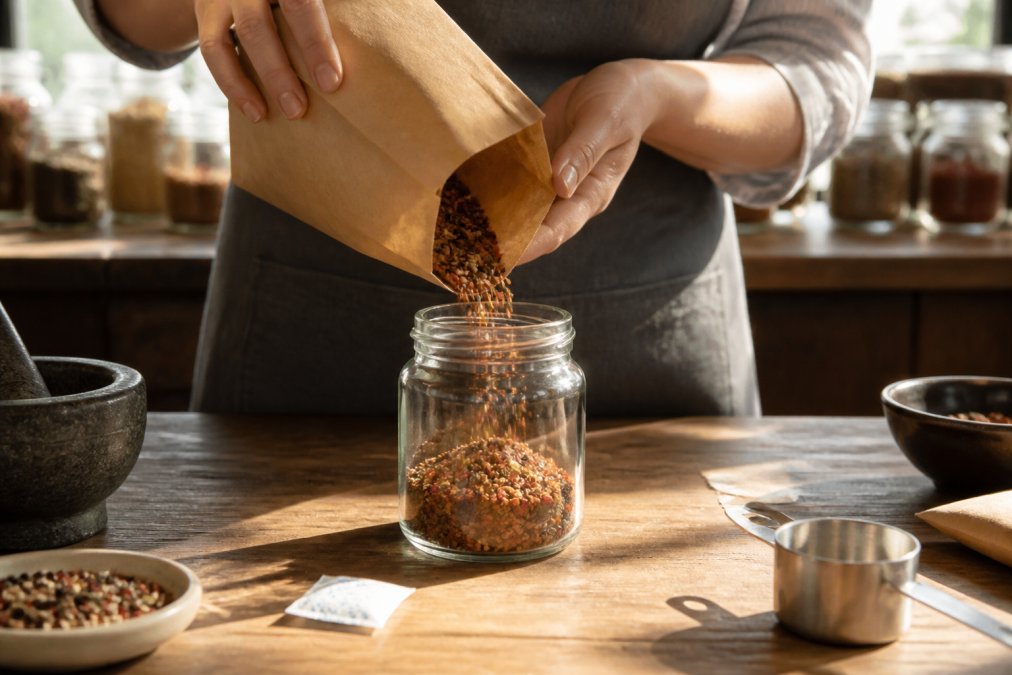
Desiccants absorb excess moisture inside the jar, preventing clumping and caking. Silica gel packets are the most common choice (the FDA). Ensure the packets are food-grade and clearly labeled as safe for food storage.
Place the desiccant packet at the bottom of the jar before adding your spices. This positioning keeps it out of direct contact with the blend while maximizing moisture absorption throughout the container.
Step 3: Label and Date Your Blends
Write the name of the blend and the date you stored it on a label. Use a permanent marker on masking tape or purchase adhesive labels designed for kitchen use. Place the label on the front of the jar where it's easy to read. Dating your spices is the only way to know when a blend has reached the end of its shelf life.
Step 4: Find the Right Storage Location
Place your jars in a cool, dark location away from heat sources. The pantry is ideal. A cabinet in a cool corner of the kitchen works well. Avoid cabinets above or near the stove, oven, or dishwasher. Temperature consistency matters, spices stored in a location with stable temperatures last longer than those in areas with daily fluctuations.
Organize your jars so you can access them without disturbing others. When you need a specific blend, you shouldn't have to move five other jars to reach it. Good organization prevents unnecessary opening and closing of containers.
Understanding Shelf Life of Spice Blends
Most whole spices maintain quality for two to three years when stored properly (usda.gov). Ground spices and blends have shorter shelf lives, typically one to two years (the FDA). Blends that contain pre-ground ingredients degrade faster than those made from whole spices that are ground fresh.
Grinding increases surface area, which accelerates oxidation. The first few months after purchase are when your blend is at peak potency. After six months of proper storage, you'll notice subtle changes. By the one-year mark, many blends have lost noticeable potency.
Opened jars degrade faster than unopened ones. Every time you open a container, you expose the contents to fresh air and potential moisture. Minimize opening frequency by measuring out what you need and closing the lid immediately.
Signs That Spices Have Gone Bad
Spices don't go bad in the way fresh food does. They won't make you sick. But they will lose potency and flavor, rendering them nearly useless in cooking.
Color fading is the first visual indicator. Fresh spice blends have vibrant, saturated colors. Over time, especially with light exposure, colors become dull and muted. A bright red cayenne-based blend that fades to a pale rust color has lost significant potency.
Loss of aroma is the most reliable test. Open the jar and smell the contents. If the scent is weak or barely detectable, the blend has degraded. Fresh artisanal spices have a strong, complex aroma that hits you immediately.
Clumping and caking indicate moisture has entered the jar. This happens when the hermetic seal fails or desiccants haven't been used. Clumped spices are difficult to measure and distribute evenly in cooking.
Flavor testing is the final check. Add a tiny pinch to your tongue. Fresh spices deliver immediate, bold flavor. Degraded blends taste muted or flat. A blend that shows multiple signs of degradation should be replaced.
Common Storage Mistakes to Avoid
Understanding what not to do is as important as knowing what to do.
Storing spices above the stove is the single most common error. Heat rises, and every time you cook, your spices get warmed. This accelerates oxidation and can cause moisture to condense inside jars. Move your spices to a cool location immediately if they're currently stored here.
Using clear containers without shielding from light exposes your blends to constant light damage. Opaque containers or storage in a closed cabinet or drawer eliminates this problem.
Leaving jar lids loose defeats the purpose of airtight storage. Make sure every lid is sealed completely before storing.
Skipping desiccants is a false economy. Without them, moisture accumulates and spices clump.
Storing spices in plastic containers is problematic. Plastic can absorb odors and flavors, contaminating future contents. It's also more porous than glass, allowing air and moisture to pass through more easily.
Grinding spices ahead of time reduces shelf life dramatically. If you grind your own, do it just before use.
Transferring spices without cleaning containers introduces old flavors and potential contaminants. Always clean and dry containers thoroughly before transferring new spices.
Ignoring expiration dates leads to using old, degraded spices. Check your labels regularly and replace blends that have exceeded their shelf life.
Storing artisanal spice blends properly transforms how you cook. When your spices maintain their flavor profile and aromatic qualities, every dish tastes better. The bold, complex flavors you're paying for actually make it to your plate instead of fading during months of improper storage.
Start with quality containers, glass jars with airtight seals and dark tinting. Add desiccants to control moisture. Store in a cool, dark location away from heat. Label with dates so you know when to replace blends. These steps take minimal time but deliver maximum impact on your cooking results.
Dam Spice Company's all-natural, additive-free blends like our Hamburger Seasoning and Dam Butt Rub are crafted with premium New Mexico spices designed to deliver bold, savory flavor. Proper storage ensures those carefully balanced flavors stay vibrant from the first use to the last. Get started with Dam Spice Company and experience how authentic Southwest seasoning transforms your everyday cooking into something memorable.


Frequently Asked Questions
Q: How should I store spice mixes to keep them fresh?
A: Store spice blends in airtight containers made of glass or food-grade plastic, away from direct light and heat sources. Keep them in a cool, dry place like a pantry or cabinet. Add a small food-grade desiccant packet to prevent moisture from degrading the volatile oils that give spices their potency and flavor profile. Ensure containers have hermetic seals and label them with the purchase date to track shelf life.
Q: What's the shelf life of spice blends compared to whole spices?
A: Ground spice blends typically maintain optimal flavor for 6 to 12 months when stored properly in airtight containers, while whole spices can last 2 to 3 years. The grinding process exposes more surface area to oxidation and moisture, reducing shelf stability. Proper storage with desiccant and consistent cool temperatures extends shelf life significantly.
Q: How can I tell if my spice blend has lost its potency?
A: Signs that spices have gone bad include a dull or faded color, weak aroma when you open the jar, visible clumping or caking (indicating moisture exposure), or an off or musty smell. Test potency by smelling the blend, fresh spices have a strong aromatic profile. If the flavor seems muted when you use it in cooking, the blend has likely lost potency due to oxidation or heat exposure. Replace blends showing these signs of degradation.
Q: Should I store spices in the freezer or refrigerator?
A: Freezer storage can extend shelf life if done correctly, but it's not necessary for most home cooks. The key is preventing moisture condensation when removing jars from cold storage. If you freeze spices, use airtight, moisture-proof containers and allow them to reach room temperature before opening to avoid condensation. A cool, dry pantry with stable temperatures is usually sufficient for maintaining freshness and avoiding cross-contamination with other foods.
This article was written using GrandRanker