

Simple Vegetable Seasoning Ideas for Beginners
Table of Contents
- Start With a Simple Vegetable Seasoning Formula
- How to Season Vegetables for Roasting, Grilling, and More
- Homemade Vegetable Seasoning Blends You Can Mix in Minutes
- Best Seasonings for Vegetables, Matched by Type
- Seasoning for Roasted Vegetables: Getting the Ratios Right
- Low-Sodium, Salt-Free, and Dietary Adaptations
- Common Beginner Mistakes and How to Fix Them
- Conclusion
- Frequently Asked Questions
Last Updated: October 8, 2026
Start With a Simple Vegetable Seasoning Formula
Most beginners overthink vegetable seasoning, then under-season the pan. The fix is a three-part base: salt, pepper, and fat.
At Dam Spice Company, we blend seasonings in New Mexico, and the lesson we repeat most is that good vegetables rarely need a complicated spice rack, just salt at the right moment, fresh pepper, and enough oil to carry flavor.
The Three-Part Base: Salt, Pepper, and Fat
Salt seasons the vegetable itself. Pepper adds bite and aroma. Fat carries both into the flesh and helps the surface brown instead of steam.
Use kosher salt for even coverage and grind pepper fresh, since pre-ground loses its punch fast. Olive oil works for most roasting and sautéing; avocado oil handles higher heat without smoking.
How Much Seasoning Per Pound of Vegetables
A reliable starting ratio is 1/2 to 3/4 teaspoon kosher salt per pound of raw vegetables, plus a light grind of pepper and 1 to 2 tablespoons of oil.
Dense vegetables like potatoes and carrots sit at the higher end; leafy greens and zucchini need less, since they release water and shrink.
Season in layers: half before cooking, taste after, then adjust. You can always add salt, never take it back.
How to Season Vegetables for Roasting, Grilling, and More
Cooking method changes how seasoning behaves, not just how much you use. High, dry heat concentrates flavor and browns the surface, so paprika, cumin, and chile powder shine. Moist heat dilutes seasoning, so use a heavier hand or a finishing sprinkle.
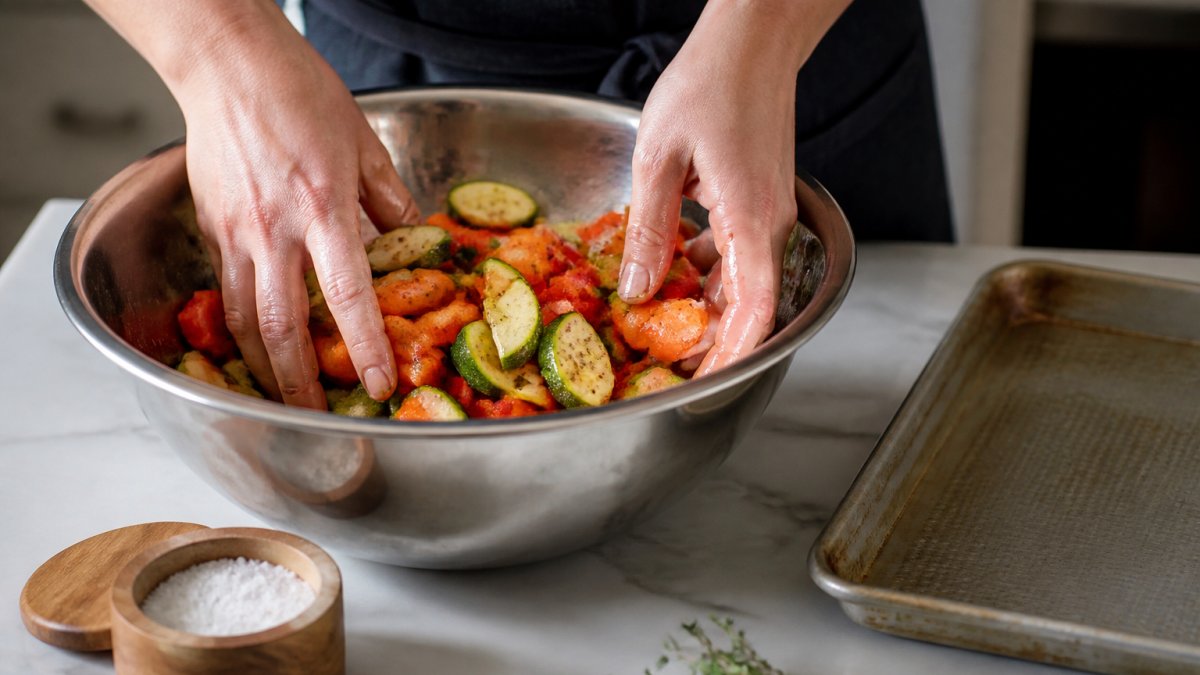
Steaming, sautéing, microwaving, and air-frying each have their own seasoning logic. Here is the breakdown, with quantities you can use.
Roasting at 425°F
Toss one pound of cut vegetables with 1 to 2 tablespoons oil, 1/2 to 3/4 teaspoon kosher salt, and 1 to 2 teaspoons of your blend. Spread in a single layer and roast at 425°F.
Season before cooking here: dry oven heat locks in spices and browns the surface. Season after and it sits on top instead of melding in.
Grilling Over Medium-High Heat
Brush vegetables with oil first, then season. Loose powder falls through the grate, so press seasoning in by hand or toss in a bowl before grilling over medium-high heat. Add a second light dusting after flipping to replace what fell off and add fresh aroma.
For skewers, season the pieces before threading. For whole ears of corn or thick planks of zucchini, oil and season the cut side only.
Sautéing in a Hot Pan
Heat 1 tablespoon of oil in a skillet over medium-high heat until it shimmers. Add the vegetables, then season midway through cooking, not at the start.
For a one-pound batch, use 1/2 teaspoon kosher salt and 1 teaspoon of blend. If the pan looks dry, add oil in 1-teaspoon increments rather than dumping more in.
Steaming
Season after steaming, never before, salt draws water into the pot and leaves a watery, bland result. Once tender, transfer to a bowl, drizzle with olive oil, and sprinkle with salt, pepper, and lemon. A pinch of salt per cup of cooked vegetables is a good start.
Microwaving
Treat microwaved vegetables like steamed ones: season after. A pinch of salt, a grind of pepper, and a squeeze of lemon is enough for one serving. When reheating leftovers, taste first, microwaving concentrates salt as moisture evaporates, so a dish that tasted right cold can taste over-salted hot.
Air-Frying
Air-frying is like roasting with less oil: use about half the oil, roughly 1 tablespoon per pound, but keep the seasoning the same. Toss vegetables with oil and seasoning in a bowl, cook in a single layer, and shake the basket once or twice so pieces brown evenly. If your air fryer runs hot, drop the temperature 25°F below a sheet-pan recipe.
Homemade Vegetable Seasoning Blends You Can Mix in Minutes
A homemade vegetable seasoning is any blend you mix from pantry spices, so you control the salt and skip fillers.
Herb-forward blend: 2 tablespoons dried oregano, 1 tablespoon dried parsley, 1 tablespoon dried dill, 1 tablespoon garlic powder, 1 teaspoon lemon pepper.
Mix each in a small bowl, then transfer to a jar. These are starting points, not rules.
A Starter Pantry Kit and How to Store Your Blends
You do not need a wall of jars. This list covers nearly every vegetable you will cook this month:
- Kosher salt and a grinder of black pepper
- Garlic powder and onion powder
- Dried parsley, dried dill, and oregano
Store blends airtight, away from heat and light, near the stove for daily use, and label the jar with the date you mixed it.
Best Seasonings for Vegetables, Matched by Type
The best seasonings for vegetables depend less on the vegetable than on its sugar, water, and bitterness. Sweet vegetables like carrots and squash take warm spices well; bitter greens need acid and fat more than more salt.
Flavor Combinations for Leafy Greens, Root Vegetables, and More
| Vegetable Type | Best Seasoning Approach | Why It Works |
|---|---|---|
| Leafy greens | Olive oil, lemon, garlic powder, red pepper flakes | Acid cuts bitterness |
| Root vegetables | Cumin, paprika, garlic powder, kosher salt | Warm spices match natural sweetness |
| Cruciferous | Garlic powder, onion powder, lemon pepper | Savory notes soften sulfur bite |
| Squash and sweet potatoes | Smoked paprika, cumin, cinnamon pinch | Sweetness pairs with smoke and warmth |
| Tomatoes and peppers | Oregano, garlic powder, olive oil, basil | Mediterranean herbs reinforce natural acidity |
| Mushrooms | Salt, black pepper, thyme, butter or oil | Simple seasoning lets earthiness lead |
For a shortcut that works across most of these, our SPG seasoning covers salt, cracked black pepper, and garlic in one shake. It is the blend we reach for when we want roasted vegetables seasoned in under a minute. The Everything Bagel blend is the one to reach for when you want crunch on top of roasted potatoes or green beans.


Seasoning for Roasted Vegetables: Getting the Ratios Right
Seasoning for roasted vegetables comes down to three ratios: salt to weight, oil to surface area, and heat to sugar. Nail those and the pan does the rest.
Here are the actual numbers, plus what to do when the pan misbehaves.
The Three Ratios
Salt to weight. Use 1/2 to 3/4 teaspoon kosher salt per pound of raw vegetables.
Oil to surface area. Use 1 to 2 tablespoons per pound, a thin, even coat on every piece, not a puddle.
Heat to sugar. Carrots, squash, and sweet potatoes brown fast at high heat because their sugars caramelize. If your oven runs hot, drop to 400°F for those and keep 425°F for starchy or savory vegetables like potatoes and cauliflower.
Timing by Vegetable Type
| Vegetable | Cut Size | Roast Time at 425°F |
|---|---|---|
| Potatoes, beets, carrots | 1-inch chunks | 30 to 40 minutes |
| Cauliflower, broccoli | 1-inch florets | 20 to 25 minutes |
| Zucchini, asparagus | 1-inch pieces or whole spears | 15 to 20 minutes |
| Cherry tomatoes, green beans | Whole | 12 to 18 minutes |
| Onions, bell peppers | 1-inch pieces | 20 to 25 minutes |
What to Do When the Pan Misbehaves
Pale, soft vegetables. The pan was crowded or the oven too low.
Spices taste bitter or scorched. Your oil may be too thin for the heat, or the blend too high in sugar.
Seasoning clumps on the pan. Toss vegetables with oil first, then sprinkle seasoning and toss again, seasoning sticks to oil, not dry skins.
Low-Sodium, Salt-Free, and Dietary Adaptations
Salt-free seasoning is not a compromise if you build it around aromatics. Onion, garlic, mustard, and paprika deliver depth that salt usually provides, and acid finishes the job.
Our Doctor's Choice no-salt blend was built for exactly this, combining onion, garlic, mustard, and paprika with no salt added, a practical option for anyone watching sodium without giving up flavor on roasted vegetables.

A few adaptations that work across the board:
- Salt-free: Double the garlic and onion powder, then finish with lemon juice or vinegar.
- Gluten-free: Check labels on blends and spice mixes. Our blends are naturally gluten-free.
- MSG-free: Read ingredient lists. Our blends contain no MSG.
For a Southwest-style option, Grumpy Gringo brings chile pepper, cumin, garlic, and smoke to grilled vegetables and pinto beans. Smokey Jalapeño adds a mild smoky kick to roasted potatoes and grilled corn without overwhelming heat.
Common Beginner Mistakes and How to Fix Them
Most vegetable seasoning problems trace back to a handful of fixable habits. Here are the most common, with the fix for each.
| Mistake | What Happens | The Fix |
|---|---|---|
| Seasoning after roasting only | Flavor sits on the surface | Season before cooking, adjust after |
| Too much oil | Vegetables steam and turn greasy | Use 1 to 2 tablespoons per pound |
| Old ground spices | Flat, dusty flavor | Replace ground spices every 6 to 12 months |
| Crowded pan | Pale, soft results | Spread in a single layer with space |
| Skipping acid | Flat, heavy taste | Finish with lemon or vinegar |
| Adding delicate herbs early | Herbs burn and turn bitter | Add fresh herbs at the end |
| Salting steamed vegetables before | Watery, bland result | Salt after steaming |
Two more worth naming: tasting only at the table (taste midway through cooking and adjust), and ignoring the vegetable's own moisture (zucchini and mushrooms release water, so season lighter and use higher heat).
Conclusion
Seasoning vegetables well is a skill, not a talent, and the gap between bland and bold comes down to salt timing, oil quantity, and one good blend. Start with the three-part base, match your seasoning to the cooking method, and keep a small pantry kit on hand.
That is where Dam Spice Company comes in.
Get started with Dam Spice Company and season your next pan of vegetables like a pro.
Frequently Asked Questions
What is a good vegetable seasoning for someone just starting out?
A simple salt, pepper, and garlic powder blend covers most vegetables well. From there, add onion powder, paprika, or dried herbs like parsley and oregano. If you want a ready-made option, an all-purpose blend such as SPG (sea salt, cracked black pepper, and garlic) works on roasted, grilled, and sautéed vegetables without any guesswork. Start with about 1 teaspoon per pound of vegetables, then adjust to taste.
How much seasoning should I use for a pound of vegetables?
As a starting point, use about 1 teaspoon of a balanced seasoning blend per pound of vegetables, plus 1 to 2 tablespoons of oil so the seasoning sticks and coats evenly. If your blend already contains salt, taste before adding more. For roasted vegetables, you can go slightly heavier since some seasoning stays on the pan. Write down what you used so you can repeat or adjust it next time.
How can I make vegetables taste good without a lot of salt?
Salt-free blends built on onion, garlic, mustard, and paprika add savory depth without sodium. Doctor's Choice (No Salt) combines those ingredients for a bold, well-balanced flavor on vegetables, eggs, and potatoes. You can also lean on acid and heat: a squeeze of lemon, a splash of vinegar, or a pinch of chili powder wakes up the flavor. Roasting or grilling concentrates natural sweetness, so less salt is needed overall.
When should I season vegetables before cooking?
For roasting and grilling, toss vegetables with oil and seasoning right before they hit the heat so the coating stays put. If you season more than 15 minutes ahead, salt starts pulling moisture out and can make vegetables soggy. For steaming or microwaving, season after cooking since the seasoning won't wash off in the water. Delicate additions like fresh herbs, citrus zest, and lemon juice go on at the end so their flavor stays bright.
Which seasonings work best for roasted vegetables?
Roasted vegetables handle warm, earthy spices well because the dry heat brings out their aroma. Paprika, smoked paprika, cumin, garlic powder, onion powder, and dried oregano are reliable choices. A Southwest-style blend like Grumpy Gringo (chile pepper, cumin, garlic, and smoke) suits carrots, cauliflower, and potatoes. Toss with oil, spread in a single layer, and roast at 425°F, stirring once, until the edges brown.