

Spice Lab vs Local Blends: Which Wins
Table of Contents
- Spice Lab vs Local Spice Blends: The Core Differences
- Quality Standards: What Sets Them Apart
- Additive-Free Seasoning Brands and What That Really Means
- Small-Batch vs Mass-Produced Spices: The Flavor Impact
- How to Store Spice Blends for Maximum Flavor Retention
- Freshness Dating and Shelf-Life Expectations
- Making Your Choice: Spice Lab vs Local Options
- Conclusion
Last Updated: August 22, 2026
Spice Lab vs Local Spice Blends: The Core Differences
Choosing between mass-produced and small-batch local spice blends is choosing between industrial consistency and artisanal authenticity. Large-scale operations prioritize shelf stability and cost efficiency, while local blends emphasize freshness, ingredient transparency, and regional flavor profiles.
Mass-produced blends typically contain anti-caking agents, flow improvers, and preservatives designed for years of shelf stability. Local and artisanal blends often skip these additives entirely, relying on fresher ingredients and proper storage. The cost difference reflects these priorities: mass producers optimize for volume and longevity, while small-batch blends optimize for flavor and ingredient control.
Quality Standards: What Sets Them Apart
Quality in spice blends isn't standardized by government certification. The difference comes down to what each producer tests for and how transparent they are about their methods.
Sourcing Transparency and Ingredient Purity
Large spice operations source from global suppliers, often buying bulk spices stored for months before blending. Local blends typically source from fewer suppliers with direct relationships to growers or regional producers.
A mass-produced blend might list "spices" as a catch-all ingredient, legally acceptable but vague. A quality local blend lists each component: cumin, coriander, chile powder, sea salt, and specific heat levels. When evaluating sourcing, ask what you can verify: Where did each ingredient come from? How recently were they harvested? Were they tested for contaminants? Mass producers rarely answer with specificity. Local producers often can, because their supply chains are shorter and more traceable.
Dam Spice Company sources directly in New Mexico, controlling the entire chain from harvest to blend, not typical for mass-market options.
Testing for Potency and Freshness
The volatile oils in spices, the compounds that create flavor, degrade over time. Mass-produced blends rely on standardized safety testing but often don't test for potency. Local blends vary widely; some conduct sensory evaluation and potency testing, others rely on turnover and freshness dating.
Potency testing measures aromatic compound concentration. Fresh chile powder should have measurably higher volatile oil content than powder sitting in a warehouse for six months. Few producers test this, but it directly affects flavor intensity.

Additive-Free Seasoning Brands and What That Really Means
"Additive-free" means different things depending on who's using it. Anti-caking agents like silicon dioxide prevent clumping in humid conditions (the FDA). Flow improvers help spices pour smoothly. Preservatives extend shelf life. None are dangerous in typical amounts, but they change the product. An additive-free blend contains just spices, salt, and sometimes natural oils.
The tradeoff is real: additive-free blends are more prone to clumping if exposed to humidity and don't stay potent as long. Storage matters more with these blends, you're trading convenience for ingredient purity.
When you see "additive-free" on a label, verify it actually means no anti-caking agents or preservatives. Check the ingredient list. If you see anything you can't pronounce or don't recognize as a spice, it's not truly additive-free.
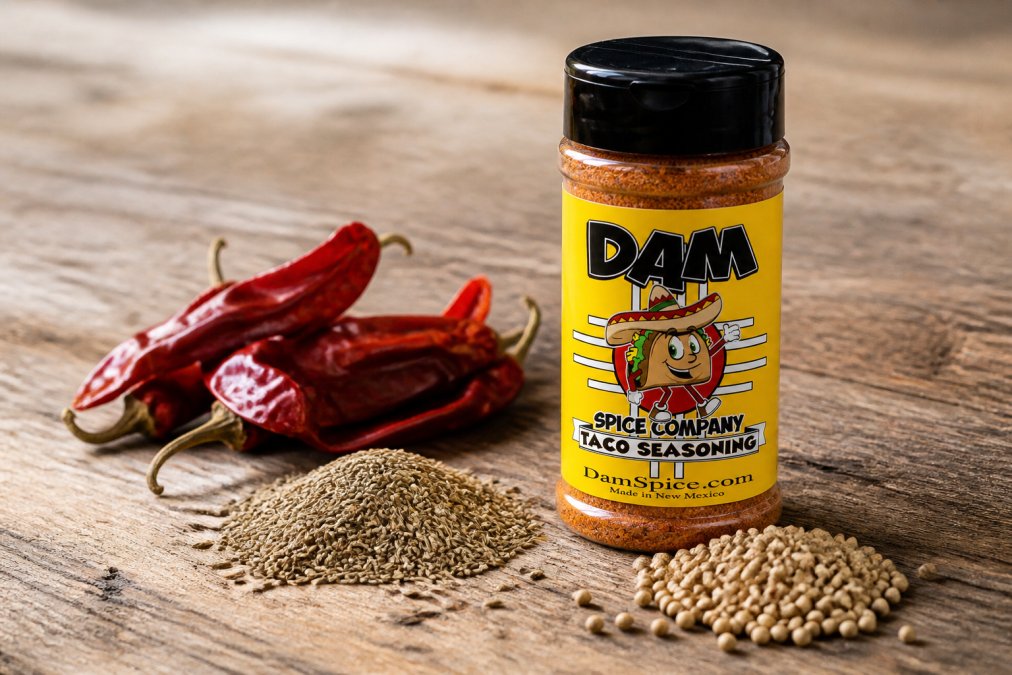
Dam Spice Company blends contain no additives, just sea salt, spices, and nothing else. No MSG, no flow agents, no preservatives.
Small-Batch vs Mass-Produced Spices: The Flavor Impact
Small-batch blends are typically ground fresher and blended in smaller quantities, meaning volatile oils are more concentrated. Mass-produced blends are formulated for consistency across thousands of jars, sometimes averaging flavor intensity to hit a standard.
Aromatic Compounds and Flavor Intensity
Small-batch producers often grind spices closer to blending, meaning less time for volatile oils to degrade. They also tend to use higher ratios of flavorful ingredients like chile powder and cumin, since they're not constrained by mass-producer cost pressures.
The practical result: you use less of a small-batch blend to get the same flavor intensity. A teaspoon of a potent local blend might deliver more flavor than two teaspoons of a mass-produced equivalent.
Cost-Per-Ounce Reality Check
A mass-produced blend might cost $3 to $5 per ounce. A small-batch local blend typically costs $6 to $10 per ounce. But if the small-batch blend is twice as potent, you're actually paying less per serving. The real question isn't per-ounce price, it's cost per meal. A potent local blend might cost more upfront but deliver more flavor per teaspoon, meaning fewer jars per year and better results.
How to Store Spice Blends for Maximum Flavor Retention
Storage is where the difference between mass-produced and small-batch blends becomes most obvious. Anti-caking agents and preservatives in mass-produced blends make storage easier. Additive-free blends require more care.
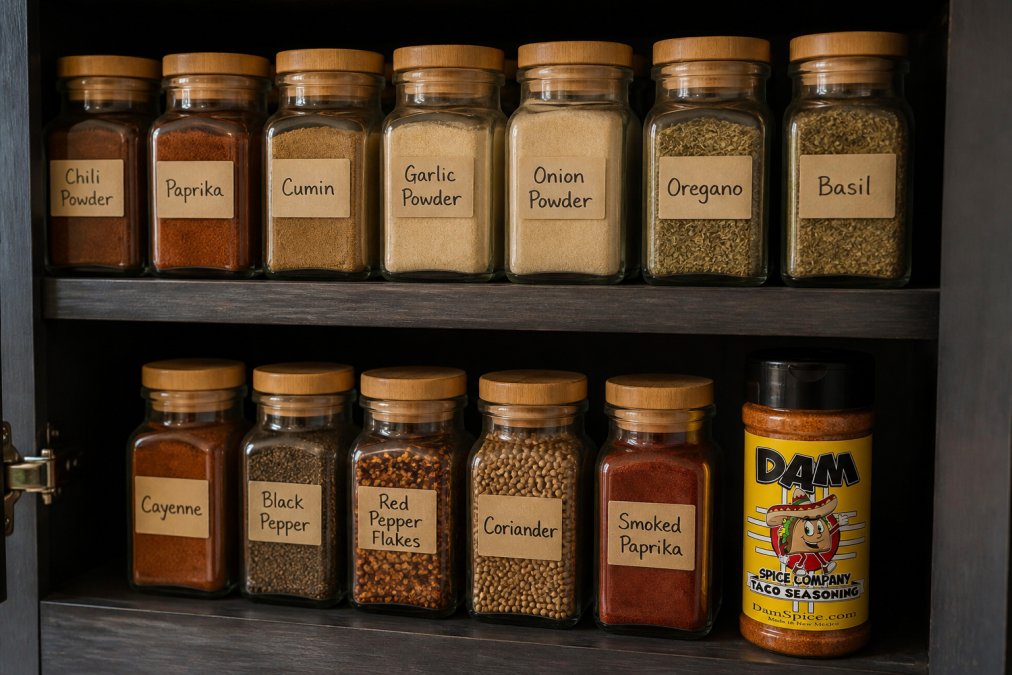
The enemies of spice potency are heat, light, humidity, and time. Heat degrades volatile oils fastest. Light accelerates degradation. Humidity causes clumping and moisture damage. Even air exposure matters, oxygen slowly oxidizes aromatic compounds.
Store spice blends in airtight containers away from direct sunlight in a cool, dark cabinet. Avoid storing above the stove; the heat dramatically shortens shelf life. Glass jars with tight-fitting lids work better than plastic.
For small-batch blends without preservatives, proper storage is essential. You might get 6-12 months of good flavor from an opened jar versus 12-24 months for mass-produced blends. Freezing spice blends in airtight containers slows volatile oil degradation significantly and works well for long-term storage.
Freshness Dating and Shelf-Life Expectations
Most spice blends don't come with harvest dates or scientific freshness markers. Understanding real freshness requires knowing how spices degrade and what information producers track.
How Spices Lose Flavor Over Time
Flavor in spices comes from volatile aromatic compounds, primarily essential oils and terpenes (peer-reviewed research). These degrade through oxidation (exposure to oxygen breaks down aromatic compounds), evaporation (volatile oils literally evaporate, especially in warm conditions), and enzymatic degradation (some spices contain enzymes that break down flavor compounds even after drying).
Chiles, cumin, and coriander lose about 10-15% of volatile oil content per month in typical kitchen storage (room temperature, moderate humidity, indirect light) (peer-reviewed research). Spices stored in warm conditions or direct sunlight degrade 2-3 times faster.
The Problem With "Best By" Dates
Most mass-produced spice blends print a "best by" date 2-3 years from manufacturing. This date assumes average storage and doesn't account for how long individual spices sat in warehouses before blending, temperature fluctuations during shipping, or retailer storage conditions.
Small-batch producers sometimes print manufacturing dates but rarely print "best by" dates. Some will provide harvest dates for key ingredients if you contact them, but this requires asking.
What Actually Indicates Freshness
Since dating information is unreliable, use these signals:
Aroma intensity: Open the jar and smell it. A fresh blend should have strong, immediate aroma. If you must bring the jar close to your nose, volatile oils have degraded significantly.
Color vibrancy: Faded color correlates with faded flavor. A chile-based blend should be deep red or burgundy, not dull rust. Cumin should be warm brown, not grayish.
Texture and clumping: Clumping suggests moisture exposure, which accelerates degradation. Some clumping in additive-free blends is normal. Break up clumps and smell, if aroma is strong, it's still usable.
Supplier reputation: High-turnover retailers typically have fresher stock than those with slow-moving inventory.
Realistic Shelf-Life Expectations
Under typical home storage (room temperature, indirect light, moderate humidity, airtight container):
- Mass-produced blends with preservatives: Peak flavor 12-18 months. Acceptable flavor 18-24 months.
- Small-batch additive-free blends: Peak flavor 6-10 months. Acceptable flavor 10-14 months.
How to Extend Shelf Life
Refrigeration: Slows oxidation and evaporation significantly. Flavor degradation drops to 3-5% per month instead of 10-15%. Allow jars to warm to room temperature before opening to avoid condensation.
Freezing: Essentially pauses degradation. Unopened frozen portions maintain peak flavor for 18-24 months.
Vacuum sealing: Divide bulk blends into smaller portions and vacuum-seal. This removes oxygen and dramatically slows oxidation.
Buying smaller quantities: Buy smaller jars more frequently. A 2-ounce jar finished in 3 months tastes fresher than a 5-ounce jar sitting for 8 months.
Assessing Freshness When You Buy
- Check the manufacturing date if printed. Prefer jars made within the last 3 months.
- Open the jar and smell it. Strong, immediate aroma indicates good freshness.
- Check color against a reference image of peak freshness.
- Ask the retailer about inventory turnover.
- For small-batch producers, ask about harvest dates and storage practices.
Making Your Choice: Spice Lab vs Local Options
The decision comes down to what you prioritize: convenience and consistency, or flavor intensity and ingredient transparency.
Choose mass-produced blends if you want spices that stay stable indefinitely, don't require special storage, and cost less per jar. You'll get reliable, consistent flavor.
Choose small-batch local blends if you want higher flavor intensity, ingredient transparency, and verifiable sourcing. You'll pay more per jar but use less per application and get noticeably bolder results.
For home cooks and barbecue enthusiasts, small-batch usually wins. The flavor difference is real and noticeable. Try both in a dish you make regularly, the difference in flavor intensity will tell you whether the higher cost is worth it.
If you're serious about bringing authentic Southwest flavor to your kitchen, small-batch blends sourced with ingredient transparency are worth the investment. Dam Spice Company's all-natural, additive-free blends are made right here in New Mexico with no MSG, no preservatives, and no compromise on flavor. Start with our Taco Seasoning ($7.99) or Grumpy Gringo all-purpose blend ($7.99), both deliver the bold, savory results that make barbecue and everyday cooking actually taste like something worth remembering.


=== FAQ ANSWERS (audit these too, same rules) ===
[1] Q: What makes small-batch spice blends different from mass-produced options? A: Small-batch spice blends typically use fresher ingredients with higher volatile oil content, delivering stronger aromatic compounds and flavor intensity. Mass-produced spices often sit in warehouses longer, losing potency. Small-batch producers also control grinding techniques and can adjust seasoning ratios for culinary consistency, while mass-produced blends prioritize shelf stability over flavor extraction. The tradeoff is cost, small-batch options usually run higher per ounce.
[2] Q: How do I verify that a spice blend is truly additive-free? A: Check the ingredient label for anti-caking agents, flow agents, or vague terms like 'natural flavors' or 'spices.' Additive-free brands list only recognizable spices and salt. Look for transparency statements about purity testing. If the label doesn't specify 'no anti-caking agents' or 'no additives,' contact the producer directly, legitimate brands answer these questions.
[3] Q: How long do spice blends stay fresh, and does storage method matter? A: Most spice blends retain peak flavor for 6-12 months when stored properly. Storage dramatically affects shelf life: keep jars in cool, dark, airtight containers away from heat and light. Moisture and air exposure cause volatile oils to degrade faster. Whole spices last longer than pre-ground blends because grinding exposes more surface area to oxidation. Buy smaller quantities from producers who date their batches, and replace blends annually for maximum flavor intensity.
[4] Q: Is the price difference between Spice Lab and local blends worth it? A: That depends on your priorities. Local and specialty blends often cost more per ounce but deliver fresher ingredients, better flavor profiles, and transparent sourcing. Spice Lab and similar retailers offer convenience and consistent pricing. If you value authentic regional flavors, ingredient transparency, and culinary grade quality, the premium typically justifies itself through better results in your cooking. For budget-conscious cooks, mass-produced options work fine for everyday dishes.
[5] Q: Can I use local spice blends for everyday cooking, or are they just for specialty dishes? A: Quality spice blends work for any cooking style. Local and artisanal blends are versatile enough for weeknight dinners, grilling, and specialty recipes. The advantage is they add bold, complex flavor to simple meals, a good blend transforms basic proteins and vegetables into memorable dishes. Many home cooks find that switching to higher-quality blends makes everyday cooking more enjoyable without requiring special techniques or ingredients.
Frequently Asked Questions
Q: What makes small-batch spice blends different from mass-produced options?
A: Small-batch spice blends typically use fresher ingredients with higher volatile oil content, delivering stronger aromatic compounds and flavor intensity. Mass-produced spices often sit in warehouses longer, losing potency. Small-batch producers also control grinding techniques and can adjust seasoning ratios for culinary consistency, while mass-produced blends prioritize shelf stability over flavor extraction. The tradeoff is cost, small-batch options usually run higher per ounce.
Q: How do I verify that a spice blend is truly additive-free?
A: Check the ingredient label for anti-caking agents, flow agents, or vague terms like 'natural flavors' or 'spices.' Additive-free brands list only recognizable spices and salt. Look for transparency statements about purity testing. If the label doesn't specify 'no anti-caking agents' or 'no additives,' contact the producer directly, legitimate brands answer these questions.
Q: How long do spice blends stay fresh, and does storage method matter?
A: Most spice blends retain peak flavor for 6-12 months when stored properly. Storage dramatically affects shelf life: keep jars in cool, dark, airtight containers away from heat and light. Moisture and air exposure cause volatile oils to degrade faster. Whole spices last longer than pre-ground blends because grinding exposes more surface area to oxidation. Buy smaller quantities from producers who date their batches, and replace blends annually for maximum flavor intensity.
Q: Is the price difference between Spice Lab and local blends worth it?
A: That depends on your priorities. Local and specialty blends often cost more per ounce but deliver fresher ingredients, better flavor profiles, and transparent sourcing. Spice Lab and similar retailers offer convenience and consistent pricing. If you value authentic regional flavors, ingredient transparency, and culinary grade quality, the premium typically justifies itself through better results in your cooking. For budget-conscious cooks, mass-produced options work fine for everyday dishes.
Q: Can I use local spice blends for everyday cooking, or are they just for specialty dishes?
A: Quality spice blends work for any cooking style. Local and artisanal blends are versatile enough for weeknight dinners, grilling, and specialty recipes. The advantage is they add bold, complex flavor to simple meals, a good blend transforms basic proteins and vegetables into memorable dishes. Many home cooks find that switching to higher-quality blends makes everyday cooking more enjoyable without requiring special techniques or ingredients.
This article was written using GrandRanker