

Spicy Dry Rub Recipes for Grilled Vegetables
Table of Contents
- Why Spicy Dry Rubs Beat Marinades for Grilled Vegetables
- How to Grill Vegetables with Dry Rub: Step-by-Step
- Grilling Vegetables Temperature Guide: Direct vs. Indirect Heat
- The Best Spices for Grilled Vegetables: Build Your Blend
- Vegetable-by-Vegetable Pairing Guide
- Dam Spice Blends Built for Grilled Vegetables
- Common Mistakes That Ruin Spicy Dry Rubs on Vegetables
- Conclusion: Your Next Cookout Starts Here
- Frequently Asked Questions
Last Updated: October 3, 2026
Why Spicy Dry Rubs Beat Marinades for Grilled Vegetables
A spicy dry rub is a coarse-ground blend of dried spices, salt, and often a little sugar that you pat directly onto food before it hits the heat.
Marinades are mostly water, and water steams. On a hot grate, a wet vegetable releases moisture for the first several minutes, so instead of charring, it sits there sweating. A dry rub pulls surface moisture away, letting caramelization and char develop quickly. That browned crust is where the flavor lives.
The other advantage is control: you can taste a rub before it touches the grill, adjust the heat, and know exactly what you're getting.
How to Grill Vegetables with Dry Rub: Step-by-Step
Learning how to grill vegetables with dry rub comes down to three moves: dry the surface, oil lightly, season generously, then cook hot and fast. Total time is about 25 minutes.
Step 1: Prep and Dry Your Vegetables [Time: 10 minutes]
Cut vegetables into even pieces, roughly 1/2 inch thick for zucchini and bell peppers, and trim the woody ends off asparagus. Then dry them thoroughly with paper towels, the step most people skip, and the one that matters most.
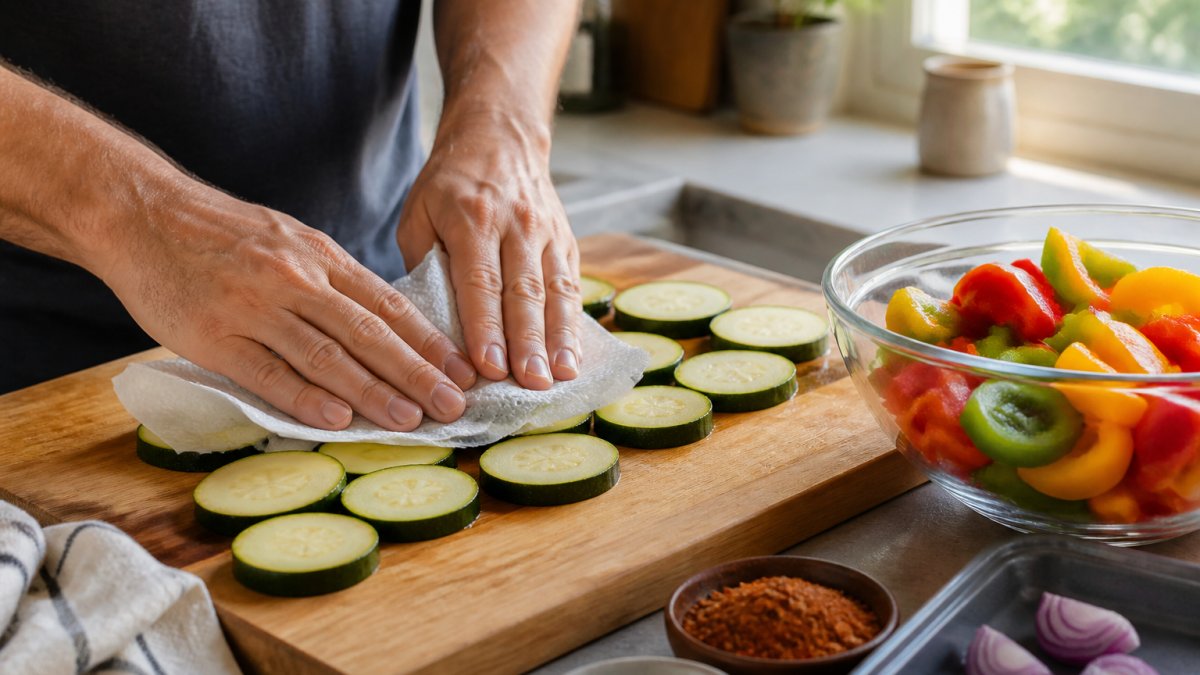
Expected Result: Vegetables feel dry to the touch, with no visible moisture beading on the surface.
Step 2: Oil, then Apply the Rub [Time: 5 minutes]
Brush on a thin coat of olive oil first. Oil helps the rub stick and carries fat-soluble flavor compounds in spices like smoked paprika and cayenne. Then sprinkle the rub on and press it in with your fingers.
A workable starting ratio is about 1 teaspoon of rub per cup of cut vegetables. Coarse-ground blends need slightly more because they don't pack as densely.
Step 3: Rest, Grill, and Finish [Time: 10 minutes]
Let the seasoned vegetables sit for 5 to 10 minutes so the salt starts drawing moisture out and pulling flavor in. Then grill over direct heat, turning once, until you see grill marks and the edges char.
Finish with a squeeze of lime or fresh herbs. Dried herbs go in the rub; fresh herbs go on at the end, where their oils survive.
Grilling Vegetables Temperature Guide: Direct vs. Indirect Heat
Use direct heat for quick-cooking vegetables and indirect heat for dense ones. That single rule solves most grilling problems.
| Vegetable | Heat Method | Grate Temperature | Approximate Time |
|---|---|---|---|
| Zucchini, yellow squash | Direct | Medium-high | 3-4 min per side |
| Bell peppers | Direct | Medium-high | 4-5 min per side |
| Asparagus | Direct | Medium-high | 3-4 min total |
| Onions, thick slices | Direct | Medium | 5-6 min per side |
| Corn on the cob | Direct | Medium-high | 8-10 min, turning |
| Potatoes, parboiled | Indirect | Medium | 15-20 min |
| Whole eggplant | Indirect then direct | Medium | 20 min, then 3 min |
Direct heat means the vegetables sit right over the flame or coals; indirect means off to the side with the lid closed, cooking by ambient temperature. Dense vegetables like potatoes and whole eggplant need that gentler environment or the outside burns before the inside softens.
The Best Spices for Grilled Vegetables: Build Your Blend
The best spices for grilled vegetables hold up to high heat and add savory depth rather than just heat. Smoke, chile, garlic, and onion do the heavy lifting. But most recipes skip calibration: a blend is only as good as its match to your heat tolerance and the vegetable it's landing on.
Core Spices and Seasoning Ratios
Start with a base and adjust from there. A reliable seasoning ratio for a vegetable-forward spicy dry rub:
- 2 parts kosher salt
- 2 parts smoked paprika
- 1 part garlic powder
- 1 part onion powder
- 1 part coarse ground black pepper
- 1/2 part cayenne pepper
- 1/2 part brown sugar (optional, for caramelization)
Smoked paprika brings color and umami, cayenne delivers clean, fast heat, and garlic and onion powder round out the flavor without adding moisture. For a deeper blend, add a pinch of ground cumin or dried Mexican oregano.
Heat-Level Calibration: Build Mild, Medium, or Hot
Most spicy rub recipes hand you a fixed blend and hope for the best. Better to build the base, then dial heat with a single variable, the chile fraction, so you can move between mild, medium, and hot without rebuilding the whole jar.
| Heat Level | Cayenne (parts) | Smoked Paprika (parts) | Optional Add-In |
|---|---|---|---|
| Mild | 1/4 | 2 | 1/4 part ancho chile powder |
| Medium | 1/2 | 2 | 1/4 part chipotle powder |
| Hot | 1 | 2 | 1/4 part habanero or ghost pepper powder |
A few mechanics worth knowing. Cayenne's heat comes from capsaicin, which is fat-soluble, not water-soluble, that's why the oil coat matters, carrying heat evenly instead of letting it pool in one bite.
A common pattern among frequent vegetable grillers is to keep one base jar and one "heat jar" of pure ground chile, then blend per batch.
Sugar-Free and Keto-Friendly Spicy Options
Sugar in a rub helps with browning, but it also burns: above medium heat, a sugar-heavy rub can go from caramelized to bitter in under a minute.
Swap the brown sugar for an extra half-part smoked paprika and a quarter-part ground chipotle for sweetness-adjacent depth plus a smokier finish.
One trade-off: without sugar, you lose the fast Maillard browning it accelerates. Compensate by drying the vegetable surface thoroughly and grilling over slightly higher direct heat for a shorter time, so you get char before the interior goes soft.
Vegetable-by-Vegetable Pairing Guide
Different vegetables need different heat levels and flavor profiles, and the reason is texture. Dense, low-moisture vegetables take a bold, coarse rub and a long cook; delicate, high-moisture ones need a finer grind, less salt time, and a faster cook, or the rub steams them into mush.
| Vegetable | Texture / Moisture | Heat Level | Grind | Grilling Method | Rub Timing |
|---|---|---|---|---|---|
| Zucchini, yellow squash | High moisture, soft | Medium | Medium | Direct, medium-high | 5-10 min before grill |
| Bell peppers | High moisture, firm skin | Medium-high | Medium | Direct, medium-high | 10 min before grill |
| Asparagus | Low moisture, fibrous | Medium-high | Fine | Direct, medium-high | Right before grill |
| Onions, thick slices | High moisture, dense layers | Medium | Medium | Direct, medium | 10-15 min before grill |
| Corn on the cob | High moisture, protected by husk or silk | Medium-high | Fine | Direct, medium-high | Right before grill |
| Potatoes, parboiled | Dense, low moisture | Medium | Coarse | Indirect, medium | 15 min before grill |
| Whole eggplant | Spongy, oil-hungry | Medium | Coarse | Indirect then direct | 10 min before grill |
| Mushrooms | Earthy, high moisture release | Medium-high | Coarse | Direct, medium-high | Right before grill |
Here's how to read that table in practice.
- Zucchini and yellow squash: Mild and absorbent, so a smoky paprika-forward blend works without overwhelming them. They release water fast, so salt close to grill time and use a medium grind so the rub clings.
- Bell peppers: Their natural sweetness handles a hotter rub, and a honey-and-cayenne profile complements the char. The waxy skin resists oil, so brush a little extra.
- Asparagus: Low moisture and fibrous, so it takes a fine grind and a short salt window. Keep it simple with salt, chile, and garlic so the grassy flavor comes through; salting ahead turns the spears limp.
- Onions: Sweet, salty, and spicy balances work best; the sugar in the rub caramelizes on the cut faces. Thick slices hold up to direct heat; thin ones fall apart.
- Corn: A chile-lime profile with a touch of salt is the classic move. Apply right before grilling so the kernels stay crisp.
- Potatoes: Dense and low-moisture, so they want a coarse rub and indirect heat. Parboiling first ensures the inside cooks before the outside scorches.
- Eggplant: Spongy and oil-hungry, so go light on oil and season assertively. Start indirect to cook through, then finish direct for char.
- Mushrooms: Earthy and meaty, they take a bold, savory rub with plenty of black pepper. They release water as they cook, so a coarse grind holds up better than a fine one.
Dam Spice Blends Built for Grilled Vegetables
We built our blends with the grill in mind, and several are excellent on vegetables. Here's how we'd match them.
Bee Sting ($7.99) is our pick for anyone new to spicy vegetable rubs.

Sweet Heat ($7.99) leans hotter, with sea salt, brown sugar, black pepper, chile pepper, and cayenne.
Smokey Jalapeno ($9.99) is the mild option, made with slow-smoked jalapeños.
Sweet Habanero ($9.99) brings sea salt, honey powder, garlic, onion, paprika, and habanero powder.
Every blend is made with New Mexico spices in New Mexico, with no MSG and no artificial additives. All are naturally gluten-free.
Common Mistakes That Ruin Spicy Dry Rubs on Vegetables
The biggest mistake is applying rub to wet vegetables. If there's moisture on the surface, the rub slides off, pools in the bowl, and never forms a crust.
Second: too much sugar over too much heat. A brown-sugar-heavy rub on a screaming-hot grate chars before the vegetable cooks through. Drop to medium heat or cut the sugar.
Third: salting too early on delicate vegetables. Asparagus and thin zucchini slices will go limp if they sit salted for 30 minutes. Season those right before they hit the grill.
Conclusion: Your Next Cookout Starts Here
Getting grilled vegetables right comes down to dry surfaces, the right heat level, and a rub built for the job. Most people get one of those three wrong, and the result is soggy, bland vegetables nobody reaches for twice. Fix all three and grilled vegetables stop being a side dish people tolerate.
That's what we do at Dam Spice Company. Our blends are all-natural with no additives, made with New Mexico spices in New Mexico, and built around authentic Southwest flavor profiles that bring out bold, savory notes in everything you grill.
Get started with Dam Spice Company and bring real Southwest heat to your next cookout.
Frequently Asked Questions
Should you oil vegetables before applying a dry rub?
Yes. A light coat of olive oil helps the spicy dry rub stick to the surface and encourages caramelization on the grill. Brush or toss vegetables with about one tablespoon of oil per pound, then sprinkle the rub evenly. Without oil, the seasoning slides off and the vegetables char before the spices have a chance to bloom.
How long should you let a dry rub sit on vegetables before grilling?
Fifteen to thirty minutes is enough for vegetables. Unlike meat, vegetables have no dense protein structure for the rub to penetrate, so the seasoning sits on the surface. Letting them rest longer than an hour can draw out moisture and make the vegetables limp. Apply the rub, let them sit while the grill heats, then cook.
Can you use the same dry rub for vegetables as you do for meat?
You can, but watch the sugar and salt content. Rubs built for ribs or pork often carry high sugar levels that burn quickly over direct heat. A blend like Sweet Heat, made with sea salt, brown sugar, chile pepper, and cayenne, works on both pork and vegetables. For vegetables, apply a lighter coat and grill over moderate heat.
What are the best spices for a Southwest-inspired vegetable rub?
Start with smoked paprika, garlic powder, onion powder, cayenne pepper, and coarse ground chile. Kosher salt and a small amount of brown sugar round out the flavor profile. Cumin adds earthy depth. For a shortcut, Dam Spice Company's Sweet Habanero combines sea salt, honey powder, garlic, onion, paprika, and habanero powder in one jar.
How do you keep a spicy dry rub from burning on the grill?
Control the heat. Grill vegetables over medium heat, around 375 to 425 degrees Fahrenheit, and use indirect heat for thicker cuts like bell peppers. Sugar in the rub caramelizes fast above 450 degrees. If you see darkening, move the vegetables to a cooler zone and finish them there. A light oil coating also buffers the spices from direct flame.