

Balance Smoky and Spicy Notes in Cooking
Table of Contents
- Understanding Smoke and Spice Flavor Profiles
- Step 1: Choose Your Smoke Base
- Step 2: Build Your Spice Rub with Intentional Heat
- Step 3: Master the Marinade and Brine Technique
- How to Neutralize Spicy Food
- Common Mistakes in Smoking Meats and Seasoning
- Simple Weeknight Dinner Seasoning Ideas
- Frequently Asked Questions
Last Updated: September 25, 2026
Understanding Smoke and Spice Flavor Profiles
Learning to balance smoky spicy flavors transforms ordinary meals into something memorable. Smoke adds depth and umami, that savory richness that makes food taste fuller. Heat from spice creates intensity that can either complement or overpower smoke depending on how you layer them.
Most home cooks treat smoke and spice as separate ingredients, throwing them together and hoping for the best. That's where things go wrong.
How Smoke Builds Umami and Depth
Smoke works by coating your food with compounds that trigger umami receptors, that savory, mouth-filling sensation that makes you want another bite.
Smoke adds complexity that builds and develops. Think of it as the bass line in a song, running underneath everything else and giving the whole dish weight and presence.
Different smoke sources create different flavor profiles:
- Smoked paprika delivers gentle, sweet smoke
- Liquid smoke provides concentrated, intense smoke flavor
- Chipotle peppers add smoky heat with fruit notes
- Black cardamom brings smoky, campfire-like depth
- Wood condensation (from smoking) creates authentic, complex smoke
How Heat Intensity Affects Palate Perception
Heat from spice works differently than smoke, it's immediate and sharp. Capsaicin, the compound in hot peppers, triggers pain receptors that your brain interprets as heat.
Heat can mask smoke if you're not careful. A dish that's too spicy overwhelms your ability to taste anything else, burying the smoke.
When balanced properly, heat enhances smoke by opening your taste buds and priming your palate to receive subtle flavors.
Progressive heat works best. Start mild. Build slowly. This lets smoke shine through at each level.
Step 1: Choose Your Smoke Base
Your smoke base is the foundation, it determines how strong your smoke flavor is and what kind of smoke character you're working with.
Smoked Paprika vs. Liquid Smoke vs. Wood Condensation
Smoked paprika is your everyday workhorse, paprika peppers smoked over oak or other wood, then ground into powder. The flavor is gentle and sweet. Use it when you want smoke that plays a supporting role.
Liquid smoke is concentrated smoke flavor in liquid form, one teaspoon can change an entire pot of food. Use it when you need strong smoke flavor but can't use actual smoke. The downside: it can taste artificial if overused.
Wood condensation (actual smoke from wood-fired cooking) is the gold standard, complex, layered, and authentic. But it requires equipment and time, making it impractical for weeknight dinners.
For everyday cooking, smoked paprika is your best bet. It's forgiving. It blends easily. It won't ruin a dish if you add a little extra.
Regional Smoke Profiles: Chipotle, Black Cardamom, and Tandoor Influence
Chipotle peppers are smoked jalapeños with smoky, fruity, slightly sweet flavor. They work beautifully in Southwest cooking, adding smoke without making a dish taste like barbecue.
Black cardamom is smoked cardamom pods with campfire-like, intense flavor. One pod flavors an entire pot of rice. Use it sparingly in curries, rice dishes, and braised meats.
Tandoor influence comes from Indian clay ovens that create intense, dry heat and charring. Approximate this on a grill or under a broiler using high heat and quick cooking.
Choose your smoke base based on what cuisine you're cooking. Mexican food? Use chipotle. Indian food? Try black cardamom. American barbecue? Smoked paprika or actual smoke.
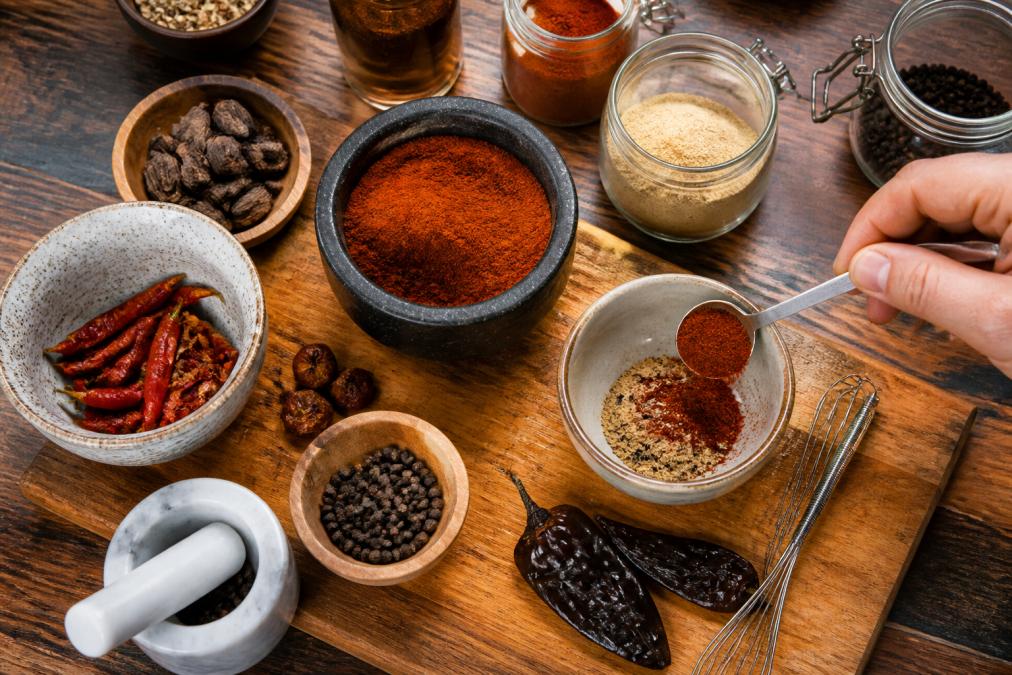
Step 2: Build Your Spice Rub with Intentional Heat
A spice rub is where you layer your flavors and control how much heat, smoke, and sweetness you want in every bite.
The mistake most people make is dumping equal amounts of everything into a bowl, creating chaos with inconsistent bites.
Layering Capsaicin Levels for Progressive Heat
Capsaicin is the compound that makes peppers hot. Different peppers have different amounts, letting you build balanced heat instead of punishing intensity.
Here's the hierarchy from mild to extreme:
- Paprika (no heat, pure flavor)
- Ancho chile (mild, fruity, smoky)
- Chipotle (mild-medium, smoky)
- Cayenne (medium-hot, sharp)
- Thai chile (very hot, bright)
- Carolina Reaper (extreme, overwhelming)
Progressive layering means using multiple peppers at different heat levels, mild for base flavor, medium for noticeable heat, hot for intensity.
Example rub structure:
- Base: 2 tablespoons smoked paprika (flavor, no heat)
- Middle: 1 tablespoon chipotle powder (smoke + mild heat)
- Top: 1 teaspoon cayenne (noticeable heat)
This creates a rub where heat builds as you chew, first smoke, then warmth, then intensity, guiding your palate instead of shocking it.
Balancing Smoke Intensity with Spice Pungency
Pungency is the sharp, lingering quality of spice, high pungency means heat sticks around and builds.
Smoke should equal or slightly exceed spice pungency. If spice pungency is higher, the dish tastes hot and one-dimensional.
Step 3: Master the Marinade and Brine Technique
A marinade or brine infuses smoke and spice deep into meat before cooking. A rub sits on top; a marinade penetrates. When you bite into marinated meat, the flavor comes from inside.
Using Acidity and Sweetness to Tame Heat
Acidity breaks down capsaicin molecules, making spice feel less intense. Sweetness coats your palate, creating a buffer between your mouth and the heat while balancing savory smoke flavors.
Infusion Methods for Even Flavor Distribution
For thick cuts: inject marinade deep into the meat using a meat injector in a grid pattern every inch, then let sit 4-12 hours before cooking.
How to Neutralize Spicy Food
Sometimes you go too far. You add too much heat. The dish becomes inedible. Here's how to fix it.
Neutralizing Agents and Flavor Correction Tactics
Dairy works best. Milk, cream, sour cream, and yogurt contain casein, a protein that binds to capsaicin (Checking your browser). A spoonful of sour cream can save an entire pot of chili.
Common Mistakes in Smoking Meats and Seasoning
Learning what not to do saves time and prevents wasted ingredients.
Over-Smoking and Pungency Overload
The most common mistake is thinking more smoke equals better flavor. Too much smoke tastes like burnt rubber, acrid and unpleasant.
Neglecting Flavor Balance and Char Timing
Flavor balance means every element, smoke, spice, sweet, savory, acid, works together. If one dominates, the whole dish suffers.
Simple Weeknight Dinner Seasoning Ideas
Not every meal needs to be complicated. Quick rubs work just as well as elaborate marinades when you understand the balance.
Quick Rub Formulas for Everyday Cooking
These formulas take 2 minutes to mix. They work on chicken, pork, beef, and vegetables.
The Everyday Rub (for chicken and pork):
- 2 tablespoons smoked paprika
- 1 tablespoon garlic powder
- 1 tablespoon brown sugar
- 1 teaspoon black pepper
- 1/2 teaspoon salt
- 1/4 teaspoon cayenne
The Southwest Rub (for beef and vegetables):
- 2 tablespoons smoked paprika
- 1 tablespoon chipotle powder
- 1 tablespoon cumin
- 1 tablespoon brown sugar
- 1 teaspoon salt
- 1/2 teaspoon black pepper
The Hot Rub (for adventurous eaters):
- 2 tablespoons smoked paprika
- 1 tablespoon chipotle powder
- 1 tablespoon cayenne
- 1 tablespoon brown sugar
- 1 teaspoon garlic powder
- 1/2 teaspoon salt
Stovetop and Oven Techniques Without a Grill
You don't need a grill to get smoky, spicy flavor. Your stovetop and oven work just fine.
Stovetop method:
- Heat a cast iron skillet over medium-high heat until it's very hot
- Apply your rub to meat
- Place meat in the hot skillet
- Don't move it for 3-4 minutes, let the rub develop a crust
- Flip and cook the other side
- Finish in a 400°F oven for 10-15 minutes (depending on thickness)
Oven method:
- Apply your rub to meat
- Let it sit for 30 minutes
- Place on a baking sheet lined with foil
- Roast at 425°F for 15-20 minutes (chicken breasts) or 25-35 minutes (thicker cuts)
- Finish under the broiler for 2-3 minutes to develop char
Frequently Asked Questions
How do you balance smoky and spicy notes without one overpowering the other?
Start with a base of smoky spices like smoked paprika, then layer heat gradually using milder peppers first (jalapeño) before adding intense ones (Carolina Reaper). Use a 2:1 smoke-to-spice ratio as a starting point, adjusting based on your palate. Brines with acidity (vinegar, citrus) and sweetness (brown sugar, honey) help distribute both flavors evenly and prevent one from dominating. Taste as you go, adding heat in small increments rather than all at once.
How do you neutralize spicy food if the heat becomes too intense?
Dairy products like sour cream, yogurt, or milk contain casein, which binds capsaicin and reduces heat perception. For savory dishes, add richness with butter, oil, or cheese. Sweetness from honey, brown sugar, or caramelized onions masks pungency. Acidity from lime juice or vinegar can also reset your palate. If the dish is already cooked, dilute it by doubling the non-spicy components (add more meat, vegetables, or sauce base) rather than trying to fix it with single ingredients.
What's the best way to infuse smoke flavor without a grill or smoker?
Smoked paprika, liquid smoke, and smoked spices deliver authentic smoke flavor on any stovetop or in the oven. Chipotle peppers in adobo sauce add deep, smoky heat. Black cardamom provides a wood-fired, tandoor-like aroma. Layer these into dry rubs, brines, or marinades before cooking. For stovetop searing, apply your rub generously and let the seasoning char slightly in a hot pan to develop caramelized, smoke-like notes. This technique works equally well for burgers, steaks, chicken, and vegetables.
Can all-natural spice blends deliver the same balanced smoky-spicy profile as commercial blends?
Yes. All-natural blends without MSG or fillers can achieve complex flavor layering through intentional ingredient selection. Smoked paprika, jalapeño, and complementary spices create the same depth as heavily processed alternatives. The difference is precision: you control the ratio of smoke to spice and know exactly what's in your food. For weeknight cooking, pre-blended rubs like Dam Spice Company's Sweet & Smokey BBQ or Kick Ass Rub eliminate guesswork and guarantee balanced profiles without additives.