

Best Additive Free Meat Rubs: 2026 Buyer's Guide
Table of Contents
- What Makes a Meat Rub Truly Additive-Free
- How to Read Spice Labels for Hidden Additives
- Top Additive-Free Meat Rubs for Every Protein
- Best Low Sodium Meat Seasonings for Health-Conscious Cooks
- Simple Weeknight Dinner Seasoning Ideas
- Storing and Preserving Additive-Free Blends
- Conclusion
- Frequently Asked Questions
Last Updated: September 10, 2026
What Makes a Meat Rub Truly Additive-Free
Additive free meat rubs contain only culinary ingredients: spices, herbs, salt, sugar, and dried aromatics. No anti-caking agents, no silicon dioxide, no maltodextrin, no "natural flavors" hiding a flavor enhancer. That definition sounds simple, but most grocery store labels tell a different story. This guide from Dam Spice Company breaks down what to look for, which blends deliver, and how to season weeknight dinners without a cabinet full of chemicals.
The stakes are higher than most cooks realize. The FDA guidance on food additives and GRAS ingredients draws a clear line between ingredients with a documented safety history and those added purely for shelf life or appearance. A rub built for the pantry aisle often falls into the second category.
The Hidden Ingredients in Commercial Rubs
Anti-caking agents like silicon dioxide, calcium silicate, and cellulose powder keep powder flowing in humid kitchens and add nothing to flavor. Flavor enhancers like autolyzed yeast extract and hydrolyzed vegetable protein deliver a savory punch without appearing on the front label as MSG, even though they contain free glutamates. And many barbecue rubs lead with brown sugar or dextrose to build bark, pushing the glycemic load up for anyone managing blood sugar.
How to Read Spice Labels for Hidden Additives
Reading a spice label for hidden additives means checking four things in order: the ingredient list, the order of ingredients, the certifications near the nutrition panel, and the allergen statement below it. Ingredients are listed by weight, so a blend that leads with sugar or salt is telling you what you are mostly buying; one that leads with paprika or garlic is telling you something better.
Here is what to scan for, grouped by what each additive actually does:
- Anti-caking agents: silicon dioxide, calcium silicate, cellulose powder, magnesium stearate. These keep powder flowing in humid kitchens and add nothing to flavor.
- Flavor enhancers: yeast extract, autolyzed yeast, hydrolyzed vegetable protein, disodium inosinate, disodium guanylate. These deliver free glutamates without the word MSG on the label.
- Hidden sugars: dextrose, maltodextrin, corn syrup solids, cane juice, rice syrup solids. These push glycemic load up and can interfere with keto and paleo goals.
- Preservatives: BHA, BHT, sodium benzoate, potassium sorbate, calcium propionate. These extend shelf life at the cost of a clean ingredient statement.
- Fillers: rice flour, cornstarch, wheat flour, oat flour, soy flour. These bulk up a blend and, in the case of wheat, soy, and some oat sources, introduce a gluten or allergen risk.
A clean label reads like a recipe: garlic, onion, paprika, black pepper, sea salt. If you cannot picture the ingredient in a kitchen, it probably does not belong in your rub. The USDA FoodData Central database lets you verify what whole spices actually contain, which makes it easier to spot when a blend is padded with fillers.
Allergen-Specific Label Decoding
Most guides stop at sugar, salt, and MSG, leaving out cooks managing celiac disease, a corn allergy, a nightshade sensitivity, or an autoimmune protocol. Here is how to read a label for each.
- Gluten-free: Wheat flour is the obvious risk, but barley malt, rye, and some 'spice extract' or 'natural flavor' lines can carry gluten. Look for a certified gluten-free mark, not just a 'no wheat' claim.
- Corn-free: Cornstarch, maltodextrin, dextrose, citric acid (often corn-derived), and corn syrup solids are the usual offenders. Corn hides in anti-caking and flavor-enhancer lines more than any other grain.
- Nightshade-free (AIP): Paprika, cayenne, chili powder, and smoked paprika are all nightshades. A 'Southwest' or 'BBQ' blend almost always contains at least one. Look for herb-forward blends built on garlic, onion, thyme, and rosemary instead.
- Soy-free: Hydrolyzed vegetable protein and 'natural flavors' are the two most common soy carriers in rubs. Soy lecithin is less common in dry rubs but does appear in some binder blends.
Sourcing Transparency: Organic vs. Conventional and Anti-Caking Agents
Two blends can carry identical ingredient lists and still be very different products, because sourcing and processing differ.
- Organic vs. conventional spices: Organic certification (USDA Organic) restricts synthetic pesticides and irradiation. Conventional spices are legal and safe, but paprika, cumin, and black pepper are among the more heavily treated crops. If you eat rubs daily, organic sourcing is worth the premium.
- Anti-caking agents as a sourcing signal: A blend listing silicon dioxide or calcium silicate is usually built for long warehouse and shelf life, which often correlates with older, lower-grade spice stock. A blend with no anti-caking agents is usually made in smaller batches and sold faster.
- Irradiation and ethylene oxide: Some conventional spices are irradiated or treated with ethylene oxide for microbial reduction, and neither must appear on the label. Organic certification prohibits both, which is one reason organic rubs cost more.
- Country of origin: Paprika from Spain and Hungary, cumin from India, and black pepper from Vietnam each carry different flavor and quality profiles. Brands that name origin are usually more transparent about the rest of the supply chain.
A practical shortcut: if a brand publishes its sourcing, batch dates, or organic certificates, it is almost always a cleaner product than one that only publishes a marketing page.
Top Additive-Free Meat Rubs for Every Protein
The best additive free meat rubs match the blend to the protein. Brisket wants pepper-forward heat and a coarse grind so the bark sets without burning; chicken wants herbs and a lighter hand with salt so the skin crisps instead of steaming; pork shoulder rewards sweetness that caramelizes over a long smoke. Dam Spice Company builds its lineup around this idea, with each blend made in New Mexico from all-natural ingredients and no additives of any kind.
Beef and Brisket
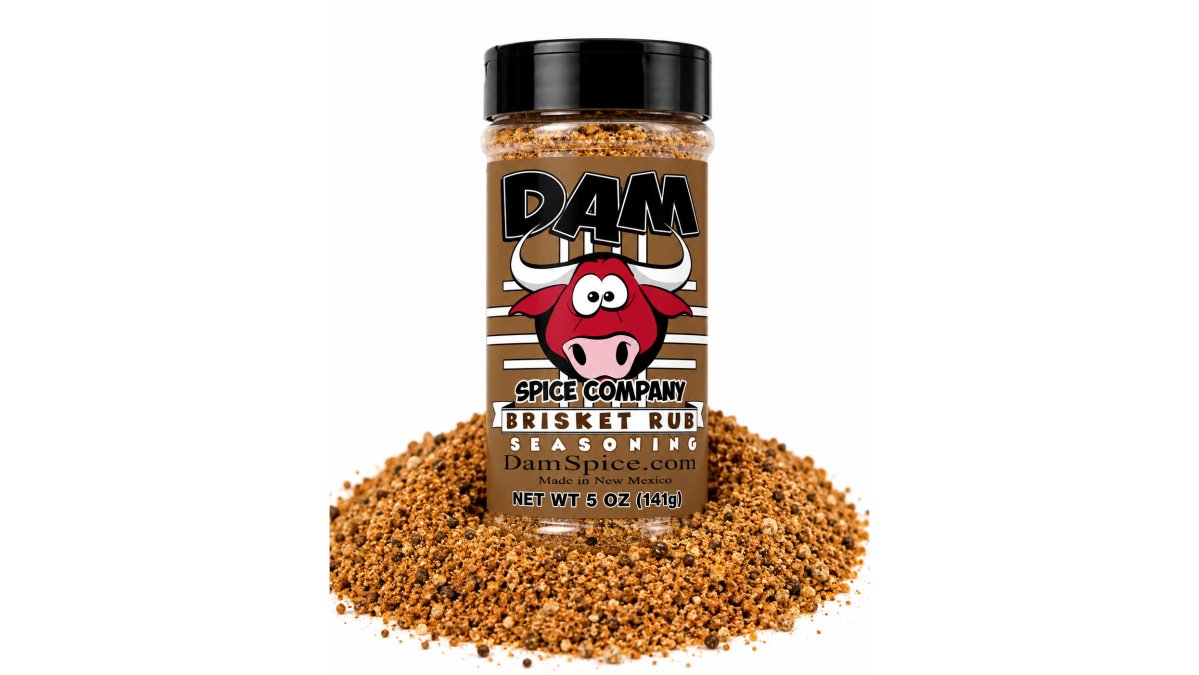
For beef, reach for Brisket Rub ($7.99), a savory, garlic-and-pepper blend built to form a bold Texas-style bark on low-and-slow cooks. The coarse grind matters: fine powders scorch at 225-250°F before the collagen breaks down, while a coarse grind toasts gradually and stays put through a long stall. It also works on chuck roast, tri-tip, and burgers. For smoke and heat, Kick Ass Rub ($7.99) brings Southwest-inspired medium heat with a sweet finish that suits ribs and steaks. For a simple baseline, SPG ($7.99) is just sea salt, cracked black pepper, and garlic, with no fillers or artificial additives.
Pork and Poultry
Pork and chicken need a different touch. Dam Butt Rub ($7.99) balances salty, sweet, and spicy for ribs, pulled pork, and roasts, with mild-to-medium heat; its sugar caramelizes during a long cook to build the mahogany bark pulled pork is known for. Dirty Bird ($7.99) is the chicken specialist: garlic, onion, herbs, and paprika with no sugar and no MSG, and it holds up whether you grill, smoke, roast, or air fry. Because it is sugar-free, it will not burn on a hot grill the way a sweet rub can. For holiday birds, Turkey Rub ($7.99) leans herbaceous with a lightly sweet finish.
| Rub | Best Protein | Flavor Profile | Heat | Sugar | Price |
|---|---|---|---|---|---|
| Brisket Rub | Beef brisket, tri-tip | Bold, garlic, pepper | Mild | No | $7.99 |
| Kick Ass Rub | Ribs, steaks, burgers | Smoky, bold, savory | Medium | Yes | $7.99 |
| SPG | Anything | Savory, garlic, peppery | Mild | No | $7.99 |
| Dam Butt Rub | Ribs, pulled pork | Salty, sweet, spicy | Mild-Medium | Yes | $7.99 |
| Dirty Bird | Chicken, turkey, wings | Savory, garlic, herb | Mild | No | $7.99 |
| Turkey Rub | Whole turkey, pork loin | Savory, herbaceous | Mild | Yes | $7.99 |
Matching Rubs to Allergen and Diet Needs
Here is how the lineup maps to common restrictions:
- Gluten-free: All six blends are built on spices, herbs, salt, and sugar with no wheat, barley, or rye fillers.
- Nightshade-free (AIP): Paprika and chili are nightshades, which rules out Brisket Rub, Kick Ass Rub, Dirty Bird, and Turkey Rub. SPG and Doctor's Choice (No Salt) are the safe picks.
- Corn-free: None of the blends list cornstarch, maltodextrin, or dextrose, but citric acid and 'natural flavors' can be corn-derived.
- Keto and paleo: Dirty Bird and SPG are sugar-free. Dam Butt Rub, Kick Ass Rub, and Turkey Rub contain sugar and are better suited to a maintenance or off-cycle day.
- Low sodium: Doctor's Choice (No Salt) is the only salt-free option; SPG and the others are salted and should be used with that in mind.
Sourcing and Storage Notes
Additive-free blends trade shelf stability for clean ingredients. Without anti-caking agents, they clump faster in humid kitchens, and without preservatives, ground spices lose their aromatic oils within roughly six months to a year of opening. Buy the size you will actually finish. Store jars sealed, away from the stove and direct sun, and use a dry spoon every time. If you stock up, keep bulk portions in an airtight container in the freezer and refill a small counter jar as needed.

Salt-free and sugar-free blends brown differently than conventional rubs. Pat your meat dry, apply a thin oil layer first, and give the rub 20 minutes to hydrate before it hits the heat. That is what makes the spices toast instead of steam.
Best Low Sodium Meat Seasonings for Health-Conscious Cooks
The best low sodium meat seasoning replaces salt with layered flavor rather than simply removing it. Doctor's Choice (No Salt) ($7.99) combines onion, garlic, mustard, paprika, and spices for a bold, well-balanced profile with no salt added, no MSG, and no fillers. It works on chicken, beef, pork, fish, eggs, and potatoes.
Salt-free blends brown differently than salted rubs. Pat your meat dry and apply a thin oil layer first so the spices adhere and toast properly instead of steaming.
If you are cutting sodium but still want some salt, use Doctor's Choice as your base and add a measured pinch of SPG, so you control the sodium instead of inheriting whatever a commercial blend decided for you.

Simple Weeknight Dinner Seasoning Ideas
Simple weeknight dinner seasoning ideas start with one rule: pick a blend that works across proteins and vegetables so you are not juggling five jars.
- Monday: Dirty Bird on sheet-pan chicken thighs with potatoes and broccoli, roasted at high heat
- Tuesday: SPG on pan-seared pork chops with a quick pan sauce
- Wednesday: Doctor's Choice on scrambled eggs, roasted cauliflower, and a baked potato bar
- Thursday: Kick Ass Rub on ground beef tacos with charred peppers and onions
- Friday: Sweet & Smokey BBQ Rub on grilled burgers and corn
The trick is applying the rub early. Even 20 minutes of dry brining lets the salt and spices pull moisture to the surface and then reabsorb it, which seasons the meat through rather than just coating it. For a deeper look at how dry brining changes texture and flavor, the USDA food safety guidance on poultry and meat preparation covers the handling basics that keep weeknight cooking safe.

Storing and Preserving Additive-Free Blends
Additive-free blends have a shorter shelf life than commercial rubs because nothing in the jar fights moisture or clumping. Ground spices lose their aromatic compounds over time, and heat, light, and humidity speed that decline. A closed jar in a cool, dark cabinet holds peak flavor for roughly six months to a year; above the stove, that window shrinks fast.
Storage rules that actually matter:
- Keep jars sealed and away from the stove, dishwasher, and direct sun
- Use a dry spoon, never a wet one, to avoid introducing moisture
- Label the open date so you know when to rotate stock
- Buy smaller jars if you cook seasonally rather than daily
- Store bulk seasoning in an airtight container in the freezer for long-term keeping
Conclusion
Finding genuinely additive-free meat rubs takes a few minutes of label reading, but the payoff shows up on the plate. The cleanest option is built from real spices with nothing hiding behind a "natural flavors" line. Dam Spice Company makes that easy with all-natural blends crafted in New Mexico, no additives of any kind, and flavor profiles built for everything from brisket to weeknight chicken. Start with a $0.50 sample of Doctor's Choice, or grab a full-size jar of Dirty Bird or Brisket Rub for $7.99 and taste the difference clean seasoning makes.
Frequently Asked Questions
What ingredients should I avoid in store-bought meat rubs?
Look out for anti-caking agents like silicon dioxide, preservatives such as BHT or sodium benzoate, and flavor enhancers like monosodium glutamate (MSG). These additives can hide behind names like 'natural flavor' or 'spices.' Also watch for high fructose corn syrup and excessive sodium. A clean rub should list recognizable ingredients like paprika, garlic, onion, and herbs. If you see items you can't pronounce, it's a sign the product may not be additive-free.
Are there healthy BBQ rubs that don't contain sugar or MSG?
Yes, many brands now offer sugar-free and MSG-free options. Look for rubs sweetened with small amounts of natural sugars like coconut sugar or molasses, or entirely savory blends. For MSG-free, check the label for 'no MSG' or 'no added MSG' and avoid autolyzed yeast extract. A good example is a simple salt, pepper, and garlic blend, which delivers flavor without additives. Always read the ingredient list to confirm.
How do I choose a high-quality, additive-free spice blend?
Start by reading the ingredient list: it should be short and consist of whole spices, herbs, and maybe salt or sugar. Avoid blends with anti-caking agents, preservatives, or artificial colors. Look for 'clean label' certifications or statements like 'no artificial additives.' Consider sourcing: brands that grind spices in small batches and disclose their sources tend to be more transparent. Finally, check for allergen info if needed, and opt for blends with a strong, fresh aroma.
Can you find flavorful meat rubs without artificial preservatives?
Absolutely. Many small-batch spice companies craft rubs without preservatives by using natural ingredients that also help preserve, like salt, sugar, and dried herbs. These blends rely on proper packaging and storage to maintain freshness. Look for rubs in airtight jars or resealable bags, and check for a 'best by' date. Without preservatives, the flavor can fade over time, so buy from brands that prioritize freshness and store your rubs in a cool, dark place.
The challenge with additive-free cooking is not finding flavor, it is finding blends you can trust without reading every label twice. Dam Spice Company solves that with all-natural ingredients, authentic Southwest flavor profiles, and blends made in New Mexico with no additives of any kind. Whether you need a no-salt option for health-conscious cooking or a bold rub for barbecue, Dam Spice Company has a jar for it. Get started with Dam Spice Company and season every meal with confidence.