

Best Oil for Roasting Vegetables: 7 Top Picks
Table of Contents
- Why Your Choice of Oil for Roasting Vegetables Matters
- Comparison Table: Top Oils for Roasting at a Glance
- Smoke Point of Cooking Oils: The Science That Decides Crispy vs. Burnt
- The 5 Best Oil Types for Roasting Vegetables, Ranked
- Roasting Vegetables Temperature Guide: Heat, Time, and Oil Together
- How to Season Roasted Vegetables: Oil as the Flavor Carrier
- Oil-Free Roasting and Sustainability: Two Angles Most Guides Miss
- Common Mistakes to Avoid When Oiling Vegetables
- Frequently Asked Questions
Last Updated: September 7, 2026
Choosing the best oil types for roasting vegetables often comes down to a single question: how hot is your oven going to get? The oil for roasting vegetables you select determines whether you get crispy, caramelized edges or a smoke-filled kitchen and a bitter, burnt tray. We spend our days thinking about flavor, and the fat you roast with is the foundation that carries every seasoning you shake on top.
Here is the short answer: oils with a high smoke point, like avocado oil, outperform delicate ones for standard roasting temperatures between 400°F and 450°F. The smoke point is the temperature at which an oil begins to break down, producing acrid smoke and harmful compounds (the FDA). This guide will walk you through the five best oils for the job, the science of heat stability, and how to season the final result so your vegetables actually taste like something.
Why Your Choice of Oil for Roasting Vegetables Matters
The oil you use does far more than prevent sticking. It drives heat conduction across the vegetable's surface, which directly triggers the Maillard reaction and caramelization. Those are the chemical processes responsible for the deep brown, savory crust that makes roasted vegetables irresistible.
A common mistake is reaching for extra virgin olive oil for everything because it is "healthy." While EVOO is a fantastic finishing oil, its lower smoke point means it can degrade at high roasting temperatures, leading to off-flavors and a loss of the very nutrients you want. The right oil creates a crispy texture while acting as a carrier for fat-soluble vitamins like A, D, E, and K found in many vegetables.
The choice also impacts your health. Oils rich in monounsaturated fats, such as avocado and olive oil, are more stable at heat than polyunsaturated options like grapeseed oil, which are more prone to lipid oxidation (peer-reviewed research). For a strong, everyday roasting oil, you want something stable, flavorful, and suited to the heat.
Comparison Table: Top Oils for Roasting at a Glance
| Oil Type | Smoke Point | Flavor Profile | Best Use Case |
|---|---|---|---|
| Avocado Oil | 500°F+ | Neutral | High-heat roasting, all vegetables |
| Extra Virgin Olive Oil | 350-410°F | Fruity, peppery | Lower-temp roasting, finishing |
| Ghee / Clarified Butter | 450-485°F | Nutty, rich | Root vegetables, Mediterranean dishes |
| Grapeseed Oil | 420-450°F | Neutral | Sheet-pan roasts, mild flavor desired |
| Refined Coconut Oil | 400-450°F | Slightly sweet, aromatic | Sweet potatoes, tropical dishes |
Smoke Point of Cooking Oils: The Science That Decides Crispy vs. Burnt
Smoke point is the threshold where an oil's triglycerides break down into free fatty acids and glycerol, releasing smoke. Once you cross that line, you are not just tasting burnt oil; you are introducing bitter flavors and potentially harmful free radicals into your food.
Most home roasting happens between 400°F and 450°F. If your oil's smoke point sits below your oven temperature, you will hit the smoke point threshold before your vegetables finish roasting. This is why refined oils, which have been processed to remove free fatty acids and impurities, generally have higher smoke points than their cold-pressed or unrefined counterparts.
For high-heat cooking, choose oils with a smoke point comfortably above 450°F. Avocado oil leads the pack here, followed closely by ghee. Extra virgin olive oil, despite its health halo, sits in a lower range, making it better suited for roasting at 375°F or for a final drizzle after the vegetables come out of the oven.
The 5 Best Oil Types for Roasting Vegetables, Ranked
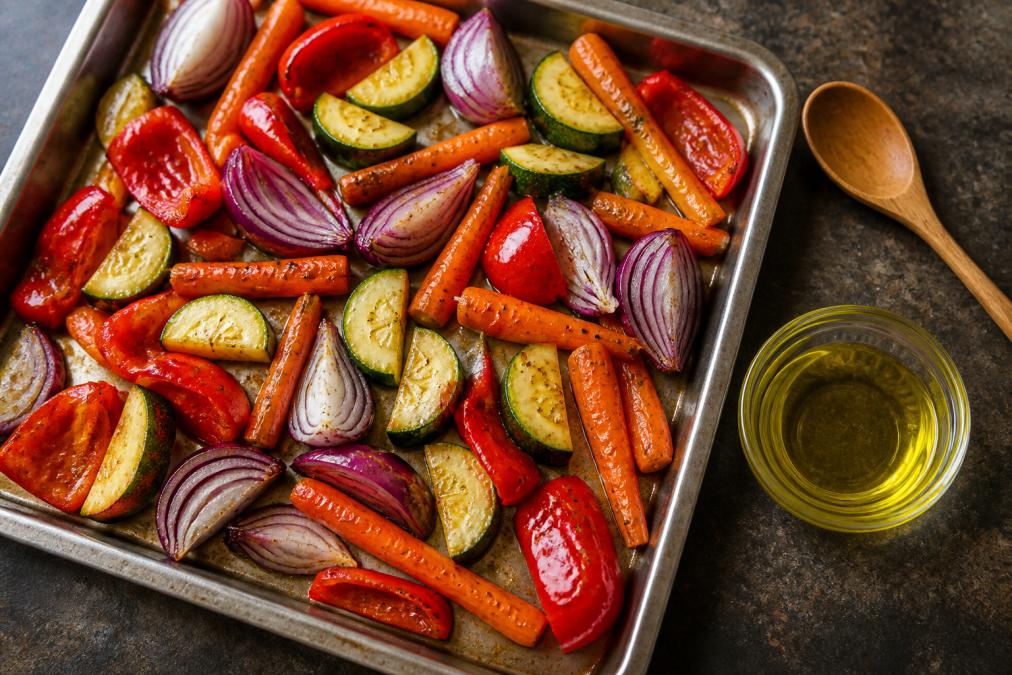
These five oils cover every culinary application you will face in the oven. They are ranked by a combination of heat tolerance, flavor contribution, and versatility.
1. Avocado Oil: The High-Heat Champion
Avocado oil is the gold standard for roasting because its smoke point hovers around 500°F, far above any home oven temperature (aocs.org). This gives you a massive margin of error, ensuring the oil remains stable even if your oven runs hot. Its neutral flavor lets the vegetables and your seasonings take center stage.
This is the best oil for roasting vegetables when you want a pure, clean canvas. It allows for maximum caramelization without introducing competing flavors. The high monounsaturated fat content also makes it a heart-healthy choice that resists oxidation well.
2. Extra Virgin Olive Oil: The Flavorful All-Rounder
Extra virgin olive oil brings a fruity, sometimes peppery flavor profile that pairs beautifully with Mediterranean-style vegetables like zucchini, eggplant, and tomatoes. The key is to respect its limits. Roasting at 400°F or higher risks pushing it past its smoke point and turning the flavor bitter.
Use EVOO for roasting at moderate temperatures of 375°F to 400°F, or toss your vegetables in it after they have roasted to add a fresh, vibrant finish. It is a versatile oil for roasting vegetables that rewards attention to temperature. Its strong flavor means you need less salt and fewer spices to achieve a satisfying result.
3. Ghee and Clarified Butter: Richness Without the Burn
Ghee is clarified butter with the milk solids removed, which gives it a significantly higher smoke point than regular butter, around 480°F. This process leaves behind a rich, nutty flavor that is unmatched for root vegetables like carrots, parsnips, and potatoes.
The flavor profile of ghee adds a savory depth that neutral oils cannot replicate. It excels in high-heat cooking and brings out the natural sweetness of vegetables through enhanced caramelization. The saturated fat in ghee is stable at high temperatures, making it a safe and delicious choice for roasting.
4. Grapeseed Oil: The Neutral High-Heat Workhorse
Grapeseed oil is a refined oil with a neutral flavor and a smoke point around 420°F to 450°F. It is a reliable workhorse that does not interfere with the taste of your food, making it a solid choice for sheet-pan dinners where you want the seasoning to be the star.
Its main drawback is a higher proportion of polyunsaturated fats, which are less stable under heat and can contribute to lipid oxidation. While it works well for roasting, it is not the optimal choice for nutrient retention compared to monounsaturated-rich oils. Use it when you need a dependable, flavorless oil and are roasting at moderate temperatures.
5. Refined Coconut Oil: Aromatic and Stable
Refined coconut oil has a neutral flavor and a smoke point near 400°F to 450°F, making it more versatile for cooking than its unrefined, virgin counterpart. It is a stable saturated fat that resists heat well, and it is an excellent option for adding a subtle richness.
This oil pairs wonderfully with sweet vegetables like butternut squash and sweet potatoes. For a more aromatic result, you can use unrefined coconut oil, but be mindful of its lower smoke point and distinct coconut taste, which may not suit every culinary application.
Roasting Vegetables Temperature Guide: Heat, Time, and Oil Together
Temperature and time work in tandem with your oil choice. Dense vegetables like potatoes and carrots require a higher oven temperature of 425°F to 450°F to soften internally and crisp externally. Delicate vegetables like broccoli and asparagus roast well at 400°F to 425°F.
A practical approach is to set your oven to 425°F for most vegetables. At this temperature, you need an oil with a smoke point above that mark, which is why avocado oil and ghee are top picks. The roasting duration typically ranges from 20 to 40 minutes, depending on the vegetable's density and cut size.
Ensure your vegetables are spread in a single layer on a baking sheet lined with parchment paper. Overcrowding traps steam and prevents the heat conduction needed for a crispy texture. Give them space, and they will brown instead of steam.
How to Season Roasted Vegetables: Oil as the Flavor Carrier
Oil does more than cook; it dissolves and distributes fat-soluble flavor compounds from your spices across every surface of the vegetable. This is why seasoning is most effective when mixed with the oil before roasting.
Start with a base toss of oil and salt. Then, add your spices. A bold, earthy blend like Dam Dirt from Dam Spice Company, with its smoky paprika, garlic, and cayenne, transforms a simple tray of root vegetables into a Southwestern feast. For a simpler approach, our SPG (Salt, Pepper, Garlic) is a versatile base that never overpowers.

The ratio matters. Use about one to two tablespoons of oil per pound of vegetables. This is enough to coat without leaving a greasy pool at the bottom of the pan. Toss thoroughly to ensure every piece has a thin, even layer for optimal caramelization.
Oil-Free Roasting and Sustainability: Two Angles Most Guides Miss
You can achieve a crispy texture without any oil. Dry roasting relies on the vegetable's own moisture and natural sugars to caramelize. This works well for vegetables with high water content, like broccoli and cauliflower, when roasted at high heat until the edges char.
To dry roast, spread the vegetables on a parchment-lined baking sheet and roast at 425°F. The lack of oil means they will not brown as evenly, but the concentrated flavor and lower caloric load are benefits. Another alternative is using a small amount of vegetable broth for the initial roasting phase to help the seasoning stick without added fat.
Sustainability is another angle worth your attention. The environmental impact of oils varies significantly. Palm oil production is linked to deforestation, while olive and avocado oils have a lower land footprint. Choosing cold-pressed, locally sourced oils when possible supports more sustainable agricultural practices and often yields a fresher, more flavorful product.
Common Mistakes to Avoid When Oiling Vegetables
The most frequent error is using too much oil. Vegetables that swim in oil steam rather than roast, resulting in a soggy texture. You only need a light, even coating.
Another common mistake is using a low smoke point oil at high heat. This not only ruins the flavor of the dish but can also release harmful compounds into your kitchen air. Always match the oil to your roasting temperature, not the other way around.
Finally, do not forget to season in layers. Seasoning only at the end results in a surface-level flavor. Toss your vegetables with oil and a spice blend like Dam Butt Rub, which is salty, sweet, and spicy, before roasting to build a flavorful crust. The sugar in such rubs will caramelize beautifully, creating a complex, finger-lickin' result.

Frequently Asked Questions
What is the healthiest oil to use for roasting vegetables?
Extra virgin olive oil and avocado oil are the healthiest choices for roasting vegetables. Both are rich in monounsaturated fats, which are stable at high heat, and they help your body absorb fat-soluble vitamins like A, D, E, and K from the vegetables. Avocado oil has a higher smoke point (about 500°F), while extra virgin olive oil is best kept at or below 425°F. For most home ovens roasting between 400°F and 450°F, either works well.
Does the smoke point of an oil matter when roasting vegetables?
Yes, the smoke point matters because it is the temperature where an oil breaks down, releases free radicals, and starts producing acrid smoke. That smoke gives roasted vegetables a bitter, burnt flavor and introduces harmful compounds. Since most roasting happens between 400°F and 450°F, choose oils with smoke points above 425°F, like avocado oil (500°F), ghee (485°F), or grapeseed oil (420°F). Extra virgin olive oil (375°F) is fine at lower temperatures but can smoke in a very hot oven.
Can you roast vegetables without using any oil?
Yes, you can roast vegetables without oil, but the texture will be different. Dry roasting relies on the vegetable's own moisture, which produces steamed, softer results rather than crispy, caramelized edges. To get closer to an oiled texture without oil, toss vegetables in a small amount of vegetable broth or aquafaba before roasting. You can also roast at a higher temperature, around 450°F, and flip halfway through to encourage browning, though the Maillard reaction will be less pronounced without fat.
What is the secret to perfectly crispy roasted vegetables?
The secret to crispy roasted vegetables is a combination of three factors: high heat (425°F to 450°F), enough oil to coat without pooling, and space on the pan. Crowding the baking sheet traps steam and prevents caramelization. Use about 1 to 2 tablespoons of oil per pound of vegetables, spread them in a single layer, and leave space between pieces. Tossing with a bold seasoning blend like DAM Dirt adds a smoky crust that complements the natural sweetness of roasted vegetables.
Selecting the right oil for roasting vegetables is the first step to a perfect tray, but the seasoning is what makes it memorable. At Dam Spice Company, we craft all-natural, additive-free blends in New Mexico that are designed to turn simple roasted vegetables into the highlight of your meal. Try our smoky Dam Dirt or the versatile SPG to bring out the best in your next sheet pan, and get started with bold flavor today.