

How to Avoid Bland Home Cooking: 7 Fixes
Table of Contents
- Why Does My Cooking Taste Bland? The Real Culprits
- Step 1: Season Every Layer, Not Just the Surface
- Step 2: Use Acid to Brighten Flat Flavors
- Step 3: Fix Bland Food with Fat and Umami
- Step 4: Master Heat and the Maillard Reaction
- Tips for Cooking with Southwest Spices
-
Common Mistakes That Lead to Bland Home Cooking
- Mistake 1: Salting Only at the End (The Osmosis Problem)
- Mistake 2: The Wrong Pan Material for the Job
- Mistake 3: Crowding the Pan (The Steam Trap)
- Mistake 4: Old Spices That Smell Like Nothing
- Mistake 5: Ignoring the Pan Fond
- Mistake 6: The Equipment Blind Spot
- The 60-Second Fix-It Checklist
- When Bland Is Actually a Texture Problem
- Conclusion: Build a Flavor Profile That Works
- Frequently Asked Questions
Last Updated: September 6, 2026
Why Does My Cooking Taste Bland? The Real Culprits
Bland home cooking rarely comes down to a missing ingredient. More often, it is a systems failure: salt added only at the end, acid ignored entirely, and heat that never gets hot enough to build crust. In this guide from Dam Spice Company, we break down the most common reasons food falls flat and show you how to avoid bland home cooking by addressing flavor at every stage.

The real culprits behind flat food are predictable: under-seasoning, skipping acidic brightness, forgetting that fat carries flavor, and rushing the browning that creates depth. Treat flavor as a layered build, not a single event.
Step 1: Season Every Layer, Not Just the Surface
Seasoning every layer means adding salt and spices to each component as you cook, rather than relying on a final dusting. This is the single most important technique for avoiding bland home cooking. Salt only the surface at the end and you get salty exterior bites and dull interiors; season each component individually and every forkful tastes complete.
Start with a baseline seasoning early: salt meat before it hits the pan, season onions and garlic as they soften, and add a pinch of salt to pasta or rice water. Each layer builds on the last.
A common mistake is using the same bold rub on every protein; it can overwhelm delicate fish or eggs. A versatile base like SPG complements nearly everything without fighting the main ingredient.

Step 2: Use Acid to Brighten Flat Flavors
Acid is the fastest fix for food that tastes dull or one-dimensional. A squeeze of citrus or a splash of vinegar wakes up flavors that salt alone cannot reach, cutting through richness and making ingredients more distinct.
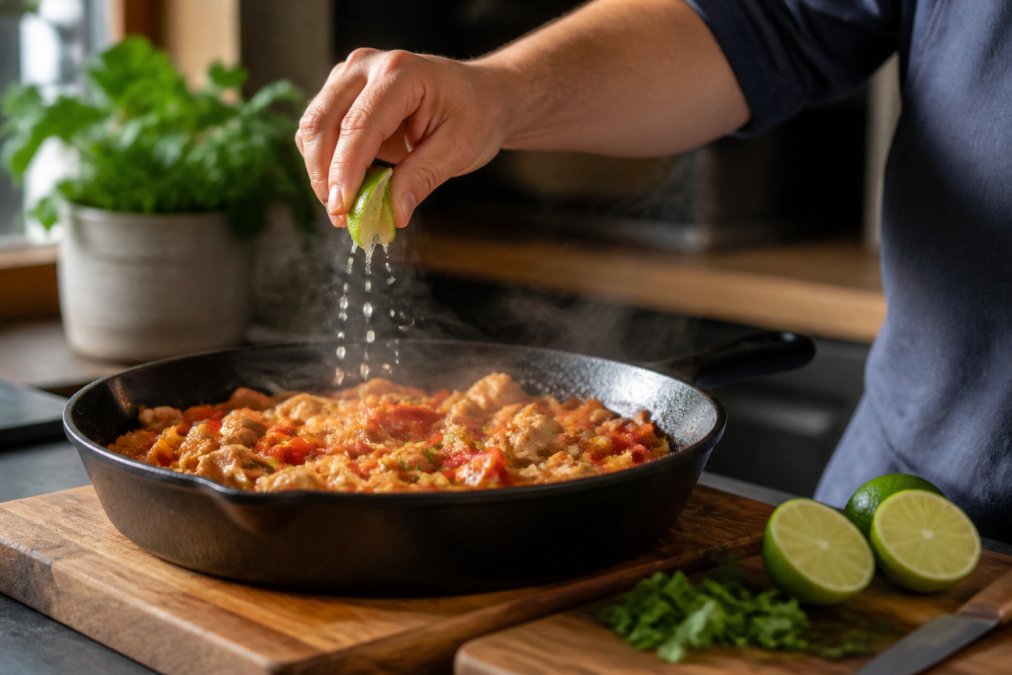
If a dish tastes bland after seasoning, try adding acid before reaching for more salt. A teaspoon of vinegar or a squeeze of lemon juice can transform a flat tomato sauce or dull beans.
The science is straightforward: acid changes the pH of your food, which alters how your taste buds perceive other flavors. According to the American Chemical Society's explainer on flavor chemistry, acids can suppress bitterness and enhance the perception of saltiness, which is why a properly balanced vinaigrette makes salad taste seasoned with less salt.
Step 3: Fix Bland Food with Fat and Umami
Fat carries flavor, and umami provides the savory depth that makes food satisfying. Many bland dishes are simply too lean. Butter, olive oil, or cream coat your palate and extend flavor, while umami-rich ingredients like mushrooms, tomatoes, and aged cheese add the savory note that signals proper cooking.
If a dish tastes flat after salt and acid, try enriching it with a pat of butter or a drizzle of good olive oil, the flavor profile often suddenly opens up.
Umami can come from unexpected places: a splash of soy sauce, a spoonful of miso, or anchovies melted into a sauce. For a no-salt option, Doctor's Choice from Dam Spice Company layers onion, garlic, and mustard to build umami without relying on sodium.
Step 4: Master Heat and the Maillard Reaction
The Maillard reaction is the browning process that creates hundreds of flavor compounds when food hits high heat. It is the difference between a gray, steamed steak and a deeply crusted, savory one.
Get your pan truly hot before adding food, a drop of water should sizzle instantly. Pat meat dry before searing, since surface moisture must evaporate before browning begins, and avoid crowding the pan.
Caramelization (browning of sugars) and the Maillard reaction (amino acids and sugars together) both require heat management and build the complex flavors that make food taste cooked. Mastering stovetop heat is non-negotiable.
Tips for Cooking with Southwest Spices
Southwest spices fail in most home kitchens for one specific reason: they are added at the wrong stage or bloomed at the wrong temperature. Unlike fine European herbs, the dried chilies, cumin, and oregano in Southwest blends need heat and moisture to unlock their volatile oils. If your chili tastes flat or your fajita seasoning tastes raw, the problem is the sequence, not the spice quality.
The Blooming Sequence That Actually Works
Ground spices release their flavor compounds in fat, not water (peer-reviewed research). The standard professional sequence:
- Heat your oil or butter over medium heat until it shimmers but does not smoke (about 350°F if you are using a thermometer).
- Add your ground Southwest spices directly to the hot fat.
- Stir constantly for 20 to 30 seconds. You will smell the difference immediately, the aroma shifts from dusty to sweet and pungent.
- Immediately add your aromatics (onion, garlic) or liquid to stop the spices from scorching.
This 30-second bloom is the difference between a chili that tastes like boiled powder and one that tastes like a slow-cooked ristra. Capsaicin and cumin's essential oils are fat-soluble; water alone cannot extract them effectively.
Why Your Stir-Fry Goes Flat (And It Is Not the Wok)
A common pattern is applying Southwest spices to high-heat cooking like stir-frying. Ground spices burn at around 350°F to 375°F, well below the 400°F+ surface of a preheated skillet. Burnt cumin and chili taste bitter, which your palate reads as "bland" because the bitterness masks the protein's sweetness.
The fix for high-heat cooking: skip the dry rub and make a wet paste, one part spice blend, one part oil, one part acid (lime juice or vinegar). Apply it to the meat 30 minutes before cooking; the oil buffers the spice against direct heat and the acid helps flavor penetrate.
Troubleshooting by Dish Type
| Dish | Why It Tastes Flat | The Fix |
|---|---|---|
| Chili or stew | Spices added to water, not fat | Bloom spices in oil before adding liquid |
| Grilled meat with dry rub | Rub burned on the surface | Use a wet paste, or apply rub after searing |
| Rice or beans | Spices never toasted | Toast whole cumin or coriander in a dry pan for 60 seconds before grinding or adding |
| Sautéed vegetables | Spices added too late | Add spices to the hot oil before vegetables go in |
The Shelf-Life Problem Specific to Ground Chilies
Ground chili powder loses its bright top notes within six months of opening, far faster than whole dried chilies (peer-reviewed research). If your dish tastes dusty, check the harvest date, most grocery store powders sit in warehouses for a year or more. Whole dried New Mexico chilies retain flavor for up to two years in an airtight container away from light. Toasting them for 60 to 90 seconds per side, then rehydrating in hot water for 20 minutes, yields a puree that outperforms any pre-ground powder.
The Acid Balance Southwest Food Needs
Southwest cuisine relies on an acid balance most home cooks skip. The heat from chilies and the earthiness of cumin need a bright counterpoint, lime juice, apple cider vinegar, or even salsa verde. If the heat feels flat or spices taste heavy, add acid one teaspoon at a time until flavors brighten. This is why lime is essential on tacos: it is structural, not garnish.
Common Mistakes That Lead to Bland Home Cooking
The most common mistakes are not about missing ingredients, they are about missing mechanisms. Salt timing, pan material, spice age, and heat delivery each follow physical and chemical rules; understand the mechanism and the fix becomes obvious.
Mistake 1: Salting Only at the End (The Osmosis Problem)
Salting at the end creates a surface hit that fades and never penetrates the interior. Salt needs time to diffuse via osmosis: roughly 20 to 30 minutes for a 1-inch chicken breast at refrigerator temperature, 40 minutes or more for a steak. End-only salting yields a salty crust and dull interior, the definition of bland.
The fix: Salt meat 30 to 45 minutes before cooking, or use a wet brine (6% salt by weight in water) for 2 to 4 hours. For vegetables, salt them 10 minutes before cooking to draw out moisture and season the interior.
Mistake 2: The Wrong Pan Material for the Job
A thin stainless steel pan heats unevenly, scorching one area while leaving another raw. Nonstick cannot reach Maillard temperatures, most coatings degrade above 500°F. If food tastes steamed rather than seared, your pan may be the culprit.
The fix: Use cast iron or heavy stainless steel for searing. Preheat for 3 to 5 minutes over medium-high heat before adding oil. A drop of water should bead and dance, the Leidenfrost effect, indicating the pan has reached roughly 380°F to 400°F.
Mistake 3: Crowding the Pan (The Steam Trap)
Adding too much food to a hot pan drops the surface temperature below 212°F, so food steams rather than sears. The Maillard reaction requires surface temperatures above 310°F; below that, you get gray, boiled food with no crust.
The fix: Cook in batches, leaving at least 1 inch between pieces. If you hear a gentle hiss rather than a vigorous sizzle, the pan is too crowded, remove food, let the pan reheat for 60 seconds, and continue.
Mistake 4: Old Spices That Smell Like Nothing
Ground spices lose volatile oils through oxidation immediately after grinding. After 12 months, most retain less than half their aromatic potency; after 3 years, they contribute mostly texture and bitterness.
The smell test is reliable: if a spice does not smell intensely aromatic when opened, it will not flavor your food. Whole spices last 3 to 4 years because the oils are protected inside the seed or pod.
The fix: Replace ground spices every 6 to 12 months, write the purchase date on the jar, and grind whole spices in a dedicated coffee grinder for the freshest flavor.
Mistake 5: Ignoring the Pan Fond
The browned bits stuck to the pan after searing, the fond, are concentrated Maillard flavor compounds. Leaving them to burn or washing them down the drain discards the most flavorful part of cooking.
The fix: Deglaze the pan after searing with 1/4 cup of stock, wine, or water, scraping with a wooden spoon. The fond dissolves into an instant sauce base, this single step adds more flavor than any spice blend.
Mistake 6: The Equipment Blind Spot
Electric stovetops cycle on and off, creating temperature swings of 50°F or more that interrupt the Maillard reaction. Gas provides continuous heat, but most home burners max out at 12,000 to 15,000 BTU, far below a restaurant wok burner's 30,000 BTU.
The fix: On electric, preheat 5 to 7 minutes and use cast iron to retain heat through off-cycles. On gas, use the highest flame for searing and a lower burner for finishing. If browning remains elusive, a portable induction burner ($60 to $100) maintains precise temperature control and solves the problem permanently.
The 60-Second Fix-It Checklist
| Problem | Mechanism | Immediate Action |
|---|---|---|
| Food tastes flat despite salt | Salt never penetrated interior | Salt earlier, or add acid (vinegar or citrus) |
| Meat is gray, not brown | Pan below 310°F | Preheat longer, dry the surface, cook in batches |
| Spices taste dusty | Volatile oils oxidized | Replace spices older than 12 months |
| Sauce tastes thin and weak | Fond left in the pan | Deglaze with stock or wine |
| Vegetables taste watery | Salt added too late | Salt vegetables 10 minutes before cooking |
When Bland Is Actually a Texture Problem
Texture directly influences flavor perception. A thin sauce coats the palate poorly, and dry meat releases fewer flavor compounds as you chew. If a dish tastes bland despite correct seasoning, check texture first: reduce the sauce until it coats the back of a spoon, and let meat rest 5 to 10 minutes so juices redistribute.
Conclusion: Build a Flavor Profile That Works
Bland home cooking is fixable, but it requires changing how you approach the stove: season every layer, reach for acid when flavors stall, let fat and umami carry depth, master your heat, and keep spices fresh.
At Dam Spice Company, we build blends that make this easier. Our all-natural, additive-free seasonings are crafted in New Mexico with authentic Southwest spices, giving you smoky, savory, and spicy notes in a single shake. Try the Hot Pizza Seasoning on pasta night or the Everything Bagel blend on roasted vegetables to see how much depth the right spice mix adds.

Get started with Dam Spice Company and turn your next meal into something worth seconds.
Frequently Asked Questions
Why does everything I cook taste bland?
Bland home cooking usually comes down to three fixable mistakes: underseasoning, skipping acid, and cooking at the wrong temperature. Most home cooks add salt only at the table, which means the seasoning never penetrates the food. Try salting early in layers while you cook. Finish with a squeeze of citrus or a splash of vinegar to add acidic brightness. Finally, make sure your pan is hot enough to brown the food. That browning creates flavor no spice blend can replace.
What is the best way to season food properly?
Seasoning properly means adding salt, spices, and aromatics at each stage of cooking, not just at the end. Start by salting meat or vegetables before cooking to draw out moisture and build a base. Add dried spices early so they bloom in the heat, and reserve fresh herbs for the final minutes. Taste as you go and adjust. A no-salt blend like Doctor's Choice lets you add savory depth without worrying about over-salting.
How can I add more depth of flavor to my home-cooked meals?
Depth comes from layering flavors: salt, fat, acid, and heat. First, brown your ingredients properly to trigger the Maillard reaction, which creates savory complexity. Then deglaze the pan with stock or broth to capture those browned bits. Add an umami-rich ingredient like mushrooms or tomato paste. Finish with a pinch of finishing salt and a dash of citrus juice or vinegar. This combination of techniques transforms flat, one-dimensional dishes into balanced meals.
How do I use spice blends to improve my cooking?
Use spice blends as a complete flavor base, not just a final dusting. For Southwest cooking, try a blend with salt, pepper, and garlic like SPG on meats before grilling or roasting. Add blends early in the cooking process so the spices bloom in the heat and infuse the dish. For vegetables or eggs, a no-salt blend works well since it adds savory flavor without extra sodium. Start with a light coat, taste, and add more as needed.