

Natural Seasoning for Healthy Home Cooking
Table of Contents
- Why Natural Seasoning Matters for Home Cooks
- Salt-Free Seasoning Blends That Deliver Bold Flavor
- Essential Spices and Culinary Herbs for Your Pantry
- Benefits of Cooking with Herbs and Spices
- How to Season Vegetables for Healthy Cooking
- Practical Seasoning Techniques for Everyday Meals
- Budget-Friendly Bulk Buying and Spice Storage
- Conclusion
- Frequently Asked Questions
Last Updated: September 3, 2026
Why Natural Seasoning Matters for Home Cooks
Natural seasoning for healthy home cooking transforms everyday meals without relying on salt, sugar, or artificial additives. Packaged seasonings often contain fillers, anti-caking agents, and hidden sodium that accumulate across the week. Natural spices and herbs deliver bold, authentic flavors while giving you control over what enters your body.
At Dam Spice Company, we've spent years crafting all-natural spice blends designed specifically for home cooks who refuse to compromise on taste. Our New Mexico-sourced seasonings prove that eliminating salt and additives doesn't mean sacrificing the savory, complex flavors that make food memorable.
When you work with pure spices and culinary herbs, you learn how flavors layer and build. You stop relying on salt as a crutch and start using garlic, paprika, black pepper, and other aromatic ingredients to create depth. This is where home cooking becomes genuinely exciting.
Salt-Free Seasoning Blends That Deliver Bold Flavor
Salt-free seasoning blends are the foundation of healthy home cooking. The right no-salt blend creates savory depth through layered spices rather than sodium.
A quality blend combines aromatic elements (garlic, onion), heat (black pepper, mustard seed), and depth (paprika, herbs) in ratios that work together rather than competing. Doctor's Choice (No Salt) from Dam Spice Company is specifically engineered for this purpose. It combines onion, garlic, mustard, paprika, and complementary spices to create rich, well-balanced flavor without sodium. Use it on meats, vegetables, eggs, or potatoes, it works across everything.

When you remove salt as the dominant flavor, other ingredients shine. Garlic becomes more aromatic. Paprika adds smoky sweetness. Mustard seed contributes subtle heat and umami. These elements create complexity that salt alone never could.
The practical advantage: a no-salt blend like Doctor's Choice gives you complete control over sodium intake while delivering restaurant-quality flavor. For people managing blood pressure or following specific dietary restrictions, this is transformative.
Essential Spices and Culinary Herbs for Your Pantry
Every home cook needs a foundation of essential spices and culinary herbs that work across multiple cuisines and cooking methods.
Garlic: The Umami Foundation
Garlic is the single most important spice in any healthy kitchen. Dried garlic powder delivers concentrated umami, that savory, mouth-filling quality that makes food taste complete. Unlike fresh garlic, which mellows as it cooks, garlic powder maintains its intensity throughout the cooking process.
Garlic works as the base layer in nearly every savory application. Sprinkle it on roasted vegetables, mix it into marinades, dust it over grilled chicken, or combine it with other spices for custom blends. The umami compounds in garlic trigger the same satisfaction receptors that salt does, which is why garlic-forward seasonings feel so satisfying without sodium.
Paprika: Smoky Depth Without Heat
Paprika brings smoky sweetness and visual appeal to dishes without adding heat. Sweet paprika works across vegetables, chicken, and fish. Smoked paprika adds that grilled, barbecued quality to dishes cooked indoors. The antioxidant properties in paprika make it a nutritional bonus alongside its flavor benefits.
Paprika's real power in healthy cooking is that when food looks deeply colored and smells smoky, your brain expects bold flavor. A generous dusting on roasted vegetables or grilled chicken creates the impression of complex preparation, even when you've simply applied a quality spice blend.
Black Pepper and Mustard Seed: Antioxidant Powerhouses
Black pepper and mustard seed are the heat and bite in a well-constructed seasoning blend. Both contain antioxidant compounds that contribute to anti-inflammatory benefits. Black pepper's piperine compound enhances nutrient absorption and adds peppery bite (peer-reviewed research). Mustard seed contributes subtle heat, earthiness, and umami.
These spices work best when freshly cracked or toasted. Whole black peppercorns ground just before use deliver more volatile oils and sharper flavor than pre-ground pepper. Similarly, toasting mustard seeds for 30 seconds in a dry pan before grinding intensifies their flavor.
Benefits of Cooking with Herbs and Spices
When you shift toward natural seasoning for healthy home cooking, you're making a choice that affects digestion, inflammation, and overall nutrient density of meals. Culinary herbs and spices contain concentrated micronutrients and bioactive compounds. Oregano and rosemary are rich in antioxidants. Turmeric contains curcumin, a compound studied for anti-inflammatory properties (peer-reviewed research). Ginger aids digestive health. Garlic supports cardiovascular function.
Spices like black pepper, cumin, and ginger stimulate digestive enzymes and improve nutrient absorption. When you season food with these ingredients rather than salt, you're actually making the food more nutritious.
Research from the American Heart Association's dietary guidelines emphasizes that reducing sodium intake while increasing herb and spice use is one of the most effective dietary changes for cardiovascular health. When you cook with natural seasoning for healthy home cooking, you're following evidence-based nutrition guidance.
How to Season Vegetables for Healthy Cooking
Seasoning vegetables properly is where natural spices show their true power. Raw vegetables are nutritious but often boring. The right seasoning transforms them into something people actually want to eat.
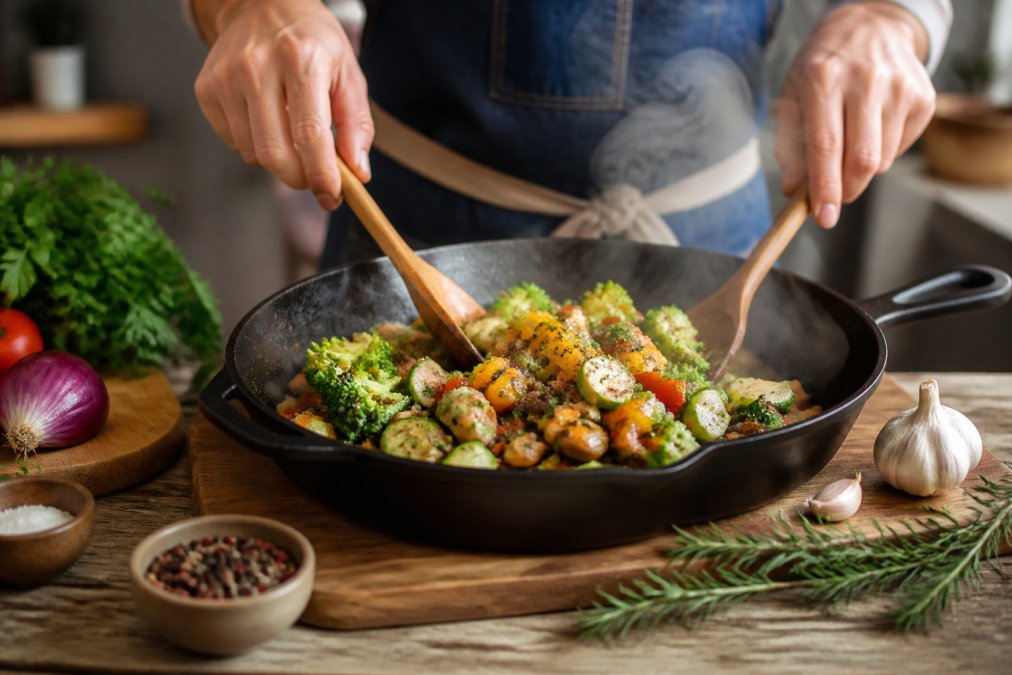
The foundation for seasoning vegetables is simple: oil, heat, and spices. Toss your vegetables in a small amount of olive oil, add your seasoning blend, and roast or pan-sear until they develop color and tenderness. The combination of heat and oil helps spice flavors bloom and distribute evenly.
For roasted vegetables, use roughly one-quarter teaspoon of seasoning blend per cup of vegetables. Add spices before cooking so they have time to infuse into the vegetables as they cook. High heat, 425°F or higher for roasting, creates browning that intensifies vegetable flavors and makes seasoning more impactful.
Different vegetables pair with different spices. Cruciferous vegetables like broccoli and cauliflower work beautifully with garlic-forward blends. Root vegetables like carrots and potatoes benefit from warmer spices like paprika and cumin. Leafy greens like kale pair well with garlic and black pepper.
Practical Seasoning Techniques for Everyday Meals
Mastering a few core seasoning techniques transforms how you cook.
Building Flavor Layers with Dry Rubs and Marinades
Dry rubs and marinades are the two most effective ways to build complex flavor in proteins and vegetables. A dry rub is a mixture of spices applied directly to food before cooking. A marinade combines spices with an acidic or oily liquid that penetrates the food over time.
Dry rubs work best on proteins with surface area, steaks, chicken breasts, ribs, fish fillets. Apply the rub generously, let it sit for at least 15 minutes (ideally 2-4 hours) so spices adhere and flavor compounds begin to penetrate, then cook.
The ratio for a basic dry rub is roughly 2 parts savory spices (garlic powder, onion powder, paprika, black pepper) to 1 part heat (cayenne, mustard powder) to 1 part aromatic herbs (oregano, thyme, cumin).
Marinades work differently. The liquid component carries spices deeper into the food. For vegetables, a 30-minute marinade is sufficient. For tougher proteins, 4-8 hours gives better penetration. A simple marinade for vegetables combines olive oil, vinegar, garlic, paprika, and black pepper.
Toasting and Infusing Spices for Maximum Impact
Toasting spices before using them intensifies their flavor and adds aromatic complexity. Heat a dry pan over medium heat, add whole spices (black pepper, mustard seed, cumin seed, coriander seed), and toast for 30-60 seconds, shaking the pan occasionally. Stop immediately when fragrant; a few seconds too long and spices burn.
Grind toasted spices immediately before using them. The volatile oils released during toasting are most potent in the first few minutes. Infusing spices into oil is another powerful technique. Gently warm oil over low heat, add spices, and let them infuse for 5-10 minutes without boiling. Strain out the spices and use the infused oil for finishing dishes.
Budget-Friendly Bulk Buying and Spice Storage
Buying spices in bulk is the most cost-effective way to stock your pantry with quality natural seasonings. Bulk spices cost a fraction of pre-packaged versions, and you control quantity. Many specialty spice retailers and co-ops sell spices by weight.
Storage is critical for maintaining spice quality. Spices degrade when exposed to light, heat, and humidity. Store them in airtight containers in a cool, dark place, ideally not above the stove. Glass jars with tight-sealing lids work well. Label containers with the spice name and purchase date.
Most ground spices maintain peak flavor for 6-12 months. Whole spices last longer, up to 2 years. If you buy in bulk, store extra quantities in the freezer in airtight containers. Freezing extends shelf life without affecting flavor.
Dam Spice Company offers sample sizes starting at $0.50, which is perfect for testing blends before committing to full-size jars. The Doctor's Choice (No Salt) sample and Everything Bagel sample let you try authentic New Mexico flavors without the investment of a full bottle. Once you know you love a blend, the full 5-ounce bottles at $7.99 become an obvious choice.

| Storage Method | Best For | Shelf Life | Cost Impact |
|---|---|---|---|
| Airtight glass jars, cool dark place | Ground spices and blends | 6-12 months | Minimal investment in containers |
| Whole spices in airtight containers | Long-term storage, toasting before use | Up to 2 years | Lower cost per use |
| Freezer storage in airtight containers | Bulk purchases, seasonal spices | 2-3 years | Preserves flavor, extends inventory |
| Original packaging (if sealed) | Short-term use, convenience | 3-6 months | Higher cost, faster degradation |
Conclusion
Natural seasoning for healthy home cooking is where flavor and nutrition align. When you move beyond salt and processed seasonings, you discover that bold, complex taste doesn't require additives or sodium. It requires understanding how spices work together and building flavor through technique rather than relying on a single dominant ingredient.
The spices that matter most, garlic, paprika, black pepper, mustard seed, are affordable, shelf-stable, and available everywhere. Learning to toast them, layer them, and apply them at the right moment transforms everyday cooking from functional to genuinely delicious.
If you're ready to experience what natural seasoning actually tastes like, start with Dam Spice Company's Doctor's Choice (No Salt) or SPG blends. Both are crafted from authentic New Mexico spices with no additives, no MSG, and no fillers, just pure, bold flavor. The sample sizes let you test the difference without commitment. Once you taste food seasoned with genuine all-natural blends, conventional seasonings feel hollow by comparison.

Frequently Asked Questions
Q: What is the healthiest natural seasoning for everyday cooking?
A: Garlic, paprika, and black pepper form the foundation of healthy natural seasoning. These three provide umami depth, antioxidant properties, and bold flavor without sodium or additives. Doctor's Choice No Salt ($7.99) combines these with mustard and additional spices to deliver savory taste while supporting blood pressure management. Pair these with fresh herbs like oregano and rosemary to maximize both flavor and nutrient density in whole food cooking.
Q: How do salt-free seasoning blends deliver bold flavor without sodium?
A: Salt-free seasoning blends rely on aromatic ingredients like garlic, onion, and spices to create umami, the savory fifth taste that makes food satisfying. Paprika adds smoky depth, mustard seed provides pungency, and black pepper contributes peppery heat. These compounds trigger your taste buds more intensely than salt alone, so you need less seasoning overall. Doctor's Choice No Salt uses this approach to create rich, well-balanced flavor that works on meats, vegetables, eggs, and potatoes without any sodium content.
Q: What are the main benefits of cooking with herbs and spices?
A: Herbs and spices deliver anti-inflammatory compounds, antioxidants, and micronutrients that support digestive health, gut health, and metabolism. Garlic and paprika contain compounds linked to heart-healthy benefits and blood pressure management. Oregano and rosemary provide polyphenols that fight oxidative stress. Beyond nutrition, spices and herbs amplify flavor profiles in dishes, allowing you to reduce salt and sugar while making meals more satisfying. This makes natural seasoning essential for healthy home cooking that doesn't sacrifice taste.
Q: How should I season vegetables to make them taste better without added salt?
A: Toast whole spices in a dry skillet for 30 seconds to release aromatic oils, then grind and toss with vegetables before roasting. Create dry rubs using garlic powder, paprika, black pepper, and dried herbs. Coat vegetables lightly with oil first, this helps seasonings adhere and distributes flavor evenly. Roast at 425°F for 20-30 minutes until caramelized. For leafy greens, sprinkle seasoning after cooking to preserve delicate flavors. Everything Bagel ($7.99) works particularly well on roasted potatoes, Brussels sprouts, and root vegetables, adding both flavor and satisfying crunch from sesame and poppy seeds.
Natural seasoning for healthy home cooking isn't a restriction. It's an upgrade. Get started with Dam Spice Company and experience how real spices transform the way you cook and eat.
This article was written using GrandRanker