

How to Choose a Meat Rub for Fish: A 2026 Guide
Table of Contents
- What Is a Dry Rub and Why It Works for Fish
- Key Ingredients for Fish Rubs and Flavor Profiles
- Rub Compatibility by Cooking Method
- How to Apply Spice Rub to Fish
- How Long to Marinate Fish With Dry Rub
- Best Dry Rub for Grilled Salmon and Other Fish Types
- Rub Storage and Shelf-Life Essentials
- Frequently Asked Questions
Last Updated: September 26, 2026
What Is a Dry Rub and Why It Works for Fish
A meat rub for fish is a blend of spices, herbs, and salt that you apply directly to the surface without any liquid. The rub creates a flavorful crust when cooked, sealing in moisture and adding bold taste to every bite. For fish, a well-chosen dry rub transforms delicate fillets into restaurant-quality dishes in minutes.
Fish benefits from dry rubs in ways that might surprise you. Unlike marinades that require hours of soaking, a dry rub works fast. The spices adhere to the fish's surface and form a protective layer during cooking. This crust locks in the natural juices while delivering savory, smoky, and spicy notes all at once. A meat rub for fish doesn't overpower the delicate protein, when formulated correctly, it enhances what's already there.
The real advantage of dry rubs over marinades is speed and control. You apply the rub, let it sit for 15 to 30 minutes, and cook. No prep time wasted. No guessing whether the fish absorbed enough flavor. The rub stays on the surface where it builds that signature crust that makes people ask for your recipe.
Key Ingredients for Fish Rubs and Flavor Profiles
Salt Base and Aromatics
Every solid dry rub starts with salt. Salt isn't just seasoning, it's the foundation that makes everything else stick and taste better. For fish, use kosher salt or sea salt rather than table salt, which contains additives and packs too densely.
Aromatics are the supporting players that make your rub memorable. Garlic powder, onion powder, and celery salt create depth without overpowering the fish. These three ingredients form the backbone of most successful fish rubs. They add umami, that savory, satisfying quality, without requiring fresh ingredients or extra prep work.
A basic salt-and-aromatic ratio works like this:
- 2 parts salt (kosher or sea)
- 1 part garlic powder
- 1 part onion powder
- ½ part celery salt
This ratio gives you a neutral base that pairs with almost any other spice you add. Adjust the salt down if you're using sea salt, which tends to be saltier than kosher salt.
Spices That Complement Without Overpowering
The mistake most home cooks make is adding too much heat or too many competing flavors. Fish is delicate. Your rub should enhance, not dominate.
Paprika is your secret weapon. Smoked paprika adds depth and a subtle smokiness that makes fish taste like it came off a professional grill. Use 1 to 2 teaspoons per rub blend. It's bold enough to matter but won't burn the fish or create harsh flavors.
Black pepper and cayenne add heat and complexity. Start with ½ teaspoon of black pepper and just a pinch of cayenne. You can always add more next time, but you can't take it out once it's mixed. Cayenne sneaks up, a little goes a long way.
Herbs like dill, thyme, and oregano work beautifully with fish. Dill is especially effective for white fish and seafood. Add ½ to 1 teaspoon of dried herbs per blend. Fresh herbs are great, but dried herbs concentrate flavor, so you need less.
Here's what a balanced fish rub looks like:
- 2 parts salt
- 1 part garlic powder
- 1 part onion powder
- 1 teaspoon smoked paprika
- ½ teaspoon black pepper
- ¼ teaspoon cayenne
- ½ teaspoon dill or thyme
This blend works on almost any fish. It's savory, slightly smoky, and lets the fish shine through.
Rub Compatibility by Cooking Method
Your cooking method changes how the rub behaves. Grilling, pan-searing, and baking all require slightly different approaches.
Grilling demands a rub that can handle high heat without burning. The spices need to form a crust, not char into bitterness. Use rubs with paprika and black pepper as your main spices. Skip delicate herbs like dill if you're grilling at high temperature, they burn too easily. A Cajun-style rub with smoked paprika, cayenne, and garlic works beautifully on the grill.
Pan-searing allows you to use more delicate spices because the heat is lower and more controlled. Dill, thyme, and oregano survive the pan without turning bitter. You can also use rubs with citrus zest, which adds brightness without overpowering the fish. The pan's residual heat caramelizes the spices and creates a golden crust.
Baking is the gentlest method. You can use rubs with fresh herbs, citrus zest, and even sugar without worry. The lower, slower heat won't scorch anything. Baked fish benefits from rubs that emphasize aromatics and herbs over heat and smoke.
Match your rub to your method:
- Grilling: Smoked paprika, cayenne, garlic, onion
- Pan-searing: Dill, thyme, oregano, garlic, black pepper
- Baking: Fresh herbs, citrus zest, mild spices, aromatics
How to Apply Spice Rub to Fish
Preparing Your Fish for Maximum Adhesion
The foundation of a good rub application is a dry fish. Moisture is your enemy. Pat your fillet completely dry with paper towels, pressing gently to remove surface water. Don't just dab, actually dry it.
Next, score the skin lightly if you're leaving it on. Three or four shallow cuts across the skin help the rub penetrate and stick. These cuts don't go through the skin; they just break the surface tension so the spices can nestle in.
Lay your fillet skin-side down on a clean cutting board. This is your working surface. Now you're ready to apply the rub.
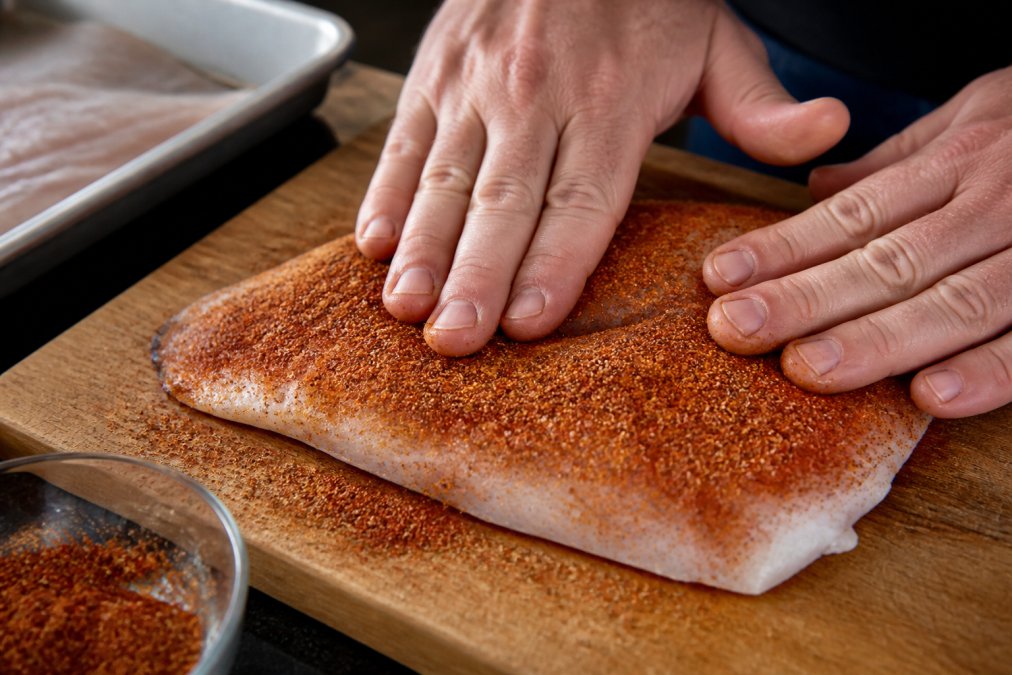
Massage and Sprinkle Technique
Don't just sprinkle your rub on and hope it sticks. Massage it in. Use your fingertips to work the spices into the fish's flesh. This step takes 30 seconds and makes a massive difference.
Start with a light layer. Sprinkle your rub across the fillet, then use your fingers to press it into the surface. Work in small circular motions, coating every part evenly. The rub should cling to the fish, not sit loosely on top.
For extra adhesion, lightly brush the fillet with a tiny bit of oil first. Olive oil or avocado oil works. Just a thin coating, you're not marinating, just creating a sticky surface. The oil helps the spices adhere without adding moisture.
Apply rub to both sides if you're cooking skin-off fillets.
How Long to Marinate Fish With Dry Rub
This is where dry rubs shine compared to wet marinades. You don't need hours. Fifteen to 30 minutes is perfect for most fish.
A practical timeline:
- Remove fish from refrigerator
- Pat dry completely
- Apply rub
- Let sit 20-30 minutes
- Cook immediately
Best Dry Rub for Grilled Salmon and Other Fish Types
White Fish vs. Oily Fish: Rub Ratios That Work
For white fish, use this ratio:
- 3 parts salt
- 1 part garlic powder
- 1 part onion powder
- ½ part dill
- ¼ part black pepper
For oily fish like salmon, use this ratio:
- 2 parts salt
- 1 part garlic powder
- 1 part onion powder
- 1 teaspoon smoked paprika
- ½ teaspoon cayenne
- ½ teaspoon black pepper
For grilled salmon specifically, consider a Cajun-inspired approach. According to culinary science research on Cajun flavor profiles, this regional style combines smoked paprika, cayenne, garlic, and thyme in ways that complement rich fish beautifully. Gator Breath from Dam Spice Company delivers exactly this profile, smoked paprika, garlic, pepper, and Cajun herbs create that perfect balance of smoky, salty, and spicy notes that makes grilled salmon unforgettable. The medium-hot heat level works for salmon without overpowering it.
Rub Storage and Shelf-Life Essentials
A dry rub is shelf-stable, which makes it far more convenient than fresh marinades. Properly stored, a homemade rub lasts 3 to 6 months. Homemade blends lose potency over time as the essential oils in spices evaporate.
A simple storage guide:
- Homemade dry rubs: 3-6 months in airtight container
- Commercial all-natural rubs: 6-12 months unopened
- Once opened: 3-6 months if stored properly
- Signs it's gone bad: faint smell, dull taste, clumping
Frequently Asked Questions
What is a good rub for fish?
A good rub for fish balances savory, aromatic, and mild heat without overpowering delicate flavors. Look for blends with a salt base, garlic powder, onion powder, paprika, and herbs like dill or oregano. Bayou Boil is specifically formulated for seafood with Cajun-inspired flavors and mild heat. Avoid heavy, smoky rubs designed for beef on white fish, though oily fish like salmon can handle bolder profiles with cayenne or smoked paprika.
How do you apply a dry rub to fish without it falling apart?
Pat your fish completely dry with paper towels to maximize adhesion. Apply the rub in a thin, even layer using a gentle massage motion rather than pressing hard. Work from head to tail, and focus on the flesh side where moisture content is highest. Use a light hand with delicate fillets; a sprinkle-and-brush technique works better than heavy rubbing for fish that flakes easily.
How long should you marinate fish with a dry rub?
Most fish benefits from 15 to 30 minutes of resting time with a dry rub. Unlike marinades, dry rubs don't require extended time because they don't penetrate as deeply. Thin fillets need less time; thicker cuts like salmon steaks can sit for up to 45 minutes. Avoid leaving rub on fish longer than an hour, as salt can draw out moisture and make the flesh dry during cooking.
What's the best dry rub for grilled salmon?
Salmon's oily, rich flavor pairs well with bold rubs featuring smoked paprika, cayenne, garlic, and cumin. Gator Breath delivers this profile with its medium-hot Cajun blend, creating a flavorful crust while the fish stays moist inside. For milder preferences, Bayou Boil offers savory Cajun notes without intense heat. Apply the rub 20 to 30 minutes before grilling to let flavors set, then grill skin-side down to protect the rub from direct heat.