

How to Make a Sweet and Spicy Rub: 2026 Guide
Table of Contents
- What You'll Need to Make a Sweet and Spicy Rub
- Step-by-Step: How to Make a Sweet and Spicy Rub
- Balancing Heat and Sugar in BBQ Rubs
- Best Spice Rubs for Roasted Vegetables
- How to Store Homemade Spice Rubs
- Pairing Your Rub with Wood Smoke and Dietary Swaps
- Common Mistakes and Troubleshooting
- Frequently Asked Questions
Last Updated: September 23, 2026
What You'll Need to Make a Sweet and Spicy Rub
A sweet and spicy rub is a dry seasoning blend that combines sugar for caramelized sweetness with chili peppers for heat, plus salt and aromatics to round out the flavor. This guide from Dam Spice Company walks through a simple base recipe, then shows you how to adjust it to your taste.

Here's what you need:
- Brown sugar (dark brown sugar works best for deeper flavor)
- Smoked paprika for color and smoke
- Kosher salt or coarse sea salt
- Granulated garlic and onion powder
- Cracked black pepper
- Cayenne pepper for clean heat
- Chili powder for depth
- Ground mustard for tang
- Turbinado sugar or demerara sugar for texture
Step-by-Step: How to Make a Sweet and Spicy Rub
Making a sweet and spicy rub takes about 5 minutes. The key is getting your spice ratio right, then tasting as you go.
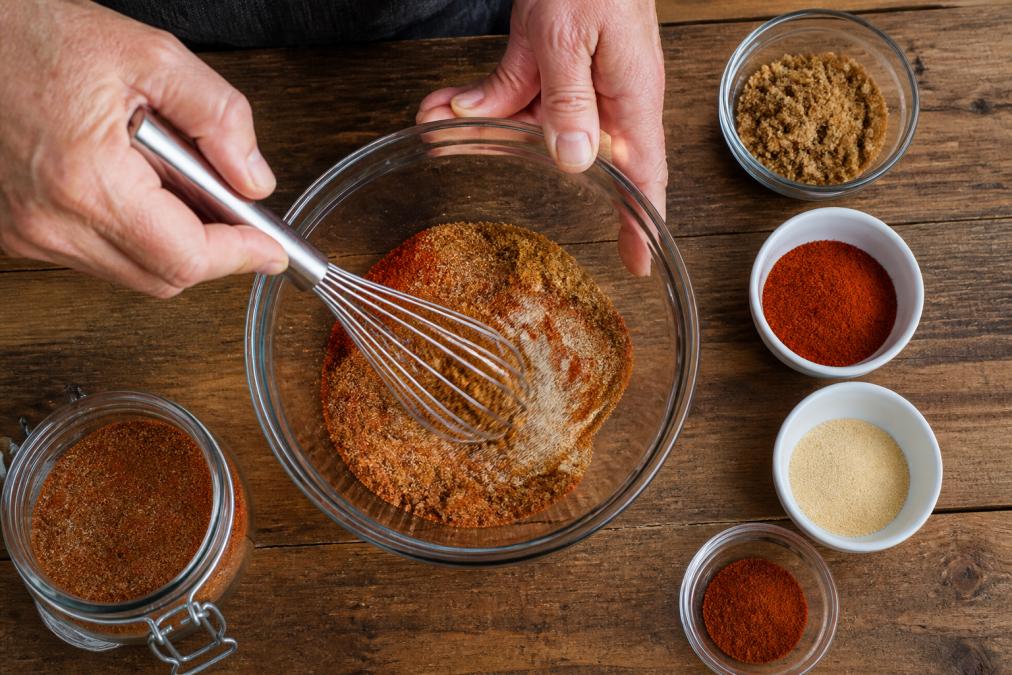
Mix the Base and Balance the Ratio
Start with a simple framework: 3 parts sugar, 2 parts salt, 1 part heat, 1 part supporting spices. This ratio keeps things balanced without guesswork.
- Add 3 tablespoons brown sugar to a bowl
- Whisk in 2 tablespoons kosher salt
- Add 1 tablespoon cayenne pepper
- Stir in 1 tablespoon smoked paprika, plus 1 teaspoon each of garlic, onion, and mustard powder
- Whisk until no clumps remain
Adjust Heat and Sweetness to Taste
Taste a small pinch before you commit. Too sweet? Add more cayenne. Too hot? Add turbinado sugar.
Balancing Heat and Sugar in BBQ Rubs
Balancing heat and sugar in BBQ rubs comes down to one rule: sugar should support the heat, not fight it. Too much sugar and the rub tastes like candy. Too little and the spice feels harsh. But the real reason most homemade rubs fail isn't the ratio, it's that cooks don't understand what sugar actually does on the grill.
How Sugar Caramelizes on the Grill
When sugar hits a hot surface, it goes through two distinct phases. First, caramelization: somewhere between 320°F and 350°F, sugar molecules break down and recombine into hundreds of new aromatic compounds, producing the nutty, toasty flavor and mahogany color we associate with good bark. Push past roughly 350°F and you cross into pyrolysis, the sugar carbonizes, turns bitter, and blackens.
Why Sugar Type Changes the Outcome
Not all sugars behave the same under heat:
- Brown sugar carries molasses, which is hygroscopic, it pulls moisture from the air and from the meat surface. That moisture slows the climb toward burning, which is why brown sugar is more forgiving on long cooks.
- Turbinado and demerara are coarse, partially refined sugars with larger crystals. They dissolve more slowly, so they caramelize later and hold their texture longer, good for a finishing crust.
- Granulated white sugar dissolves fast and burns fast. It's the least forgiving choice for a low-and-slow cook.
- Honey powder and maple sugar are increasingly popular in competition rubs because they brown at slightly different thresholds and add distinct flavor notes, but they're just as prone to scorching as white sugar if applied before a hot sear.
The Practical Rule
Build your rub so the sugar-to-salt ratio stays around 2:1 by volume for low-and-slow cooking, and closer to 1:1 if you plan to finish over direct heat. Apply the rub at least 30 minutes before cooking so the salt has time to draw moisture to the surface, that surface moisture is what lets the sugar dissolve and caramelize evenly instead of sitting on top as dry grit.
Reading the Bark
A properly caramelized bark looks glossy and deep amber, not matte black. If you see the surface going dark before the internal temperature has climbed past 150°F, your heat is too high or your sugar load is too heavy. Pull the meat, tent it, and drop the cooker temperature before continuing. The bark will keep developing, it just needs a gentler slope.
Best Spice Rubs for Roasted Vegetables
The best spice rubs for roasted vegetables lean sweeter and smokier than meat rubs, since vegetables lack the fat that carries heat. A blend of brown sugar, smoked paprika, and a light hand with cayenne works well on carrots, sweet potatoes, and Brussels sprouts.
- Root vegetables: brown sugar, cumin, chili powder
- Squash: smoked paprika, cinnamon, cayenne
- Greens and brassicas: garlic, onion, cracked pepper, light sugar
How to Store Homemade Spice Rubs
How to store homemade spice rubs properly determines how long they stay fresh. Keep your blend in an airtight container, away from heat and light.
Storage basics:
- Label the jar with the date you made it
- Store in a cool, dark cabinet, not above the stove
- Keep a scoop or funnel nearby for easy refilling
Pairing Your Rub with Wood Smoke and Dietary Swaps
Wood choice changes how a sweet and spicy rub reads on the plate. Fruit woods like apple and cherry amplify sweetness. Hickory and mesquite push smoke and heat forward. But the interaction is more specific than "sweet wood with sweet rub", the volatile compounds in smoke actually bind to the same receptors that perceive sugar and heat, which is why the right pairing makes a rub taste more complex and the wrong one flattens it.
How Smoke Compounds Interact with Your Rub
Hardwood smoke carries hundreds of volatile phenols, guaiacols, and syringols. Syringol derivatives read as sweet and floral on the palate; guaiacol reads as sharp and smoky. Fruit woods are higher in the sweet-leaning compounds, which is why they flatter a brown-sugar-and-paprika base. Hickory and mesquite are heavier in guaiacol, which amplifies the sharp edge of cayenne and chili powder.
Matching Wood to Rub and Protein
- Apple or cherry + sweet-forward rub: best for pork shoulder, pork ribs, and chicken thighs. The fruit phenols echo the molasses in brown sugar and keep the bark from tasting one-dimensionally sweet.
- Hickory + balanced sweet-heat rub: the classic pairing for St. Louis ribs and brisket. Hickory's sharper smoke cuts through rendered fat and gives cayenne something to push against.
- Pecan + medium sweet-heat rub: an underused option. Pecan sits between fruit and hickory, nutty, moderately sweet, and forgiving on longer cooks. Excellent on turkey and pork loin.
- Mesquite + heavy heat: use sparingly. Mesquite burns hot and produces aggressive smoke; a little goes a long way, and it can overwhelm a delicate rub. Best reserved for beef short ribs or a quick hot-and-fast cook.
- Oak + any rub: the neutral backbone. If you're unsure, oak is the safe default because it supports rather than competes.
How Much Wood to Use
A common mistake is treating wood like fuel. It isn't, it's seasoning. For a typical 8-to-12-pound pork shoulder on a charcoal smoker, two to three fist-sized chunks added at the start of the cook is plenty. Adding more wood throughout the cook layers creosote rather than flavor. If you're using chips, soak them and add a small handful every 45 minutes for the first two hours, then stop.
Dietary Modifications for a Sweet and Spicy Rub
Dietary swaps are easy with dry rubs since most blends are naturally gluten-free and MSG-free. Check each spice label to be sure.
- Low-sugar: swap brown sugar for a sugar-free sweetener that holds up to heat. Allulose browns similarly to real sugar and is a common choice for keto-style rubs; erythritol browns less and can leave a cooling aftertaste.
- Low-sodium: cut kosher salt in half and add more paprika and granulated garlic to fill the volume. Expect a slightly different texture, salt carries flavor into the meat, so you may want to salt the protein separately.
- Gluten-free: confirm every spice is certified gluten-free. Single-ingredient spices usually are; pre-blended chili powders and taco seasonings sometimes are not.
- MSG-free: most single spices are naturally MSG-free, but check blended mixes and any "flavor enhancer" on the label.
- Keto: combine allulose or a monk-fruit blend with the spices, and skip the turbinado finishing sugar. The rub will still caramelize, just more slowly.
Common Mistakes and Troubleshooting
The biggest mistake with sweet and spicy rubs is clumping. Sugar absorbs moisture from the air, and once it clumps, it won't coat evenly.
Fixes for common problems:
| Problem | Cause | Fix |
|---|---|---|
| Clumping | Moisture in the jar | Add a few grains of white rice or a saltine |
| Rub burns | Too much sugar, high heat | Cook indirect, finish hot and fast |
| Flat flavor | Old spices | Replace spices older than a year |
| Rub falls off | Applied too early | Pat meat dry, then rub right before cooking |
| Too sweet | Sugar-heavy ratio | Add cayenne or mustard powder |
Frequently Asked Questions
How do you balance sugar and heat in a spice rub?
Start with a 2:1 sugar-to-chili ratio, then taste. Brown sugar and turbinado add depth while cayenne, chili powder, or habanero powder bring heat. If it's too sweet, add smoked paprika or ground mustard; if it's too hot, add more sugar or kosher salt. For a sweet and spicy rub that works on pork or chicken, aim for a flavor profile where sweetness hits first and heat follows.
How long can you store homemade spice rubs?
Most homemade spice rubs keep their flavor for 6 to 12 months in an airtight container stored in a cool, dark place. Ground spices lose potency over time, so label the jar with the date. If the rub smells flat or clumps, it's past its prime. For bulk storage, keep a small jar in the kitchen and refill from a larger sealed container.
Can you use brown sugar in a spice rub for high-heat grilling?
Yes, but brown sugar caramelizes fast over direct high heat. For grilling, use turbinado or demerara sugar, which have larger crystals and resist burning. Apply the rub 30 minutes before cooking and use indirect heat for the first half of cook time, then finish over direct heat to form a crust without scorching the sugar.
What meats pair best with a sweet and spicy rub?
Pork ribs, chicken wings, pork shoulder, and salmon are the classic matches because their fat balances the sugar and heat. Beef brisket and burgers also work with a sweeter rub if you dial back the sugar. For roasted vegetables, a lighter sweet and spicy rub with smoked paprika and honey powder brings out natural sweetness without overpowering.
Making a great sweet and spicy rub is really about balance, and balance takes practice. Start with the 3-2-1-1 ratio, taste as you go, and adjust for your crowd. When you want bold Southwest flavor without the guesswork, Dam Spice Company has you covered with all-natural, additive-free blends made in New Mexico. Every jar is MSG-free, gluten-free, and built for grilling, smoking, and roasting. Get started with Dam Spice Company and bring authentic Southwest heat to your next cookout.