

How to Season Frozen Vegetables for Roasting
Table of Contents
- Why Seasoning Frozen Vegetables Before Roasting Matters
- What You'll Need: Oil, Spices, and Tools
- Step 1: Prep Frozen Vegetables Without Thawing
- Step 2: How Much Oil and Seasoning to Use
- Step 3: The Best Seasoning for Roasted Vegetables
- Step 4: How to Make Frozen Vegetables Crispy in the Oven
- Step 5: How Long to Roast Frozen Vegetables
- Roasted Frozen Broccoli Seasoning and Other Veggie-Specific Tips
- Frequently Asked Questions
Last Updated: October 6, 2026
Why Seasoning Frozen Vegetables Before Roasting Matters
Frozen vegetables are picked and frozen at peak ripeness, so they often hold more nutrients than fresh produce that has spent days in transit.
Here's the catch: frozen vegetables carry surface ice that steams them instead of roasting them and washes away anything you sprinkle on top.
At Dam Spice Company, we build all-natural blends for exactly this kind of cooking, and the seasoning step is where most home cooks give up too early.
Below, we'll walk through the exact steps, from oil ratios to oven temps, so your frozen vegetables come out browned, crisp, and full of flavor.
What You'll Need: Oil, Spices, and Tools
Gather these before you start. Having everything within reach keeps the process quick when you're working against melting ice.
Equipment:
- A large rimmed baking sheet
- Parchment paper or a silicone mat
- A big mixing bowl
- Measuring spoons
- Tongs or a spatula
Ingredients:
- Frozen vegetables, straight from the freezer
- Olive oil or another high-heat oil
- Salt and black pepper
- Garlic powder, onion powder, or a ready-made blend
- Optional: smoked paprika, cumin, Italian seasoning, or red pepper flakes
One note on the pan: a rimmed sheet pan beats a flat cookie sheet, keeping oil and stray bits contained and giving the vegetables a defined space to brown in.
Step 1: Prep Frozen Vegetables Without Thawing
Do not thaw your vegetables first. This is the single biggest mistake people make and the reason so many trays come out limp.
Thawing releases water locked inside the cells, which pools on the pan and steams everything, working directly against roasting, which drives moisture out and browns the surface.
Instead, take the vegetables straight from the freezer to the bowl. If you see loose ice crystals or frost, run them under cold water for a few seconds and pat them dry, that knocks off surface ice without thawing the vegetable through.
A few prep rules worth following:
- Work in small batches if your bag is large
- Break up any clumps with your hands
- Pat dry anything that looks wet
- Preheat the oven before you start tossing
Step 2: How Much Oil and Seasoning to Use
Most recipes say "drizzle with oil and season to taste," which leaves frozen vegetables bland or greasy.
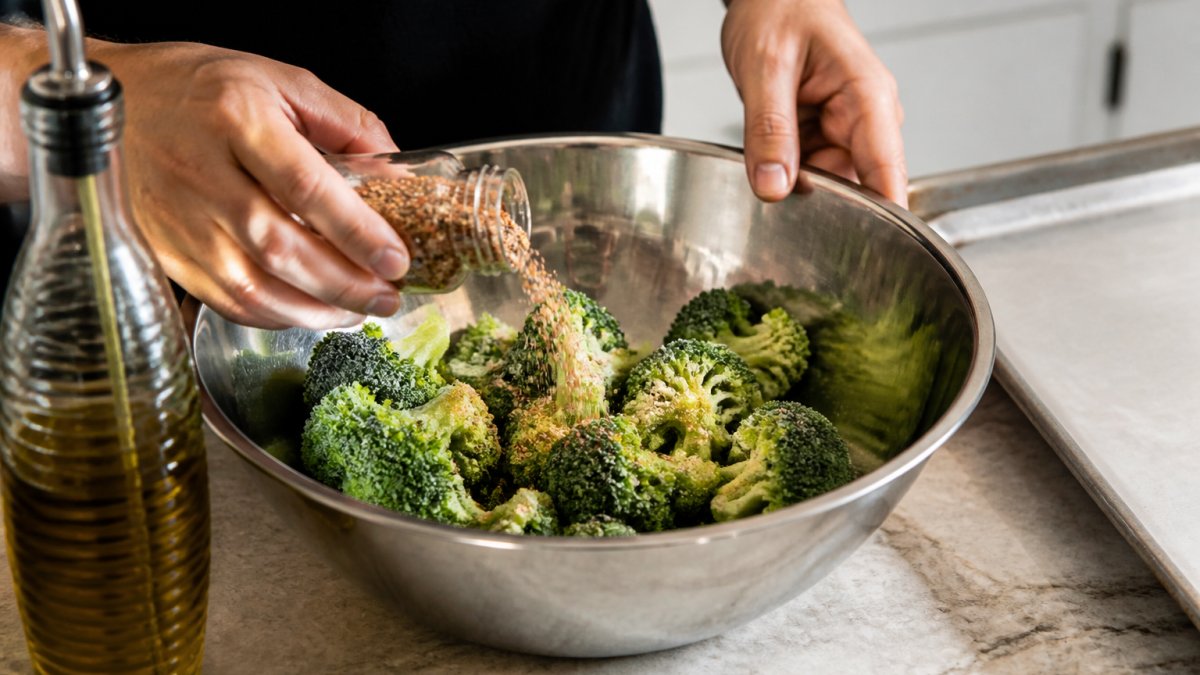
Oil by weight and by pan:
- 1 pound frozen vegetables = 1 to 2 tablespoons oil
- 12 ounces (about 4 cups) = 1 tablespoon oil
- 2 pounds = 2 to 3 tablespoons oil
- A standard 18-by-13-inch rimmed sheet pan holds about 1½ to 2 pounds of vegetables in a single layer; use 2 to 3 tablespoons oil for that full pan
Seasoning by weight and by pan:
- 1 pound frozen vegetables = 1 to 1½ teaspoons fine salt and 1 to 2 teaspoons spice blend
- 1 cup vegetables = about ¼ teaspoon salt and ½ teaspoon spice blend
- A full sheet pan (1½ to 2 pounds) = 1½ to 2 teaspoons salt and 1 to 1½ tablespoons spice blend
Why these numbers work: Salt at roughly 0.5% to 0.75% of the vegetable's weight seasons the batch without making it salty.
Adjust for surface ice. Frozen vegetables carry 5% to 10% of their weight as surface ice, which dilutes whatever you add.
Adjust for the vegetable. Dense, low-moisture vegetables like carrots and potatoes absorb oil and need the full amount.
The order that makes seasoning stick:
- Pat the vegetables dry if they look wet.
- Toss with oil first, using your hands or a spatula until every piece has a light, even sheen.
- Sprinkle the salt and spice blend over the top, then toss again for 30 seconds.
- Spread on the pan and roast.
Oil first, seasoning second. When you season frozen vegetables, dry spices sprinkled onto bare pieces slide to the bottom of the bowl.
Step 3: The Best Seasoning for Roasted Vegetables
The best seasoning for roasted vegetables balances salt, fat, acid, and a little heat: salt wakes up flavor, oil carries it, acid brightens the tray, and heat adds depth.
A dependable base blend looks like this:
- 1 teaspoon garlic powder
- 1 teaspoon onion powder
- 1 teaspoon smoked paprika
- ½ teaspoon black pepper
- ½ teaspoon salt
From there, match the blend to the vegetable. Carrots and squash lean sweet, so cumin and smoked paprika bring out their natural sugars. Broccoli and cauliflower handle garlic and lemon well. Mixed vegetables do best with a balanced all-purpose blend.
This is where a Southwest profile earns its keep. Our Grumpy Gringo blend layers chile pepper, cumin, garlic, and smoke, which is exactly the kind of deep, savory note that roasted vegetables soak up. If you want a little smoky kick without real heat, Smokey Jalapeno does the job on potatoes, peppers, and squash.


Watch your delicate seasonings. Garlic powder and dried herbs can scorch at high heat, so add fresh garlic, lemon zest, or fresh herbs in the last few minutes of roasting.
Step 4: How to Make Frozen Vegetables Crispy in the Oven
To make frozen vegetables crispy in the oven, preheat to 425°F, preheat the baking sheet itself, and spread the vegetables in a single layer with space between each piece. Crowding is the enemy of crisp.
Here's the sequence that works:
- Preheat the oven to 425°F for at least 15 minutes
- Slide the empty baking sheet in while the oven heats
- Toss the vegetables with oil and seasoning
- Pull the hot pan out and spread the vegetables on it quickly
- Roast without stirring for the first 15 minutes
That preheated pan gives the vegetables an instant sear the moment they land. It's the same idea behind a hot skillet, and it makes a real difference on frozen produce.
Overcrowding is the other culprit. If pieces touch, they trap steam and never brown. Use two pans if needed, flip once at the halfway mark, then leave them alone so the edges can crisp.
Step 5: How Long to Roast Frozen Vegetables
Roast frozen vegetables for 20 to 30 minutes at 425°F, flipping once at the halfway point. Smaller pieces like peas or corn finish closer to 20 minutes, while denser vegetables like carrots and squash need the full 30.
Doneness cues to watch for:
- Edges turn golden brown
- Pieces feel tender when pierced with a fork
- Any surface moisture has cooked off
- The tray smells nutty and toasted
If your vegetables look pale and wet at 20 minutes, give them more time. If they're browning too fast on top, move the pan to a lower rack. Trust your eyes over the clock.
Pull the tray when the edges are crisp but before anything turns black. Burnt spices taste bitter, and that flavor sticks to the whole batch.
Roasted Frozen Broccoli Seasoning and Other Veggie-Specific Tips
For roasted frozen broccoli, use garlic powder, onion powder, black pepper, and a squeeze of lemon after roasting.
Seasoning blends matched to specific vegetables:
- Broccoli and cauliflower: 1 teaspoon garlic powder, ½ teaspoon onion powder, ½ teaspoon black pepper, pinch of red pepper flakes per pound. Finish with lemon juice after roasting.
- Carrots and squash: 1 teaspoon cumin, 1 teaspoon smoked paprika, ¼ teaspoon cinnamon, ½ teaspoon salt per pound. Their natural sugars caramelize under high heat.
- Green beans and asparagus: 1 teaspoon garlic powder, ½ teaspoon black pepper, ½ teaspoon lemon zest (added after roasting) per pound. Keep it light so the vegetal flavor comes through.
- Potatoes and root vegetables: 1 teaspoon smoked paprika, 1 teaspoon onion powder, ½ teaspoon dried rosemary, ½ teaspoon salt per pound. Rosemary holds up to high heat better than most herbs.
- Brussels sprouts: 1 teaspoon garlic powder, ½ teaspoon caraway or fennel seed, ½ teaspoon salt per pound. The seeds add a subtle sweetness that balances the sprouts' bitterness.
- Mixed vegetables: 1 teaspoon garlic powder, 1 teaspoon onion powder, ½ teaspoon smoked paprika, ½ teaspoon salt per pound. A balanced blend that won't fight any single piece.
When to add delicate seasonings. Not everything belongs on the tray at the start. High heat (425°F) will burn or bitter these ingredients:
- Fresh herbs (basil, parsley, cilantro, dill): add in the last 2 to 3 minutes, or toss with the hot vegetables after they come out of the oven.
- Fresh garlic and ginger: add in the last 5 minutes. Minced garlic scorches in under 10 minutes at 425°F and turns acrid.
- Citrus zest and juice: add after roasting. The heat destroys the volatile oils that make citrus taste bright.
- Cheese: add in the last 3 to 5 minutes, just long enough to melt. Hard cheeses like Parmesan can go on at the start if you want a crisp frico-like crust.
- Sweet glazes (honey, maple, brown sugar): brush on in the last 5 minutes. Sugar burns fast above 350°F.
- Soy sauce, fish sauce, balsamic vinegar: add after roasting or in the last 2 minutes. Their sugars and acids concentrate and burn under high heat.
Sodium-conscious and dietary variations:
- No-salt: use 1 teaspoon onion powder, 1 teaspoon garlic powder, ½ teaspoon smoked paprika, ½ teaspoon mustard powder, and a pinch of black pepper per pound. Acid (lemon or vinegar) and heat (red pepper flakes) compensate for the missing salt.
- Low-sodium: cut the salt in the recipe by half and add ½ teaspoon of a salt-free blend to make up the volume.
- Vegan: all the blends above are naturally vegan. Just confirm any store-bought blend doesn't contain dairy-based anti-caking agents.
- Allergen-aware: garlic powder, onion powder, paprika, cumin, and black pepper are generally safe for the top nine allergens. Pre-made blends may contain soy, wheat, or dairy, check the label.
Troubleshooting: symptom and fix

Bland vegetables. The seasoning didn't adhere, or there wasn't enough.
Unevenly seasoned vegetables. The spices clumped or the oil didn't coat evenly.
Vegetables stuck to the pan. The oil was insufficient, or the pan wasn't preheated.
No browning after 25 minutes. The oven temperature is off, or the pan is overcrowded.
A final note on finishing. Acid is the step most people skip.
Frequently Asked Questions
Should you thaw frozen vegetables before roasting them?
No, roast frozen vegetables straight from the freezer. Thawing makes them release water before they hit the oven, which steams them instead of roasting them. Spread frozen veggies directly on a preheated baking sheet and roast at 425°F. The high heat evaporates surface ice quickly and lets the edges brown. If you thaw first, you will likely end up with soggy, limp vegetables instead of crispy ones.
How do you keep frozen vegetables from getting soggy in the oven?
Three things matter most: preheat the baking sheet in the oven, spread vegetables in a single layer without overcrowding, and pat off surface ice with a paper towel before seasoning. A hot pan starts the roasting process immediately. Overcrowding traps steam, which makes vegetables soggy. Use two sheet pans if needed, and leave space between pieces so moisture can escape and edges can brown.
What spices taste good on roasted frozen vegetables?
Garlic powder, onion powder, black pepper, smoked paprika, cumin, and Italian seasoning are reliable choices. For Southwest flavor, try a blend with chile pepper, cumin, and garlic. Dam Spice Company's Grumpy Gringo or SPG both work well on roasted vegetables. Match the spice to the vegetable: broccoli and Brussels sprouts pair well with garlic and lemon, while carrots and squash work with cumin and smoked paprika.
How long do frozen vegetables take to roast?
Most frozen vegetables roast in 20 to 30 minutes at 425°F. Broccoli and cauliflower take about 20 to 25 minutes. Carrots and squash need 25 to 30 minutes. Brussels sprouts take 25 to 30 minutes. Flip halfway through roasting for even browning. Smaller pieces cook faster, so check at the 15-minute mark. The vegetables are done when edges are browned and centers are tender.