

Is Gluten Free Spice Blend Necessary for Barbecue?
Table of Contents
- Why Gluten Free Spice Blend Choices Matter for Barbecue
- Hidden Gluten in Spices: What's Really in Your Rub
- How to Read Spice Labels for Gluten
- Gluten-Free Barbecue Rub Recipes You Can Make at Home
- Cross-Contamination in Shared Kitchen Equipment
- Restaurant and Commercial BBQ Safety
- Conclusion
- Frequently Asked Questions
Last Updated: September 19, 2026
Why Gluten Free Spice Blend Choices Matter for Barbecue
A gluten free spice blend is a seasoning mix made without wheat, barley, rye, or derivatives of those grains, and it matters for barbecue because the rub touches the meat before anyone takes a bite. This guide from Dam Spice Company covers what actually hides in commercial rubs, how to read a label in under a minute, and where cross-contamination creeps in. If you cook for someone with celiac disease or a gluten sensitivity, the difference between a clean rub and a contaminated one is not a flavor preference. It is a safety decision, and it happens in your kitchen, not at the grill.
Most people assume spices are naturally safe. That's true for single-ingredient jars. It stops being true the moment a blend gets involved.
Hidden Gluten in Spices: What's Really in Your Rub
Pure ground cumin, paprika, and chili powder contain no gluten. Blends are a different story. Manufacturers add fillers, thickeners, and flavor carriers to keep seasoning free-flowing and consistent, and some of those additives start as wheat.
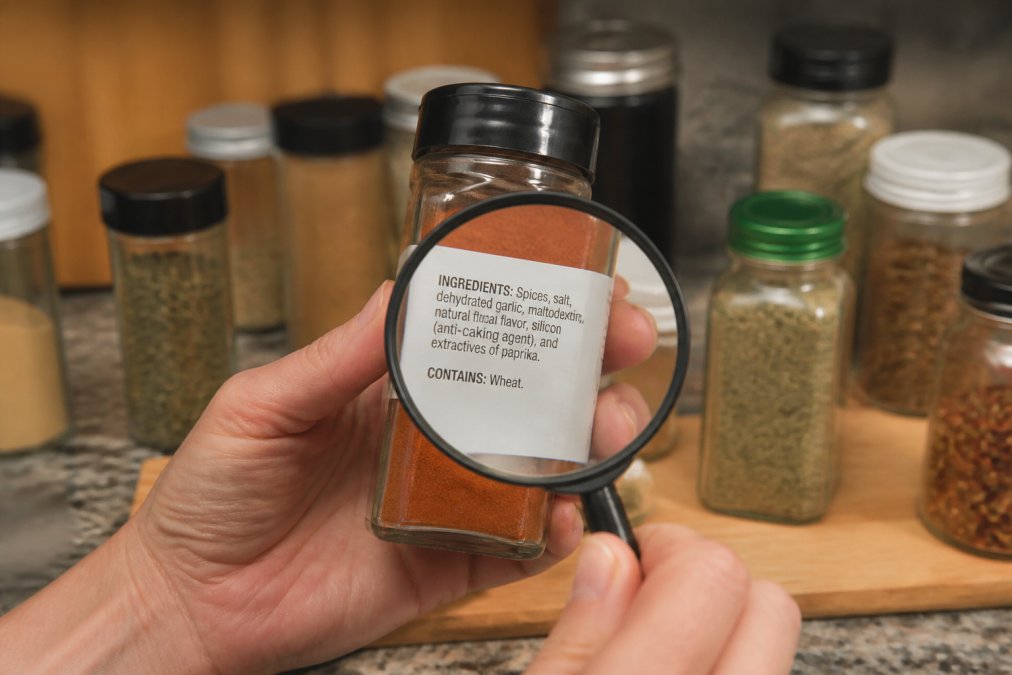
The usual suspects:
- Wheat starch, used as a bulking agent in some seasoning mixes
- Maltodextrin, which in the United States is usually made from corn but can be derived from wheat
- Natural flavors, a catch-all term that can include barley-derived ingredients
- Soy sauce powder or hydrolyzed wheat protein in savory rubs
None of these are guaranteed to contain gluten. The problem is that you cannot tell from the front of the jar. According to FDA guidance on gluten-free food labeling, a product can only carry a gluten-free claim if it meets a defined threshold and the manufacturer verifies it. That verification is voluntary. Plenty of safe products never bother.
Anti-Caking Agents and Hidden Gluten Risks
Anti-caking agents keep clumped spice powder from turning into a brick in humid weather, and they are the most overlooked source of hidden gluten in seasoning. Common ones include silicon dioxide, calcium silicate, and cellulose, which are typically safe. The risk shows up when a manufacturer uses wheat-based starch or flour as a carrier for a flavoring or coloring agent instead. You will rarely see "wheat" printed on the label. You will see "starch" or "flavoring," and that is where the detective work begins.
How to Read Spice Labels for Gluten
Reading a spice label for gluten takes under a minute if you know the four things to check. Start with the allergen statement, then the ingredient list, then any "may contain" or "processed in a facility" language, and finally the certification seal.
Here is what to look for, in order:
| What to Check | Safe Signal | Warning Sign |
|---|---|---|
| Allergen statement | Lists wheat explicitly, or none | "Contains wheat" buried in fine print |
| Ingredient list | Single spices, salt, pepper | Starch, maltodextrin, natural flavors |
| Facility language | "Certified gluten-free" | "Processed in a facility with wheat" |
| Certification seal | Third-party verified mark | No seal, no claim at all |
Key Terms on Labels That Signal Gluten
Certain words on a seasoning label should make you slow down. Maltodextrin, wheat starch, modified food starch, hydrolyzed vegetable protein, malt vinegar, and barley malt all deserve a second look. Modified food starch is the trickiest, because it can come from corn, potato, or wheat, and the label rarely tells you which.
Gluten-Free Barbecue Rub Recipes You Can Make at Home
Building your own dry rub removes the guesswork entirely, and it takes about five minutes. You control every ingredient, so there is no maltodextrin, no natural flavors, and no facility risk.
A basic Southwest-style rub:
- 2 tablespoons smoked paprika
- 1 tablespoon kosher salt
- 1 tablespoon coarse black pepper
- 1 tablespoon garlic powder
- 1 tablespoon onion powder
- 2 teaspoons ground cumin
- 1 teaspoon cayenne
- 1 teaspoon dried oregano
Mix it in a bowl, store it in an airtight jar, and use it within a few months for the boldest flavor. For a marinade instead of a dry rub, whisk the same blend with olive oil and a splash of apple cider vinegar.
The catch is sourcing. Bulk bins at grocery stores are a common trap, because scoops get shared between bins and cross-contamination is nearly impossible to prevent. Buy sealed jars from a supplier that states its sourcing and ingredient list clearly.
Cross-Contamination in Shared Kitchen Equipment
Cross-contamination in shared kitchen equipment is the risk most guides skip, and it is the one that catches people who did everything else right. You can buy a certified gluten-free rub and still get exposed by the grill grate, the cutting board, or the tongs. The reason is mechanical, not chemical: gluten is a protein, not a bacterium, so it does not "die" with heat.
The surfaces that hold gluten
- Cast iron and carbon steel grates. The seasoned, porous surface traps protein and starch in the same layer that gives you the non-stick finish. A wire brush knocks off the loose material but does not strip the polymerized layer, so a wheat-based rub from last weekend can sit in the seasoning for weeks.
- Wood cutting boards and wood-handled tools. Wood is porous. A board used to break down breaded chicken or a beer-brined brisket will hold particles in the grain even after a soap-and-water wash. Plastic boards with deep knife scars behave the same way.
- Shared spice scoops and measuring spoons. A scoop that goes into a wheat-containing rub and then into your clean jar transfers a measurable amount of powder. This is the single easiest contamination point to eliminate and the one most people ignore.
- Marinade containers and brining bags. A container that held a soy sauce or beer marinade keeps a residue film on the walls and lid threads. If it is not dishwasher-safe, hand-washing rarely gets the threads clean.
- Smoker water pans, drip trays, and foil. A shared smoker's drip tray collects rendered fat and rub runoff from every previous cook. If that runoff contained wheat, the tray is a reservoir.
What actually removes gluten residue
Gluten does not dissolve in cold water the way salt does. It needs either mechanical action, heat plus detergent, or both. A common pattern that works:
- Scrape first. Remove solid residue from grates and trays before any water touches them. Water plus starch makes a paste that spreads into crevices.
- Hot water and detergent. Use the hottest water you can handle with a grease-cutting dish detergent. Let cast iron and carbon steel cool before washing so you do not warp them.
- Mechanical scrub. A nylon brush or a scrub pad for grates; a stiff brush for wood. For cast iron, a chainmail scrubber lifts residue out of the seasoning without stripping it.
- Rinse and dry fully. Residual moisture plus residual starch is what feeds the next contamination event.
- Re-season cast iron if you stripped it. A fresh oil layer is a clean barrier.
The dedicated-kit shortcut
If you are cooking for someone with celiac disease, treat every shared surface as contaminated until you have cleaned it yourself, and keep your dedicated tools out of the general rotation.
Restaurant and Commercial BBQ Safety
Commercial barbecue operations carry risk that home cooks do not face, because one kitchen handles dozens of meats and sauces at once. If you run a food business, the FDA Food Code and allergen control resources outline how allergens must be managed, and gluten falls under that umbrella. The practical steps are the same as at home, just at scale: separate prep surfaces, labeled containers, and staff trained to know which rubs contain wheat.
Conclusion
The real challenge with barbecue seasoning is not flavor, it is traceability. You can taste a great rub, but you cannot taste wheat starch or a shared scoop. That is why we built Dam Spice Company around blends that are all natural with no additives of any kind, made with New Mexico spices in New Mexico, so your only job is deciding how much heat you want.
Frequently Asked Questions
Does barbecue seasoning have gluten in it?
Many commercial barbecue seasonings contain gluten from additives like wheat starch, maltodextrin, or anti-caking agents. Even pure spices can be cross-contaminated during processing. To be safe, look for a gluten free spice blend that clearly states it is certified gluten-free or made in a dedicated facility. Always read labels and check for allergen statements.
How can I tell if a spice blend is gluten-free?
Check the label for a certified gluten-free seal or a statement like 'made without gluten ingredients.' Scan the ingredient list for wheat, barley, rye, malt, or modified food starch. Also look for advisory statements like 'processed in a facility that also processes wheat.' When in doubt, contact the manufacturer. Learning how to read spice labels for gluten is key to avoiding hidden sources.
Which spices should celiacs avoid?
Celiacs should avoid spice blends that contain wheat starch, maltodextrin, or anti-caking agents that may harbor gluten. Also be cautious with seasoning mixes that include soy sauce or flour as ingredients. Pure single spices like paprika, cumin, and chili powder are generally safe, but cross-contamination during processing is a risk. Choose brands that test for gluten or are certified gluten-free.
Is McCormick BBQ seasoning gluten-free?
McCormick states that some of their barbecue seasonings are gluten-free, but not all. They recommend checking the label of each specific product for a gluten-free designation. Because formulations can change, always verify the current packaging. For a guaranteed gluten free spice blend, look for products that are certified gluten-free by a third-party organization.