

Natural Spice Rub Alternatives for Slow Cooker Recipes
Table of Contents
- Why Slow Cooker Meals Go Bland (and How Spice Rubs Fix It)
- How to Season Slow Cooker Meals Without Packets
- Homemade Slow Cooker Seasoning Recipes You Can Mix in Minutes
- Best Herbs for Long-Simmering Dishes
- Salt-Free and Low-Sodium Rub Alternatives for Slow Cooking
- Gluten-Free and Allergen-Friendly Seasoning Options
- Finishing Techniques: Fresh Herbs, Citrus, and Vinegar
- Conclusion
- Frequently Asked Questions
Last Updated: September 16, 2026
Why Slow Cooker Meals Go Bland (and How Spice Rubs Fix It)
The same long cook time that makes slow cookers convenient also strips the life out of your seasoning. Natural spice rub alternatives for slow cooker recipes solve this by putting flavor compounds directly on the food, where they penetrate during the cook instead of diluting into liquid. The biggest mistake home cooks make is treating a slow cooker like a regular pot. It's a low, humid environment that punishes delicate seasonings and rewards bold, structured ones.
The USDA Food Safety and Inspection Service guidance on slow cooking confirms that slow cookers hold food in a temperature range where moisture constantly circulates and condenses back onto the food. That moisture is the enemy of surface seasoning. It dilutes, it steams, and it carries volatile oils away from the meat before they can do their job.
How heat and time break down dried spices
Dried spices rely on volatile oils for their aroma and much of their perceived flavor. Those oils evaporate at relatively low temperatures, and a slow cooker holds food in a warm, wet environment for hours, a slow bleed of the compounds that make cumin smell like cumin and smoked paprika taste like smoke. Ground spices have more surface area than whole ones, so they release their oils faster, often before the food is close to done.
Why rubs outperform liquid seasoning in long cooks
A dry rub creates a concentrated layer on the meat's surface. As the meat releases its juices, they mix with the rub and form a seasoned crust rather than a diluted broth, while liquid seasoning disperses through the entire cooking liquid so less of it ever touches the food directly. Rubs also give you control over salt, heat, and smoke, with a marinade you're guessing at concentration every time.
How to Season Slow Cooker Meals Without Packets
Seasoning a slow cooker meal without a store-bought packet comes down to layering flavor and choosing ingredients that survive a long, moist cook. Packets are mostly salt, anti-caking agents, and a little spice, you can do better with four or five jars from your cabinet. Salt, black pepper, garlic powder, and onion powder form the backbone of nearly every savory profile; from there you layer in aromatics and heat, and timing matters as much as the ingredients.
Building a base: salt, pepper, garlic, and aromatics
The base layer goes on the meat first: pat it dry, then apply salt, pepper, garlic, and onion. A simple blend like Dam Spice Company's SPG earns its place here, exactly sea salt, cracked black pepper, and garlic, with no MSG, fillers, or anti-caking agents. Aromatics come next: fresh onion, garlic cloves, and dried herbs go into the pot itself, not on the meat, where they steam and release flavor into the liquid.

Layering flavors at three stages of cooking
Flavor layering happens at three points, and skipping any costs you depth.
| Stage | What to Add | Why It Works |
|---|---|---|
| Before cooking | Dry rub on the meat | Penetrates during the long, slow heat |
| During cooking | Aromatics and dried herbs in the liquid | Infuse the cooking environment |
| After cooking | Fresh herbs, citrus, vinegar | Restore brightness lost to heat |
Homemade Slow Cooker Seasoning Recipes You Can Mix in Minutes
Building a homemade seasoning blend takes less time than reading a packet label, and each blend below uses ingredients you likely already have. The trick most guides skip: a dry rub and a braising liquid are not the same formula, the dry version needs a salt load and a liquid carrier to behave the same way in the pot.
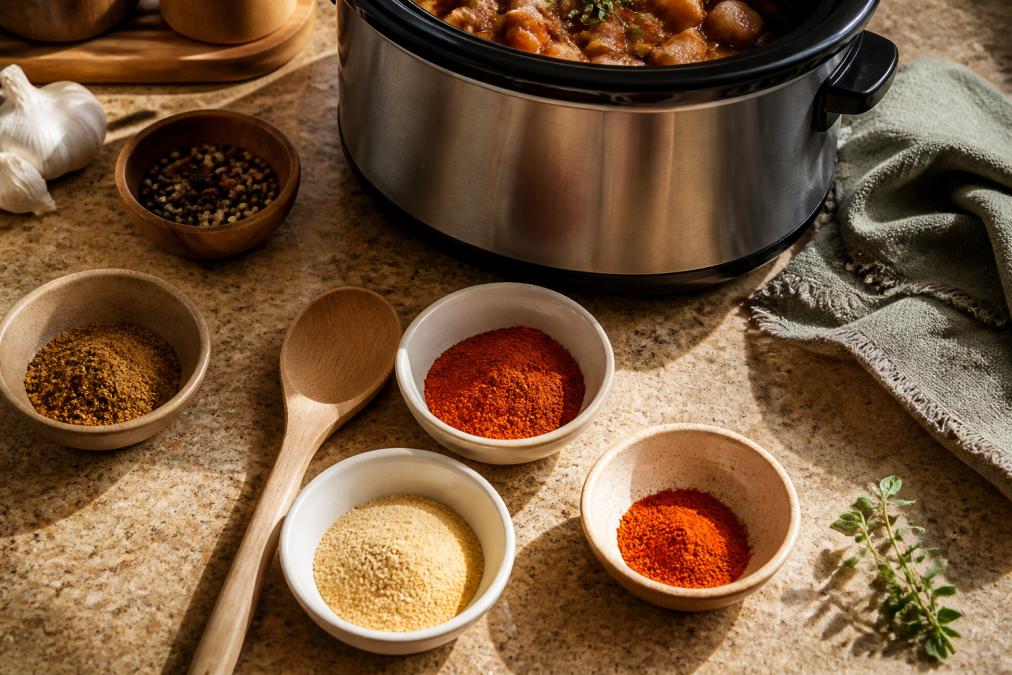
Southwest blend, Cajun blend, and taco blend ratios
These ratios make roughly two tablespoons of dry rub, enough for a two-pound roast or four to six chicken thighs. Each blend is salt-free so you control sodium separately: add ½ teaspoon fine sea salt per pound of meat, or leave it out and finish with acid.
Turning a dry rub into a braising liquid
This step is the easiest way to get rub-level flavor without a dry crust: a dry rub sits on the surface, while a braising liquid carries the same seasoning into every bite.
| Dry rub amount | Liquid | Acid | Best for |
|---|---|---|---|
| 2 tbsp Southwest | ½ cup low-sodium chicken broth | 1 tbsp lime juice | Chicken thighs, pork shoulder |
| 2 tbsp Cajun | ½ cup crushed tomatoes | 1 tbsp apple cider vinegar | Andouille, chicken, shrimp |
| 2 tbsp Taco | ½ cup low-sodium beef broth | 1 tbsp lime juice | Beef chuck, shredded chicken |
Best Herbs for Long-Simmering Dishes
Fresh herbs aren't useless in a slow cooker, they just belong at the end. Stir chopped parsley, cilantro, or basil in after you've turned the heat off.
Salt-Free and Low-Sodium Rub Alternatives for Slow Cooking
Salt-free rubs work in a slow cooker, but they need ingredients that build savory depth without sodium. The trap is that salt-free seasoning tastes flat, because salt amplifies every other flavor it touches, and "just add more spice" doesn't fix that.
Why salt-free rubs taste flat, and what replaces salt
The fix is umami and acid, layered in the right order. Dried mushrooms, tomato powder, and a little smoked paprika add savoriness that partially replaces salt, and a splash of vinegar or citrus at the end sharpens the dish.
Sodium math for slow cooker portions
The FDA guidance on sodium in the diet notes that most adults consume well above the recommended daily limit, and a single store-bought seasoning packet can carry a meaningful share of that in one meal. A typical packet-seasoned pot roast recipe can land in the range of 800 to 1,200 milligrams of sodium per serving once the packet and any added salt are counted.
Cook-time adjustments for salt-free blends
Salt-free blends behave differently over a long cook. Without salt drawing moisture out early, the surface stays wetter longer and spices have less chance to cling. Two adjustments help: pat the meat very dry before applying the rub, and add the rub in two passes, half before the cook, half stirred into the liquid at the halfway point to restore aromatics lost in the first few hours.
Gluten-Free and Allergen-Friendly Seasoning Options
Gluten hides in seasoning more often than people expect. Anti-caking agents, yeast extract, and hydrolyzed vegetable protein can all carry trace gluten, none belong in a blend you use regularly.
Finishing Techniques: Fresh Herbs, Citrus, and Vinegar
Fresh herbs follow the same rule: cilantro on taco filling, parsley on pot roast, basil on a tomato-based braise, added after the cooker is off.
Conclusion
The slow cooker's weakness is also its strength: it cooks gently and evenly but strips away the bright, volatile compounds that make seasoning taste alive. Natural spice rub alternatives for slow cooker recipes work because they put concentrated flavor directly on the food, then let you rebuild the top notes at the end.
Frequently Asked Questions
What seasonings are good for a slow cooker?
Dried herbs like oregano, thyme, rosemary, and bay leaves hold up well during long cooks. Ground spices such as cumin, smoked paprika, garlic powder, and onion powder also work because they distribute evenly through the liquid. A slow cooker spice rub built on these ingredients gives you consistent flavor without the additives found in store-bought packets. Add delicate herbs like parsley or cilantro at the end for brightness.
How do I keep flavors from dulling during long slow cooker sessions?
Spice degradation happens when volatile oils cook off over hours of heat. To fight this, layer your seasoning: add two-thirds of your spice rub at the start and reserve the rest for the last 30 minutes. Acidic finishers like citrus juice or vinegar added at the end also wake up flat flavors. Using whole spices or coarse-ground blends rather than fine powders helps them last longer in the pot.
Are there gluten-free and additive-free spice rub options for crockpot meals?
Yes. Many commercial seasoning packets contain anti-caking agents, MSG, or gluten-based fillers. Look for blends that list only spices, herbs, salt, and sugar on the label. Dam Spice Company's lineup, including Dam Butt Rub and Dam Dirt, is naturally gluten-free and contains no MSG or artificial additives. Each 5 oz bottle costs $7.99 and works for both slow cooker meals and traditional grilling.
Can I use fresh herbs as a substitute for dried spice rubs in a slow cooker?
Fresh herbs lose their punch during a six-to-eight-hour cook, so they work best as a finishing garnish rather than a base layer. If you want to use fresh herbs in the pot, add sturdy ones like rosemary or thyme sprigs at the start and tie them in a bundle for easy removal. Delicate herbs like basil, parsley, and cilantro should go in during the last 15 minutes.
What are the healthiest seasoning options for low-sodium slow cooking?
Salt-free blends built on cumin, smoked paprika, garlic powder, onion powder, and dried herbs give you deep flavor without sodium. You can also use citrus zest, vinegar, and aromatic vegetables like onion and garlic as a base. If you want a pre-made option, check labels for blends that lead with spices rather than salt. Dam Spice Company's SPG uses sea salt, cracked pepper, and garlic, so you control how much you shake on.