

Red vs Green Chile: What's the Real Difference?
Table of Contents
- Red vs Green Chile: The Same Pepper, Two Different Stages
- Harvesting and Ripening: How Green Chile Becomes Red Chile
- Red vs Green Chile Heat Levels: What the Scoville Scale Says
- Flavor Profiles: Vegetal and Bright vs Earthy and Sweet
- How to Cook with Red Chile: Sauces, Stews, and Rubs
- Best Ways to Use Green Chile: Roasting, Chiles Rellenos, and More
- The Christmas Style: When You Want Both Red and Green
- Storage, Substitutions, and Pairing Guide
- Frequently Asked Questions
Last Updated: September 16, 2026
Red vs Green Chile: The Same Pepper, Two Different Stages
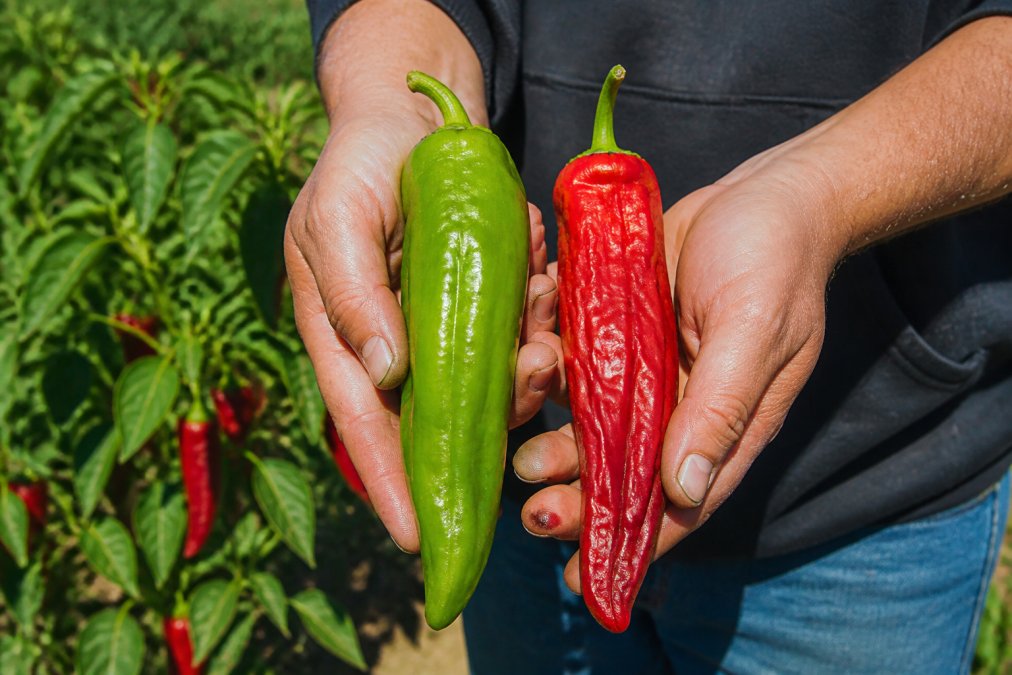
Here's the fact that surprises most home cooks: red and green chile are not two different peppers. They are the same plant harvested at two points in its life cycle. The difference between red and green chile comes down to time, and time changes everything about how the pepper tastes, how hot it runs, and how you cook with it.
Harvesting and Ripening: How Green Chile Becomes Red Chile
The harvest cycle starts in late summer, when green chile pods reach full size but have not yet changed color. Growers pick them while the walls are thick and the flavor is bright. Leave those same pods on the plant, and they continue to mature: the color shifts from green to red, sugar develops, moisture drops, and the flavor deepens.

The Harvest Cycle in New Mexico
New Mexico's chile harvest season runs from roughly late August through October. Green chile comes off the field first. Red chile stays on the vine longer, then gets strung into ristras or laid out to sun-dry. That timing is why fresh green chile is a seasonal event, while dried red chile powder is available year-round.
Red vs Green Chile Heat Levels: What the Scoville Scale Says
Heat is where the red vs green chile debate gets interesting, because the answer is not what most people assume. Green chile generally delivers a sharper, more immediate heat. Red chile, having matured longer, often tastes rounder and slightly sweeter, though it can still run hot depending on the variety.
Scoville Ranges by Variety
Heat varies far more by cultivar than by color, so the useful comparison is within a single variety at two stages. Common New Mexico-type chiles illustrate the pattern:
| Variety | Green Stage (SHU) | Red Stage (SHU) |
|---|---|---|
| Hatch mild (NuMex types) | 500-1,000 | 800-1,500 |
| Hatch medium | 1,500-2,500 | 2,000-3,500 |
| Hatch hot | 5,000-8,000 | 6,000-10,000 |
| Chimayó | 4,000-6,000 | 5,000-8,000 |
| Jalapeño (for reference) | 2,500-8,000 | 2,500-8,000 |
| Factor | Green Chile | Red Chile |
|---|---|---|
| Stage | Immature pod | Fully vine-ripened |
| Heat style | Sharp, bright | Rounder, can be sweeter |
| Flavor | Vegetal, grassy | Earthy, sweet undertones |
| Common form | Roasted, frozen | Dried, powdered |
| Best for | Rellenos, topping | Sauces, stews, rubs |
Flavor Profiles: Vegetal and Bright vs Earthy and Sweet
Green chile tastes green. That sounds obvious, but it is the most useful thing to know about it. The flavor is vegetal and bright, with a snap that comes from the pepper's higher moisture content. Roasting adds smoky notes on top of that.
Texture and Sauce Consistency
Texture follows flavor. Green chile holds its shape, so it works as a topping or a chunky filling. Red chile breaks down into a smooth sauce, which is why red chile sauce coats a plate and red chile powder blends evenly into a stew base. If you want a sauce with body, red is the easier starting point.
How to Cook with Red Chile: Sauces, Stews, and Rubs
Red chile shines in applications where you want an even, all-over coating. Think enchilada sauce, carne adovada, posole, and chili con carne. Reconstituting dried red chile pods in hot water, then blending them, gives you a sauce base you can build on with garlic, oregano, and cumin.
Best Ways to Use Green Chile: Roasting, Chiles Rellenos, and More
Green chile rewards the roasting step. Blistering the skin over a flame, then steaming the pods in a covered bowl, makes the peel slip off cleanly and leaves smoky flavor behind. From there, the classic applications open up: chiles rellenos, green chile stew, cheeseburgers, and breakfast burritos.
The Christmas Style: When You Want Both Red and Green
Order "Christmas" in a New Mexico restaurant and you get both red and green chile on the same plate. It is not indecision; it is a deliberate combination that lets you taste the bright, sharp green against the earthy, sweet red in one bite.
Storage, Substitutions, and Pairing Guide
Storage and substitution are where most guides stop short, and they are the two things home cooks actually need. Here is how to handle both, plus a pairing reference you can keep on the fridge.
Home Cooking Substitution Guide
The core rule: red chile is more concentrated by weight, because the drying process removes roughly three-quarters of the pepper's water. That concentration is why you rarely swap them one-for-one.
- Recipe calls for green chile, you have red powder: Use about half the amount by volume, since red is more concentrated. Add a splash of liquid or an extra tablespoon of tomato or stock to keep the dish from drying out, and expect a deeper, less bright flavor.
- Recipe calls for red chile sauce, you have green: Green will taste brighter and less sweet. Add a pinch of sugar or a roasted red pepper to close the gap, and simmer a few minutes longer to soften the vegetal edge.
- Recipe calls for fresh roasted green chile: Frozen roasted green chile is the closest match. Canned works in a pinch but loses some texture and picks up a tinny note, so drain and rinse it first.
- Recipe calls for dried red pods, you have powder: One dried pod yields roughly one to two teaspoons of ground powder, depending on size. Start with one teaspoon per pod the recipe calls for and adjust.
- Want both flavors at once: Reach for a red and green blend rather than mixing two jars, so the ratios are already balanced.
Storage and Preservation Techniques
How you store each form determines how long it stays good, and the two peppers have opposite strengths: green is perishable and freezes well, red is shelf-stable and fades with heat and light.
- Fresh green chile: Roast, peel, and freeze in portions. It keeps for months and thaws without much loss. Squeeze out excess air and freeze flat in bags so portions separate easily.
- Dried red chile pods: Store in an airtight container away from light and heat. They hold their flavor far longer than fresh pods, often a year or more if kept cool and dark. Leathery pods can be rehydrated; brittle, faded pods have lost their oils.
- Red chile powder: Keep it sealed and out of the sun. Heat and light fade both color and flavor, so a cool, dark cabinet beats a spice rack above the stove every time. Ground powder loses potency faster than whole pods, so buy in quantities you will use within a few months.
- Ristras: Great for decoration and short-term drying, but for long storage, break the pods down into powder or freeze them. A ristra hung in a bright kitchen will fade before it dries fully.
- Freezing red chile sauce: Red chile sauce freezes well in ice cube trays, then transfers to a bag for single-serving portions you can drop straight into a pot.
Pairing Guide
Pairing follows the flavor logic: green's brightness cuts through rich, fatty proteins, while red's earthiness complements hearty, sweet, or starchy bases.
| Chile | Pairs With | Classic Dish |
|---|---|---|
| Green | Pork, chicken, cheese, eggs | Chiles rellenos, green chile stew |
| Red | Beef, beans, corn, squash | Enchiladas, posole, carne adovada |
Frequently Asked Questions
Is red or green chile better?
Neither is objectively better; they serve different purposes. Green chile is picked young and has a bright, vegetal flavor with sharp heat, making it ideal for roasting, stuffing, and fresh sauces. Red chile is fully vine-ripened, offering earthy sweetness and deeper complexity for stews, enchiladas, and rubs. Many New Mexico cooks use both, sometimes in the same dish. Your choice depends on whether you want brightness or depth in the final plate.
Which chile is hotter, green or red?
Heat varies by variety, not just color. Green chile often has a sharper, more immediate burn because it is picked earlier, while red chile tends to have a rounder, slower-building heat. On the Scoville scale, both can range from mild to very hot depending on the specific pepper. For example, a green chile blend like Dam Spice Company's Christmas (a red and green mix) is rated Hot, while Dos Rojos (red chile and red jalapeño) is Spicy-Hot. Always check the label.
Can you substitute red chile for green chile in recipes?
Yes, but expect a flavor shift. Red chile brings earthy, sweet undertones and a smoother sauce consistency, while green chile adds bright, vegetal notes and sharper heat. In soups or stews, red chile works well as a direct substitute if you want deeper flavor. For dishes where green chile's texture and tang are key, like chiles rellenos, red chile will change the outcome. Start with a 1:1 swap, then adjust liquid and seasoning to taste.
How do red and green chile flavor profiles differ in cooking?
Green chile delivers a fresh, grassy, and slightly acidic flavor with a sharp heat that cuts through rich meats. It shines in roasted salsas, burgers, and egg dishes. Red chile is sweeter and more earthy, with notes of dried fruit and a mellow, building warmth. It excels in slow-cooked sauces, tamales, and as a rub for beef or pork. The ripening process concentrates sugars in red chile, which is why it tastes rounder and less vegetal.
What is the difference in the harvesting process for red and green chiles?
Green chiles are harvested young, while they are still firm and green, usually from late summer into fall. They are often flame-roasted to remove the skin and preserve their bright flavor. Red chiles are left on the vine longer to fully ripen, turning deep red and developing higher sugar content. They are then sun-dried or dehydrated before being ground into powder or rehydrated for sauces. This extra maturation step gives red chile its distinctive earthy sweetness.