

How to Store Homemade Spice Rubs for Freshness
Table of Contents
- Why Homemade Spice Rubs Lose Their Kick
- How Long Does Homemade Spice Rub Last?
- Best Containers for Spice Storage: Glass Jars vs. Bags
- How to Keep Spices From Clumping
- Should You Freeze Spices? Refrigerator and Freezer Storage
- Small-Batch and Portioning Strategy for Homemade Rubs
- How to Assess Freshness and When to Replace
- Frequently Asked Questions
Last Updated: October 9, 2026
Why Homemade Spice Rubs Lose Their Kick
Homemade spice rubs lose their kick because heat, light, air, and moisture strip the volatile oils that carry flavor.
At Dam Spice Company, we build every blend around all-natural ingredients with no additives, so a rub is only as good as its storage.
Here is how to store homemade spice rubs for freshness, plus the shelf-life numbers most guides skip.
How Heat, Light, Air, and Moisture Affect Freshness
- Heat cooks off volatile oils, even at room temperature.
- Light breaks down pigments and aromatics, especially in clear containers.
- Air oxidizes oils and turns bright flavors flat.
The fix is simple: keep your spice mix cool, dark, and sealed. The USDA FoodSafety.gov food storage guidance covers the basics of keeping dry goods dry and safe.
The Best Storage Location for Spice Rubs
The best storage location for spice rubs is a cool, dark, dry place away from the stove, oven, and dishwasher, a pantry shelf or interior-wall cabinet.
Avoid these spots:
- Above the stove or toaster oven
- A windowsill with direct sunlight
- Next to the coffee maker or kettle
Heat and humidity are the biggest threats. If your cabinet feels warm, move the jars.
How Long Does Homemade Spice Rub Last?
A homemade spice rub lasts about 6 months at peak flavor and up to a year if stored well. Whole spices outlast ground ones, and salt-heavy blends outlast sugar-heavy ones. After that, most rubs are not unsafe, just dull, you will need more for the same result.
Shelf Life of Whole Spices, Ground Spices, and Dried Herbs
Different ingredients age at different speeds:
| Ingredient Type | Peak Flavor | Still Usable | Notes |
|---|---|---|---|
| Whole spices | 2-4 years | 4+ years | Seeds and peppercorns hold oils longest |
| Ground spices | 6-12 months | 2 years | Grind fresh for best results |
| Dried leafy herbs | 6-12 months | 1-2 years | Crush to test aroma |
| Homemade dry rub | 3-6 months | 12 months | Depends on sugar and salt content |
Whole spices outlast ground ones because the oils stay locked inside; once ground, the clock starts.
Ingredient-Specific Exceptions: Salt, Sugar, and Chile Peppers
Salt never spoils, it can clump, but not go bad.
Sugar is the wild card: brown sugar hardens as it dries and draws moisture from the air, so sugar-heavy blends age faster than savory ones.
Chile peppers fade in color and heat; ground chile powder loses its punch within about a year, while whole dried chiles keep far longer.
A blend like our Sweet & Smokey BBQ Rub uses brown sugar, smoked paprika, and chile pepper, so it rewards good storage.

Best Containers for Spice Storage: Glass Jars vs. Bags
The best containers for spice storage are airtight glass jars with a tight-sealing lid. Glass does not absorb odors or react with spices, and shows you what is inside. Bags work short-term, but let in air and crush delicate blends.
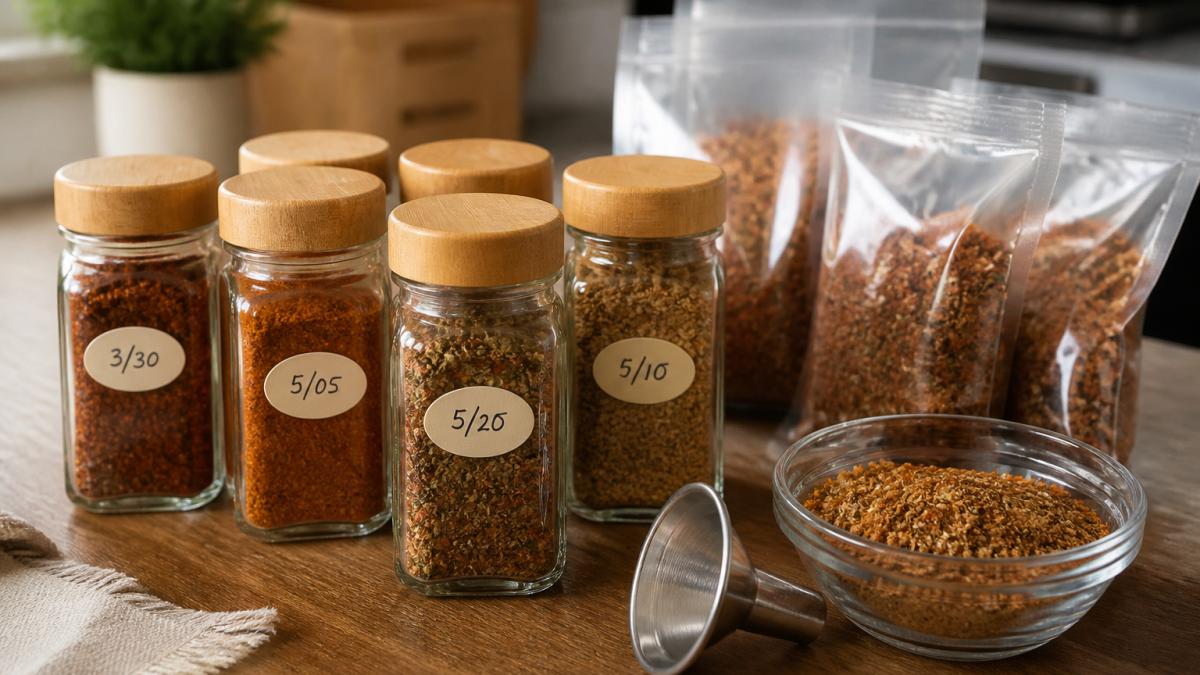
Here is how the options compare:
| Container | Air Seal | Light Block | Best For |
|---|---|---|---|
| Glass jar with clamp lid | Excellent | Good if amber | Long-term pantry storage |
| Glass jar with screw lid | Good | Good if dark glass | Everyday use |
| Resealable bag | Fair | Poor | Short trips, small batches |
| Plastic shaker | Fair | Poor | Daily grilling season |
Glass wins for anything kept over a month; a bag is fine for a weekend trip, not a year on the shelf.
Headspace, Oxygen, and Why Fill Level Matters
Most guides say use an airtight jar and stop there, but fill level matters just as much. Every inch of empty space holds oxygen, which oxidizes the volatile oils that carry aroma.
Fill jars to within about half an inch of the lid, enough room to scoop without spilling, but a small air pocket. If you cannot fill a jar, move the rub into a smaller one.
Two more container details that get overlooked:
- Lid gaskets. Clamp lids with a rubber gasket seal better than screw lids over time, but gaskets dry out and crack. Check them once a year and replace if they feel stiff.
- Wide vs. narrow mouth. Wide-mouth jars are easier to scoop from and easier to wipe clean at the rim. Narrow spice bottles look tidy but trap moisture at the threads if you shake over steam.
Matching the Container to the Rub Ingredient
Not every rub needs the same container. The ingredient mix should drive the choice.
- Salt-heavy blends are the most forgiving. Salt does not oxidize, so a simple screw-lid jar is fine. The risk is clumping, not flavor loss, so prioritize a tight seal over light blocking.
- Sugar-heavy blends (brown sugar, maple sugar, turbinado) pull moisture from the air and harden. Use a clamp-lid jar with a gasket and keep a terra cotta or bread-slice moisture absorber in the cabinet, not in the jar.
- Chile-forward blends fade in color and heat when exposed to light. Amber or dark glass matters most here, a clear jar on an open shelf will dull a paprika or ancho blend within weeks.
A blend like our Sweet & Smokey BBQ Rub leans on brown sugar, smoked paprika, and chile pepper, so it rewards an amber clamp-lid jar kept out of light. A salt-and-pepper-forward blend can live in almost anything sealed.
Labeling and Organizing Your Spice Containers
Label every jar with the blend name and storage date. That one habit solves most freshness problems, because you always know what is old.
A simple system:
- Write the blend name and date on a strip of tape
- Group savory rubs together, sweet blends together
- Keep the oldest jars in front
A lazy Susan or tiered shelf keeps several blends visible, you will reach for the rub more often.
How to Keep Spices From Clumping
To keep spices from clumping, keep moisture out of the jar. Clumping happens when water vapor gets in and the salt or sugar grabs it, and a caked rub will not sprinkle evenly.
Common causes:
- A wet spoon dipped into the jar
- Steam from a pot drifting over an open container
- Storing near the sink or dishwasher
Fix it by using a dry spoon every time and sealing the lid fully. If a blend already clumps, break it up with a fork or a few grains of dry rice.
Preventing Moisture and Contamination From Cooking
Cooking is where most contamination happens, the part most guides miss.
Never dip a wet or raw-meat-covered hand or spoon into your jar. Season raw chicken, then reach back in, and you have cross-contaminated the whole batch.
Instead:
- Pour a small amount into a bowl before you touch raw meat
- Use a clean, dry spoon each time
- Never return unused rub to the jar after it touched raw food
This keeps your spice rubs safe and dry and protects the flavor you built.
Should You Freeze Spices? Refrigerator and Freezer Storage
You can freeze spices and rubs, but it is not always best. Cold storage slows flavor loss but invites condensation every time you open the container. For blends you use weekly, the pantry is better.
Freeze only what you will not touch for months. Keep a small working jar in the pantry and a larger sealed bag in the freezer.
Why the Refrigerator Is Usually the Wrong Call
Most guides lump the fridge and freezer together. They behave differently, and the fridge is the worse option for dry rubs.
A refrigerator cycles through temperature and humidity swings every time the door opens, pulling moisture into any container that is not perfectly sealed.
There are two narrow cases where the fridge makes sense:
- A rub that contains a fresh ingredient, such as fresh garlic, fresh citrus zest, or fresh herbs. Those blends are not shelf-stable and should be treated like a perishable, used within about a week.
- A small working jar you will finish within a few weeks, sealed tightly and kept away from the door.
For a fully dry rub of ground spices, dried herbs, salt, and sugar, the pantry beats the fridge in almost every case.
Freezer Storage Details and Condensation
Condensation is the enemy in the freezer.
You cannot stop condensation entirely, but you can control how much forms and when it hits the rub.
To freeze rubs the right way:
- Use a heavy freezer bag or a jar filled to the top. A full jar has less air, so less condensation forms. Pack it tight.
- Squeeze out as much air as possible from a bag, or press the rub down and top off the jar.
- Label with the date and freeze flat. Flat bags thaw faster and stack better.
A common pattern: portion a large batch into single-use freezer bags, then move one bag to a working jar as needed. The reserve stays sealed and cold, and the jar you cook from never sees a temperature swing.
How Long Rubs Actually Keep in the Freezer
Freezing slows flavor loss but does not stop it. A well-sealed dry rub holds peak aroma in the freezer for roughly 6 to 12 months and stays usable up to about 2 years.
After a year in the freezer, expect to use more rub for the same result. Check aroma before trusting the date, the smell test works whether the rub came from pantry or freezer.
Small-Batch and Portioning Strategy for Homemade Rubs
Small-batch mixing is the best way to keep homemade rubs fresh. A rub only stays at peak flavor for a few months, so make what you will actually use.
A simple portioning plan:
- Mix a 3-month supply, not a year's worth
- Split large batches into two jars: one in use, one sealed
- Keep the sealed jar in a cool, dark spot
This way, the jar you cook from is always fresh, and the backup stays sealed until you need it. Our Brisket Rub and other 5 oz blends are sized for exactly this kind of rotation.
How to Assess Freshness and When to Replace
Check freshness with your nose and eyes before trusting the label date. A rub that smells flat or dusty has lost its oils, even if it looks fine.
Quick freshness test:
- Rub a pinch between your fingers and smell it
- Bright, sharp aroma means it is still good
- Faint or dusty smell means it is fading
- No smell at all means replace it
- Look for color loss, clumping, or bugs
If a blend fails the smell test, do not toss it. Use it up fast in a marinade or heavily seasoned dish, then mix a fresh batch.
Replace rubs at these signals:
- The aroma is gone
- The color has faded to brown or gray
- It clumps and will not break apart
Storing homemade spice rubs well comes down to a few habits: keep them cool, dark, and sealed, label everything, and mix small batches you will actually finish. Every 5 oz jar of our DAM Butt Rub and other Southwest blends is built to hold bold flavor, so all you have to do is keep the lid tight.
Frequently Asked Questions
How should you store homemade spice rubs?
Store homemade spice rubs in an airtight container, such as a glass jar with a tight-fitting lid, in a cool, dark, and dry place like a pantry or kitchen cabinet away from the stove. Keep them out of direct sunlight and away from heat sources. For long-term storage, you can freeze the rub in a heavy-duty freezer bag, but make sure it is completely sealed to prevent moisture and condensation from getting in.
How long does homemade spice rub stay fresh?
Most homemade spice rubs stay fresh for about 6 months in an airtight container in a cool, dark pantry. Whole spices and seeds last longer, up to 2 years, while ground spices and dried herbs lose potency after 6 to 12 months. Rubs with high salt or sugar content can last a bit longer. Always check aroma and color; if the rub smells flat or looks faded, it is time to replace it.
What is the best container for storing a homemade dry rub?
Glass jars with airtight lids are the best containers for spice storage because they do not absorb odors or flavors and keep air and moisture out. Small mason jars or spice bottles with screw-top lids work well. Avoid plastic bags or containers that are not airtight, as they let in air and moisture, which causes clumping and flavor loss. Label each jar with the contents and storage date.
Should homemade spice rubs be refrigerated or frozen?
Freezing is better than refrigerating for long-term storage. The refrigerator is humid and can introduce moisture every time you open the door, leading to clumping. If you plan to use the rub within a few months, a pantry is fine. For longer storage, portion the rub into small airtight bags and freeze them. Let frozen rub come to room temperature before using to avoid condensation.